.svg)

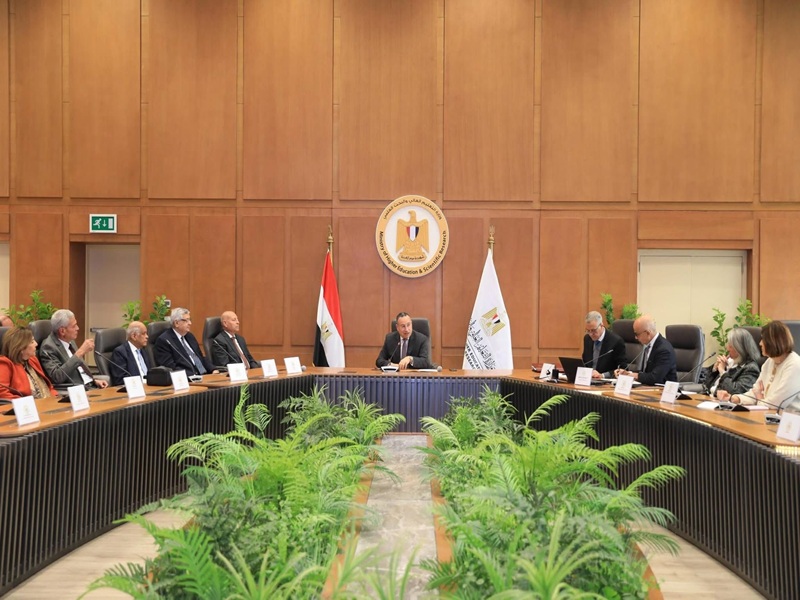
At the invitation of the Minister of Higher Education and Scientific Research: The inaugural session of Ain Shams National University was held
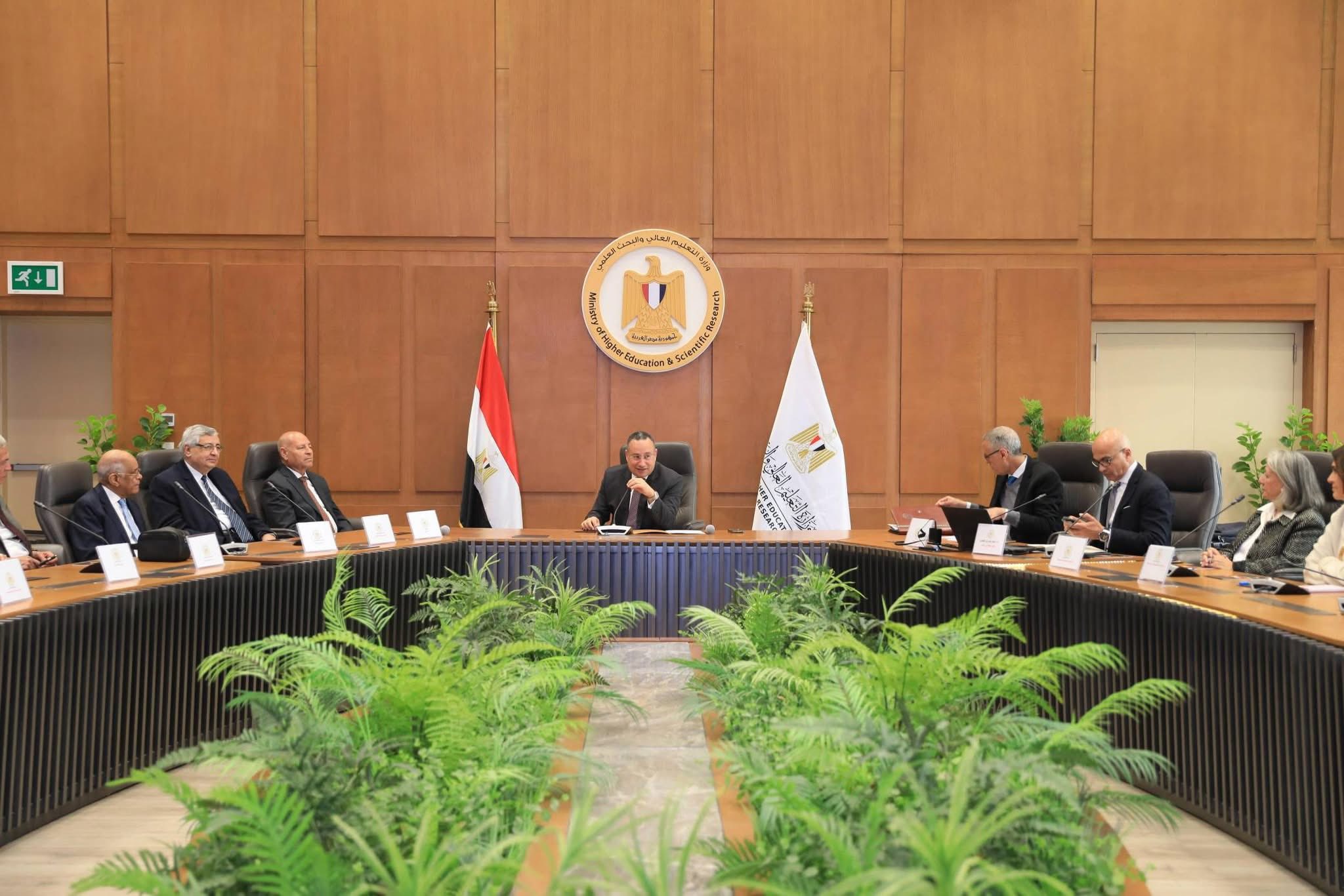
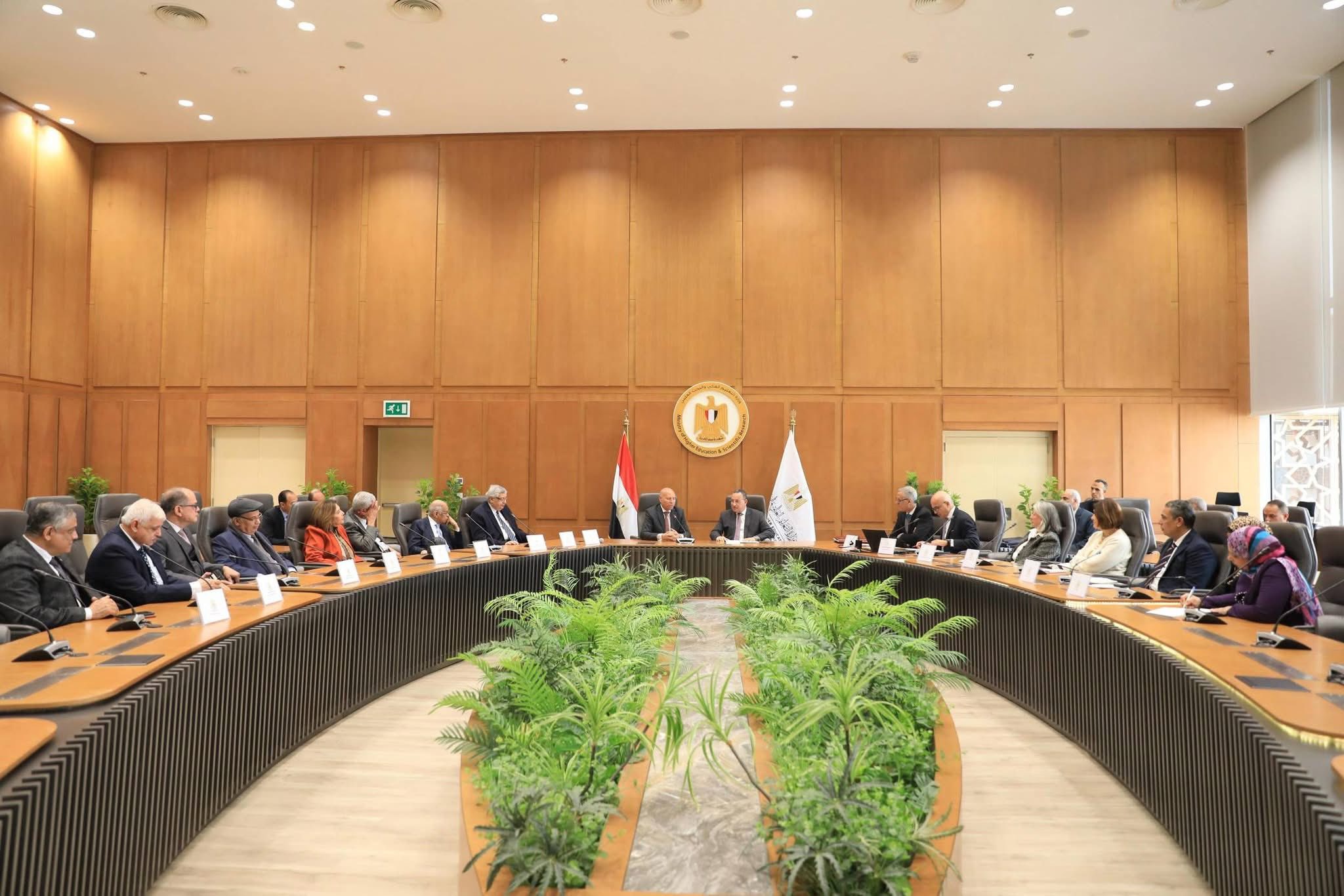
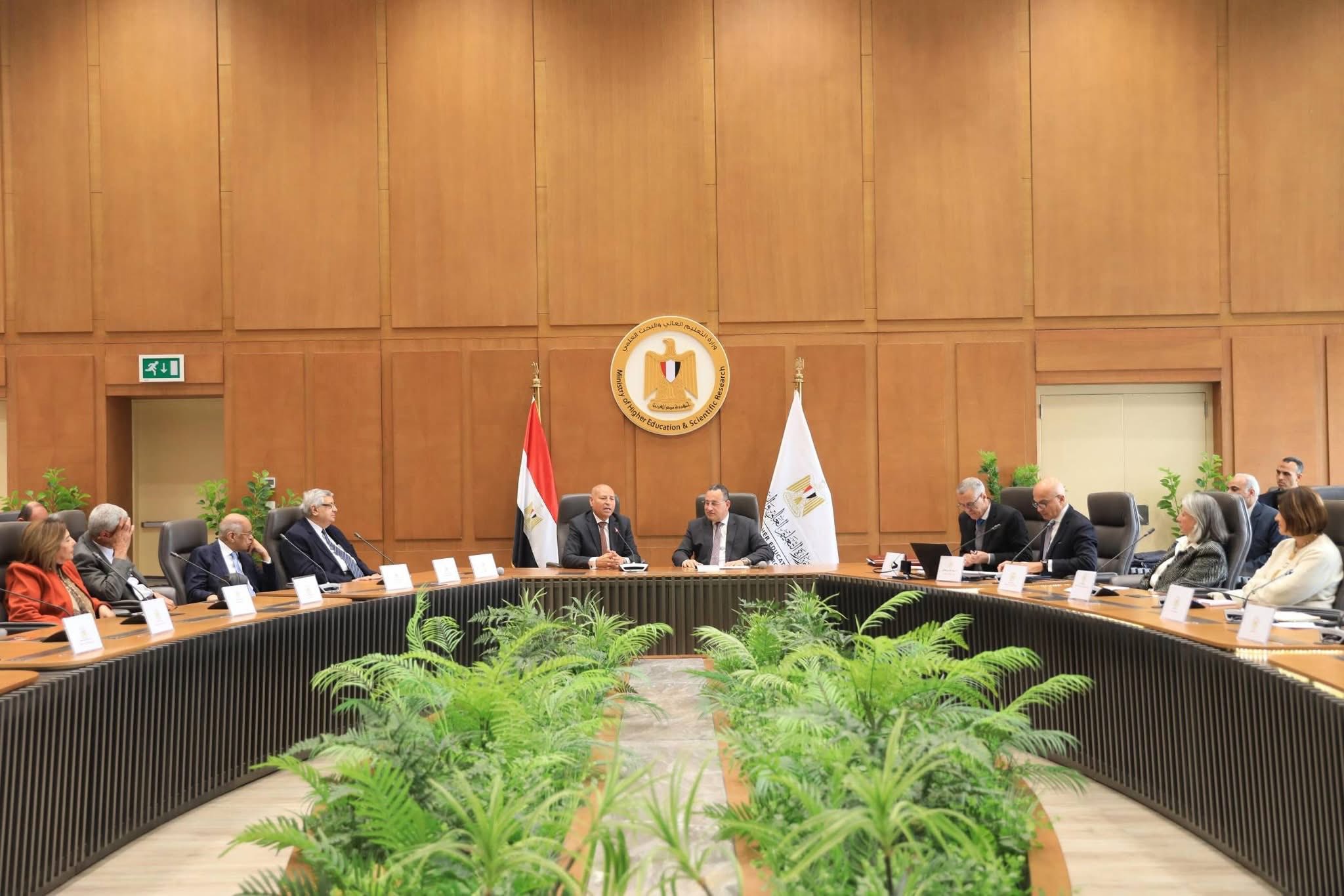
The first session of the Board of Trustees of Ain Shams National University was held at the invitation of Dr. Abdel Aziz Qansouh, Minister of Higher Education and Scientific Research, and in the presence of Dr. Maher Mesbah, Secretary of the Council of National Universities. The newly formed board includes: Dr. Mohamed Awad Tag El-Din, Advisor to the President of the Republic for Health and Prevention Affairs; Dr. Ibrahim Saber, Governor of Cairo; Dr. Ali Abdel Aal, former Speaker of the House of Representatives; Dr. Mohamed Diaa Zain El-Abedeen, President of Ain Shams University and Acting President of Ain Shams National University; Dr. Mohamed Sayed Salama, former Vice President of the University for Graduate Studies and Research; Dr. Mohamed El-Husseini, former Vice President of the University for Education and Student Affairs; Dr. Nazmi Abdel Hamid, former Vice President of the University for Community Service and Environmental Development; Dr. Mohamed Ayman Abdel Wahab Saleh, former Vice President of the University for Graduate Studies and Research; Dr. Shadia Qanawi, Permanent Delegate to the United Nations Educational, Scientific and Cultural Organization (UNESCO); Dr. Suzanne El-Qalini, former Dean of the Faculty of Arts and member of the Technical Committee for Supervision and Follow-up of National Projects at the National Council for Women; Engineer Sadek El-Sewedy, Chairman of the Board of Directors of Elsewedy Electric Company; and Major General Dr. Bahaa Din Zeidan, former head of the Unified Procurement Authority, Dr. Alaa Abdel Maksoud Arafa, Vice Chairman of the Board of Directors and Managing Director of Concrete Company, and Dr. Hala Abdel Gaber, former member of the Senate.
At the beginning of the meeting, the Minister affirmed the implementation of the political leadership's directives to elevate the quality of university education in Egypt, expressing his appreciation for the support provided to universities. He noted that the state's vision for expanding the higher education and scientific research system stems from its status as one of the most important pillars of sustainable development.
 |
 |
 |
||
Dr. Abdel Aziz Qansouh emphasized the philosophy of private universities, which is based on providing a comprehensive and distinguished educational experience. This experience relies on developing academic programs, linking them to contemporary needs, and supporting international partnerships. This approach aims to improve the quality of higher education and enhance the competitiveness of Egyptian graduates, contributing to the realization of a knowledge-based economy, one of the state's key objectives.
The Minister reviewed the establishment of private universities affiliated with public universities, expressing gratitude for all previous efforts that led to the completion of this project. He commended the efforts of Dr. Khaled Abdel Ghaffar, Minister of Health and Population, for initiating this idea, and also thanked Dr. Ayman Ashour, the former Minister of Higher Education and Scientific Research, for his efforts in overseeing the project. He further acknowledged the efforts of the working teams at all the public universities from which private universities were established.
Dr. Abdel Aziz Qansouh emphasized the importance of adhering to the political vision for private universities, ensuring they are both connected to and separate from public universities, while maintaining communication and integration between the two. He stressed the need for private universities to achieve their objectives by offering modern academic programs that meet the needs of the local, regional, and international job markets. He also highlighted the necessity of keeping pace with the significant changes that have occurred in the job market and equipping graduates with the skills and competencies required for the future.
The minister stressed the importance of international partnerships, digital transformation, and integration with the industrial sector, noting the need to maintain a balance between the connection of private universities with their governmental counterparts and the independence of their educational experience, in addition to developing administrative structures and forming diverse boards of trustees that combine academia and industry, in order to ensure the graduation of qualified cadres capable of competing at the local, regional and international levels. He emphasized providing all support to the emerging universities emanating from governmental universities to continue their success in providing a strong addition to the Egyptian higher education system, as well as paying attention to developing a comprehensive marketing policy to introduce Egyptian universities at the regional and international levels, which enhances the vision of making Egypt an educational destination in the Middle East and the African continent.
For his part, Dr. Mohamed Awad Tag El-Din affirmed the state’s support for efforts aimed at improving the quality of higher education, praising Egyptian universities, which have a long history and contribute strongly through their work as centers of expertise with great infrastructure and human resources, contributing to various development files. He expressed his hopes that the experience of private universities will achieve the preservation of the quality and strong academic reputation of the public universities from which they emerged, and that they will be a distinguished addition to the Egyptian higher education system, and achieve global excellence with their graduates.
Dr. Ibrahim Saber, the Governor of Cairo, praised the strong relationship between the universities and the governorate, and the cooperation and integration between them in all files, especially in serving the geographical area, noting that the Cairo Governorate includes three prestigious universities, namely: Ain Shams, Al-Azhar, and the Capital (formerly Helwan), pointing to the great history of cooperation between the governorate and the three universities in many files to develop the environment and serve the community, and provide scientific consultations in all vital files, in addition to their educational role, and their participation in providing medical services to the people of the governorate.
Dr. Mohamed Diaa Zain El Abedeen reviewed the strategic objectives of Ain Shams National University, noting the commencement of work in four faculties: Medicine, Engineering, Computer and Information Sciences and Artificial Intelligence, and Business. He pointed to the numerous academic programs and specializations offered, which align with the standards of quality and academic excellence that distinguish Ain Shams University as a leading regional and international university in smart education, combining academic excellence with technological innovation. He emphasized that the national university is based on the rich legacy of Ain Shams University, spanning more than 75 years, and noted the focus on expanding international partnerships with a number of prestigious international universities. The university is also keen on supporting innovation and entrepreneurship, as well as developing its administrative staff.
The university president highlighted the public's trust in Ain Shams National University, reflected in the high student enrollment, and emphasized the commitment to providing opportunities for outstanding students in accordance with the university's educational quality standards.
During the procedural session, Dr. Mohamed Awad Tag El-Din was elected Chairman of the Board of Trustees of Ain Shams National University, and Dr. Suzanne El-Kallini was elected Vice-Chair.