.svg)

The Scientific Forum of the French Language Department at the Faculty of Arts in collaboration with the French National Centre for Scientific Research
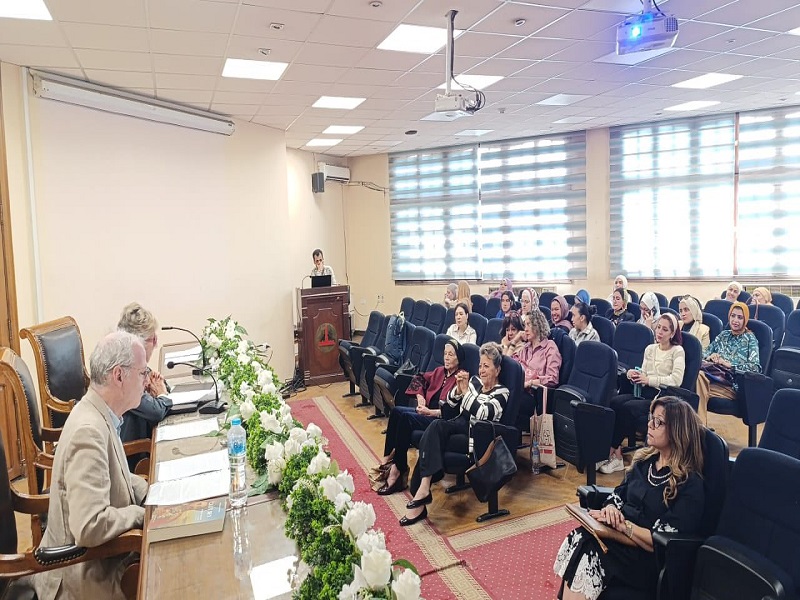
Organized by the Department of French Language and Literature at the Faculty of Arts, Ain Shams University, a scientific forum titled “French Travelers and Residents in Egypt in the 19th and 20th Centuries” was held, within the framework of academic cooperation between the department and the French National Centre for Scientific Research.
The forum was held under the patronage of Prof. Rami Maher Sadeq Ghali, Vice President for Education and Student Affairs, and Prof. Hanan Kamel Metwally, Dean of the Faculty of Arts, and under the supervision of Prof. Mohamed Ibrahim Hassan Mohamed, Vice Dean for Education and Student Affairs, with full coordination by Dr. Maha Alyoua, Head of the Department of French Language and Literature.
Prof. Hanan Kamel opened the forum by sharing her vision and impressions of its themes and axes, emphasizing that it opens a wide space for reflection on the depth of cultural and civilizational relations between Egypt and France. She noted that the writings of French travelers and residents go beyond mere documentation, becoming humanistic texts that capture the spirit of place and reshape memory.
Prof. Mohamed Ibrahim Hassan Mohamed also expressed his support for such academic events, highlighting their role in building renewed intellectual bridges between the past and the present and in strengthening research horizons.
 |
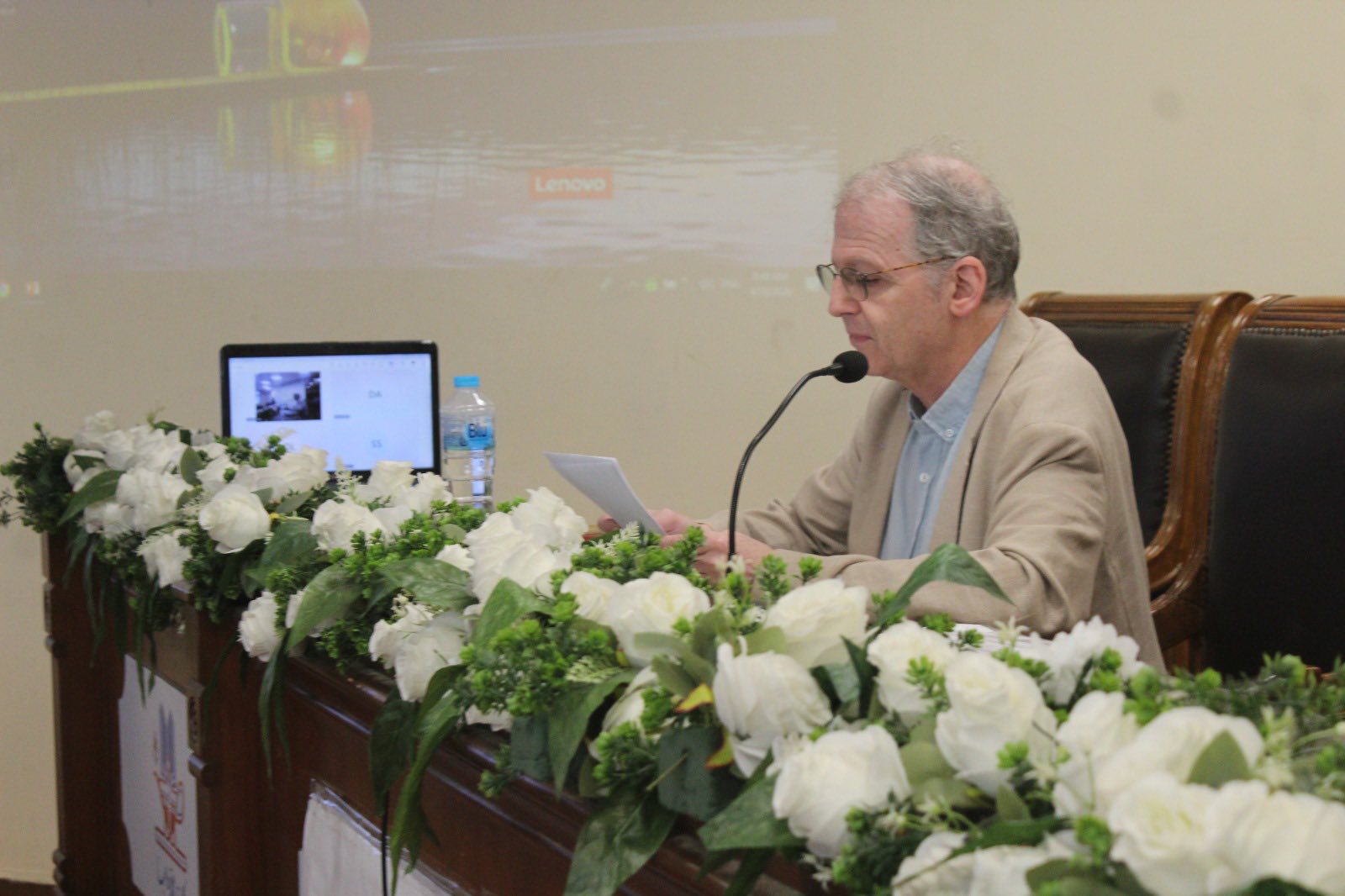 |
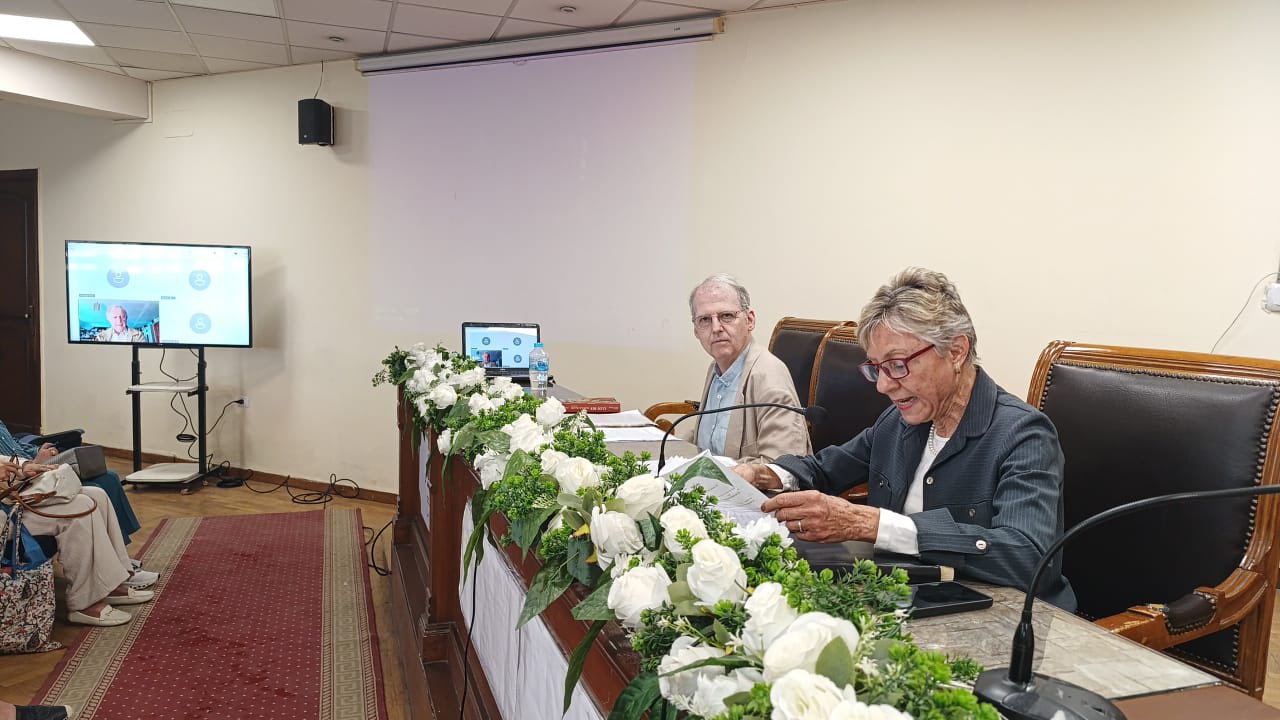
The forum represented the outcome of fruitful scientific cooperation with the French side, as the French National Centre for Scientific Research was represented by Prof. Sergea Moussa, Research Director at the CNRS, who attended the faculty and delivered a scholarly intervention reflecting the depth of French interest in Egyptian studies.
Dr. Maha Alyoua, Head of the Department, welcomed the participants, stressing that the forum provides a space for scientific dialogue aimed at re-reading shared cultural history through contemporary approaches.
On the academic level, the research papers approached Egypt not merely as a place, but as an open text with multiple interpretations, where historical methodologies intersected with critical and literary approaches to deconstruct and reconstruct the image of the “Other.”
The study of Antoine Barthélemy Clot (Clot Bey) went beyond his medical role to analyze his reformist discourse as part of a broader modernist project, where medical knowledge intersected with an Enlightenment vision aimed at reshaping society.
The study of Gaston Maspero revealed the dialectic between knowledge and power, raising questions about historical narration and how history is produced and presented to the world.
Dr. Hala Fouda presented an interpretive reading of Gérard de Nerval’s travel experience, viewing his journey not only as geographical movement but as an inner quest, where Egypt becomes a symbolic space blending reality and imagination.
In the field of arts, the analysis of Jean-Léon Gérôme’s works highlighted the visual dimension of Orientalism, where painting becomes a parallel discourse to text, reshaping the Orient through aesthetic and cultural lenses.
The study of Maxime Du Camp revealed the infiltration of ideology into writing, showing how Egyptian society was reconstructed within a European intellectual framework.
The forum concluded with a reading of Raymond Mounier’s memoirs as a human testimony reflecting the transformations of Egyptian society, from daily life to major historical events such as the Suez Crisis.
The event witnessed significant attendance from faculty members and researchers from Egyptian universities, alongside international scholars, with some contributions delivered online from France.