
.svg)

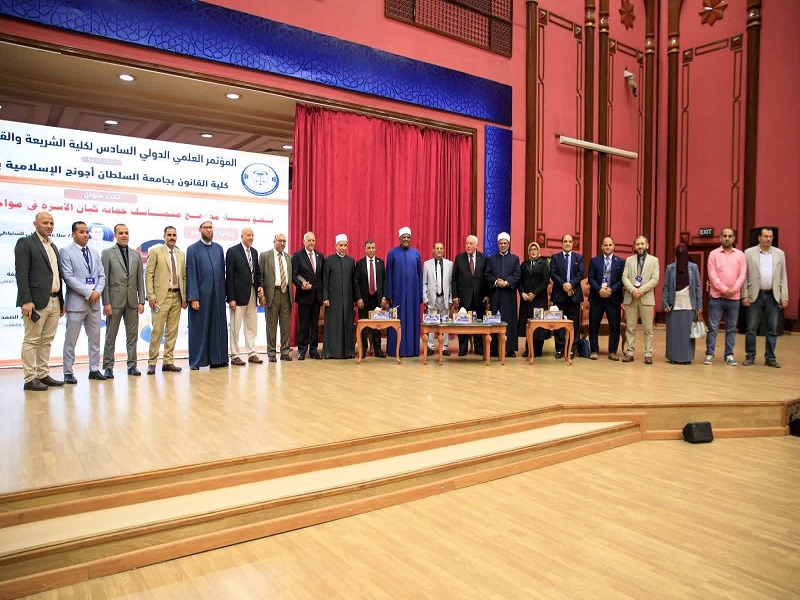
The Faculty of Law Participates in Al-Azhar University's Sixth International Conference on Contemporary Family Challenges
Under the patronage of His Eminence the Grand Imam, Prof. Ahmed El-Tayeb, a delegation from the Faculty of Law at Ain Shams University participated in the Sixth International Conference of the Faculty of Sharia and Law at Al-Azhar University in Cairo, in cooperation with Agung Islamic University in Indonesia. The conference was titled "Towards Building a Cohesive Society: Protecting the Family Entity in the Face of Contemporary Challenges."
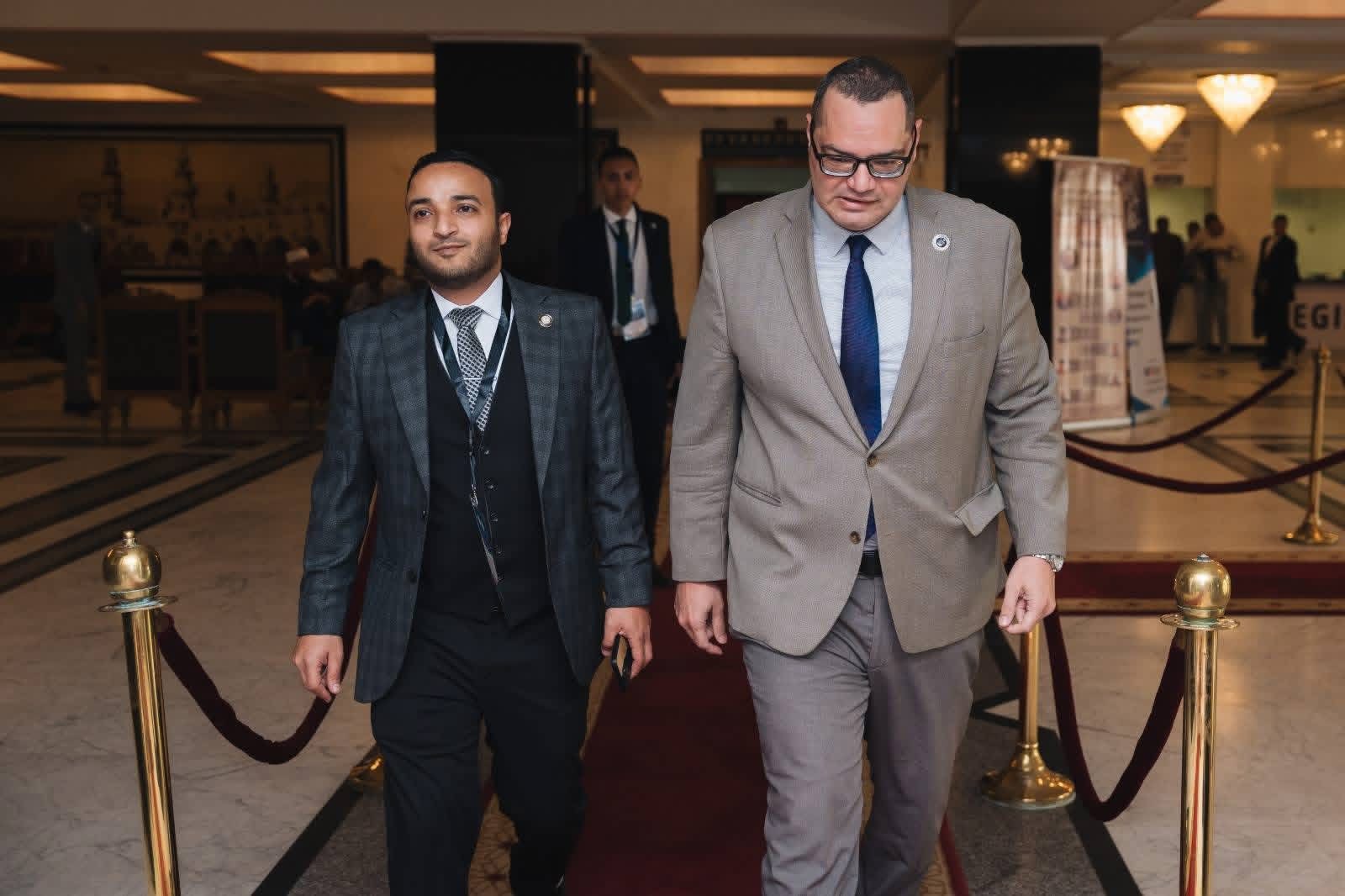
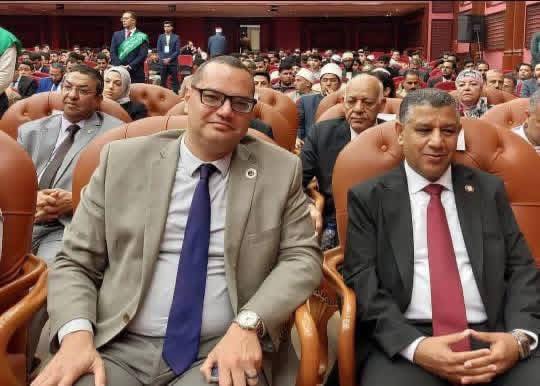
The delegation included Prof. Yassin El-Shazly, Dean of the Faculty of Law; Prof. Hussein Mahrous, Assistant Professor and Head of the Department of Sharia; and Prof. El-Desouki Abdel-Nasser, Assistant Professor in the Department of Islamic Sharia and Director of the Faculty's Quality Assurance Unit.
The conference witnessed a high-level attendance, including His Excellency Prof. Osama Al-Azhari, Minister of Religious Endowments; His Eminence Prof. Nazir Ayyad, Grand Mufti of Egypt; His Eminence Prof. Shawqi Allam, former Grand Mufti of Egypt; His Eminence Prof. Salama Daoud, President of Al-Azhar University; and a host of religious and executive leaders.
The conference proceedings were chaired by Prof. Atta Al-Sunbati, Dean of the Faculty of Sharia and Law in Cairo, in the presence of a distinguished group of deans, faculty staff from Egyptian universities, legal experts, and specialized researchers.
 |
 |
Conference Recommendations
The conference concluded with eighteen recommendations, which are as follows:
18 Recommendations for Protecting the Family Entity and Cohesion, delivered by the Vice President of Al-Azhar University in the closing statement of the Sixth International Conference of the Faculty of Sharia and Law in Cairo
The Vice President of Al-Azhar University for Graduate Studies and Research, Dr. Mahmoud Sadiq, delivered the closing statement of the Sixth International Scientific Conference of the Faculty of Sharia and Law in Cairo, held under the auspices of His Eminence the Grand Imam of Al-Azhar, Dr. Ahmed Al-Tayeb, and the President of the University, His Eminence Dr. Salama Jumaa Daoud, in cooperation with the Faculty of Law at Sultan Agung University in Indonesia, under the title: “Towards Building a Cohesive Society: Protecting the Family Entity in the Face of Contemporary Challenges.”
Dr. Mahmoud Sadiq explained that the conference participants commended the efforts of dedicated Egyptian state institutions, foremost among them Al-Azhar, in curbing the phenomenon of divorce. The research presented at the conference, along with the rich scholarly discussions and in-depth debates, resulted in 18 recommendations aimed at strengthening family cohesion and protecting its structure. These recommendations included:
1- The necessity of reviewing and developing legal frameworks and articles related to family matters to ensure their alignment with contemporary changes, guaranteeing the protection of the rights of all family members, and expediting the resolution of family disputes.
2- The mandatory use of alternative dispute resolution mechanisms, such as mediation and family reconciliation offices, to prevent conflicts arising from family problems before they escalate. The staff of these offices should be trained in Sharia, legal, and psychological aspects to reduce the rising divorce rates. These alternatives should have evidentiary validity and executive power, in a way that contributes to achieving family security and revives the value of forgiveness and social peace among people.
3. Implementing intensive mandatory premarital training programs covering jurisprudential, ethical, psychological, social, financial, and administrative aspects.
4. Integrating concepts of family cohesion and the values of respect and affection into educational curricula at all levels to raise awareness of these concepts among younger generations and reduce the emergence of family discord.
5. Establishing national observatories for family affairs to monitor and analyze phenomena alien to the family and provide periodic reports to decision-makers based on accurate statistical data.
6. Urging educational, training, and reform institutions, as well as all civil society organizations, to adopt a "digital security" curriculum aimed at teaching parents and children how to use online content responsibly and protect family privacy from digital intrusion.
7. Demanding stricter legal penalties for crimes that aim to undermine the family unit online, such as blackmail, incitement to domestic rebellion, or spreading rumors that target the stability of families.
8. Supporting the role of religious and educational institutions in developing their preaching and guidance discourse to be more relevant to contemporary realities, by addressing marital disputes arising from the pressures of digital life and offering balanced legal and psychological solutions.
9. Explicitly stipulating a periodic mechanism for reviewing alimony payments, either automatically or upon request, in the event of significant economic changes that affect the real value of money.
10. Utilizing Islamic economic tools, such as Zakat (obligatory almsgiving) and Waqf (endowment), and financial investment to support families affected by inflation, thereby alleviating the burden on the judiciary, families, and the state.
11. Emphasizing the necessity of integrating economic policies with family legislation, ensuring that family laws are formulated in light of the changing economic reality, thus achieving the principle of social justice and protecting the family as the foundation of society.
12. The need to develop a structured national framework for employing and utilizing artificial intelligence applications in family matters.
13. The necessity of changing the media's approach to women's issues and seriously ceasing the portrayal of the marital relationship as a continuous struggle between men and women, a battle of equals that never ends.
14. The necessity of supporting the efforts exerted by sincere Egyptian state institutions, foremost among them Al-Azhar, and considering the reduction of divorce rates a national goal in which all state institutions participate.
15. The importance of concerted efforts to raise awareness and recognize the danger of imported ideas to our values and customs, the necessity of seriously addressing them, and the need to reject imported theories that do not conform to the established religious and social principles of our societies.
16- The trend towards developing the legal perspective of the Egyptian legislator and judge regarding the rights of visitation, custody, and accompaniment, so that these rights are exclusively for the child and serve their best interests. This necessitates expanding the powers of the trial judge in assessing these rights, as well as considering the principles and general rules of the Court of Cassation as a cornerstone of the legal system in this regard, without relying on rigid legislative texts, in a manner that preserves the family unit and safeguards the rights of its members.
17- Increasing the capacity of family courts by establishing additional circuits in densely populated governorates.
18- Developing mechanisms for enforcing alimony and visitation rulings to ensure effective protection for those granted these rights without prolonging the enforcement process.