.svg)

The Vice President of Ain Shams University for Education and Student Affairs Witnesses the Launch of the African Regional Conference on the Hindi Language, in Cooperation Between the University and the Embassy of India
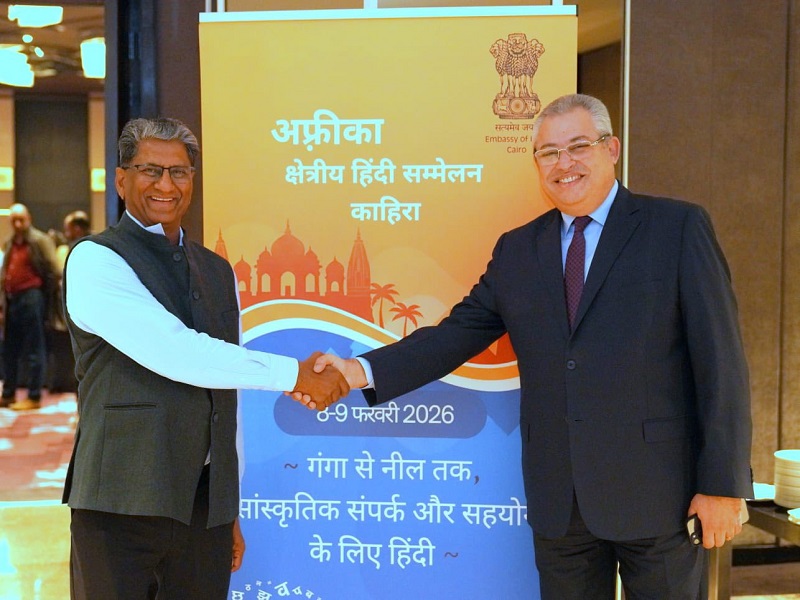
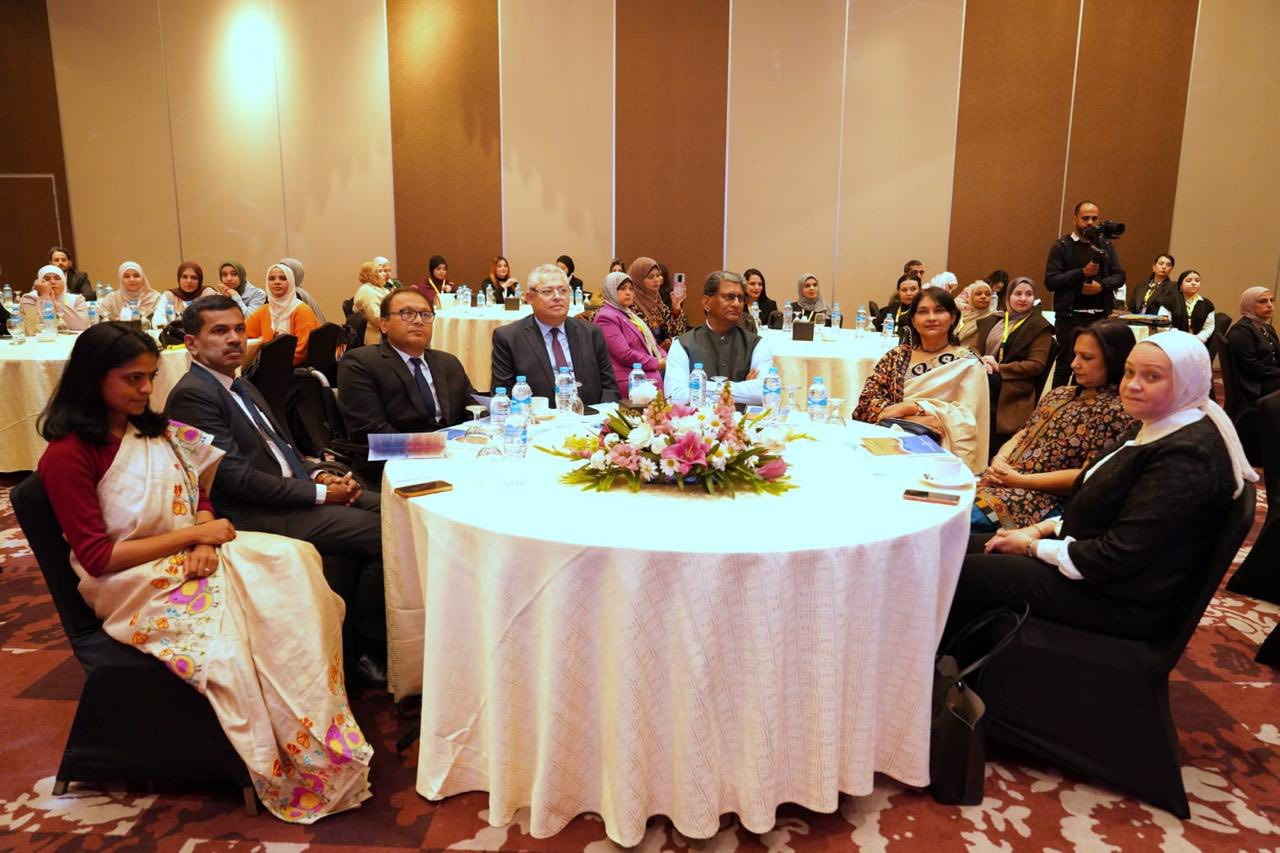
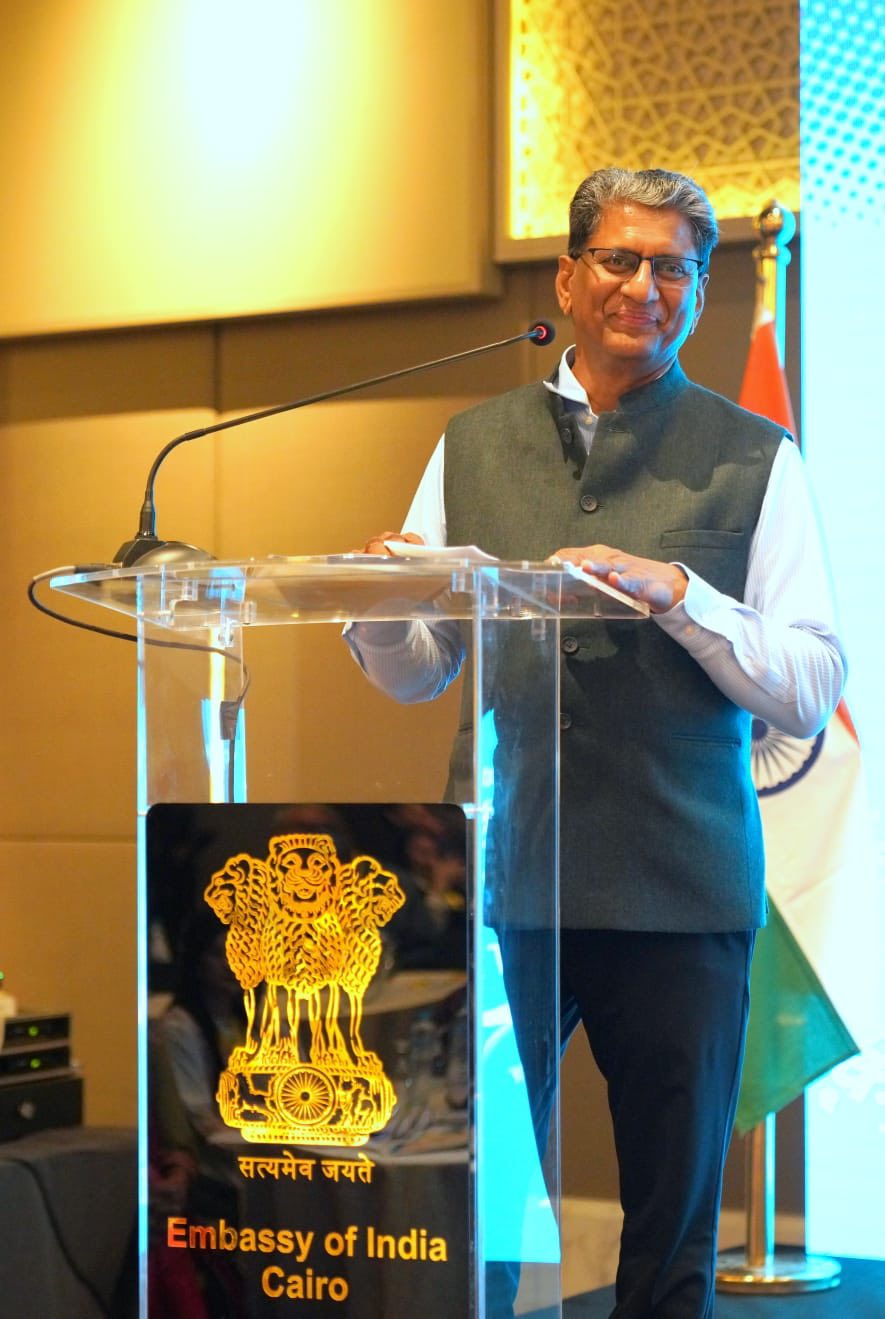
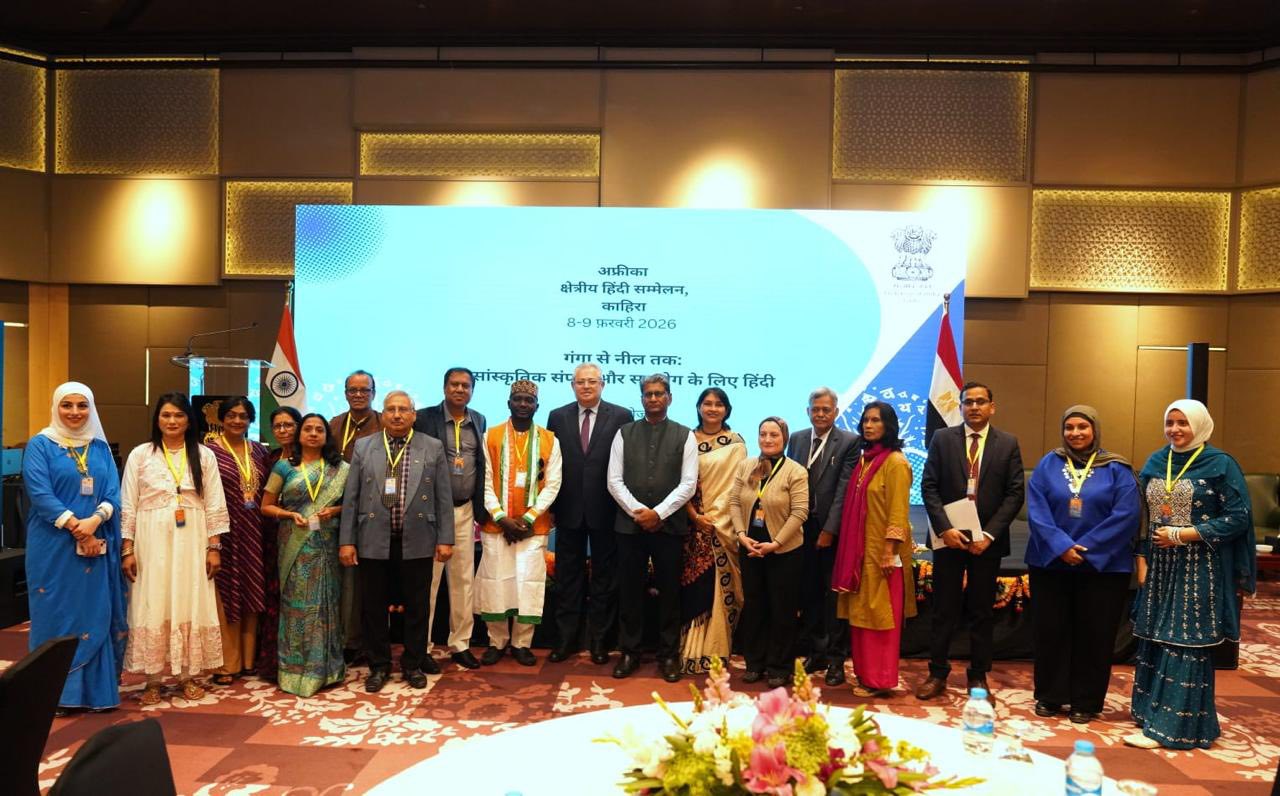
In a step reflecting the depth of cultural and academic relations between India and African countries, the activities of the African Regional Conference on the Hindi Language officially commenced today. The conference is organized by the Embassy of India in Cairo in cooperation with Ain Shams University, under the theme “Hindi for Connectivity and Cultural Cooperation from the Ganges to the Nile.”
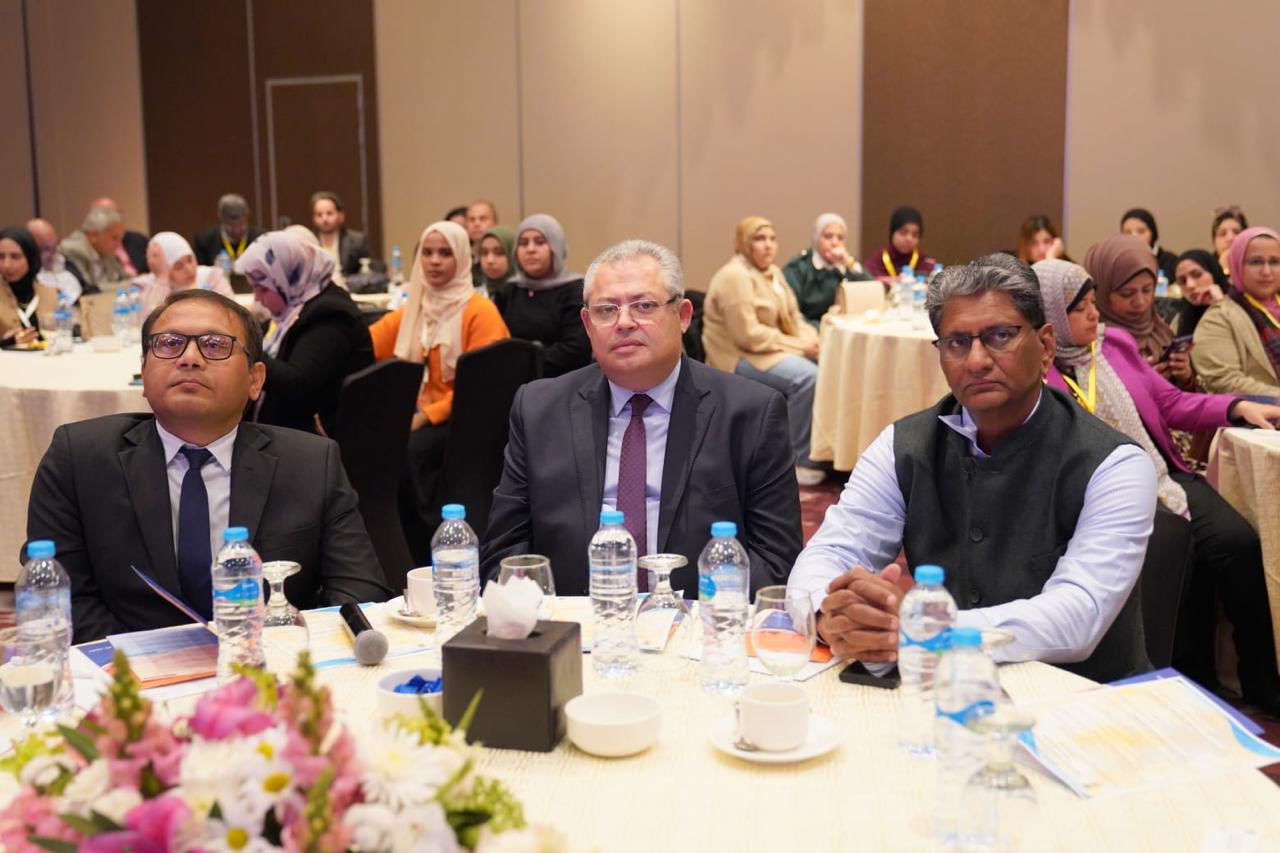
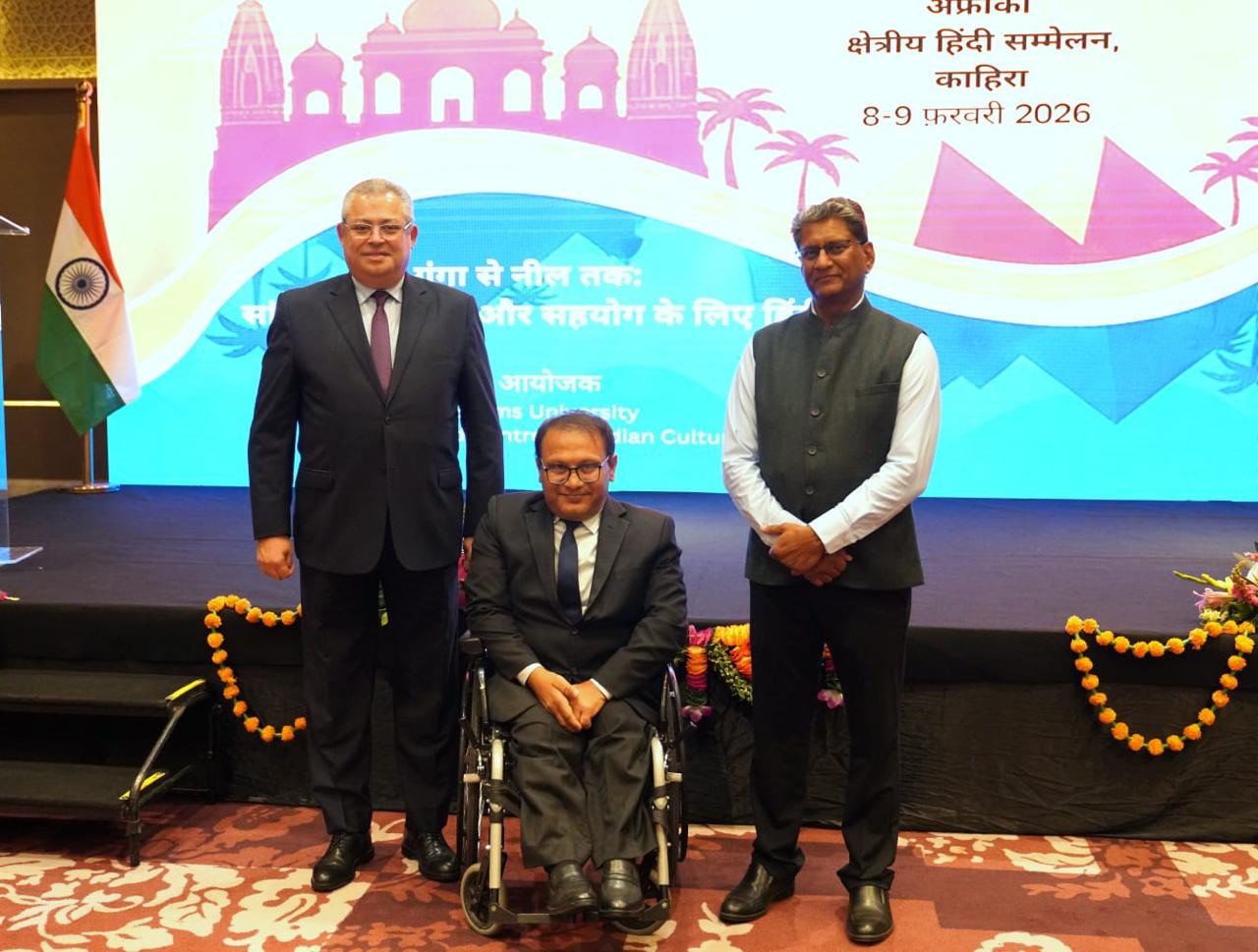
The event was attended by Ms. Neena Malhotra, Deputy Minister of External Affairs of India; H.E. Mr. Suresh K. Reddy, Ambassador of India to Cairo; and Prof. Rami Maher Ghali, Vice President of Ain Shams University for Education and Student Affairs, alongside a distinguished group of academics, specialists, and faculty staff of Ain Shams University.
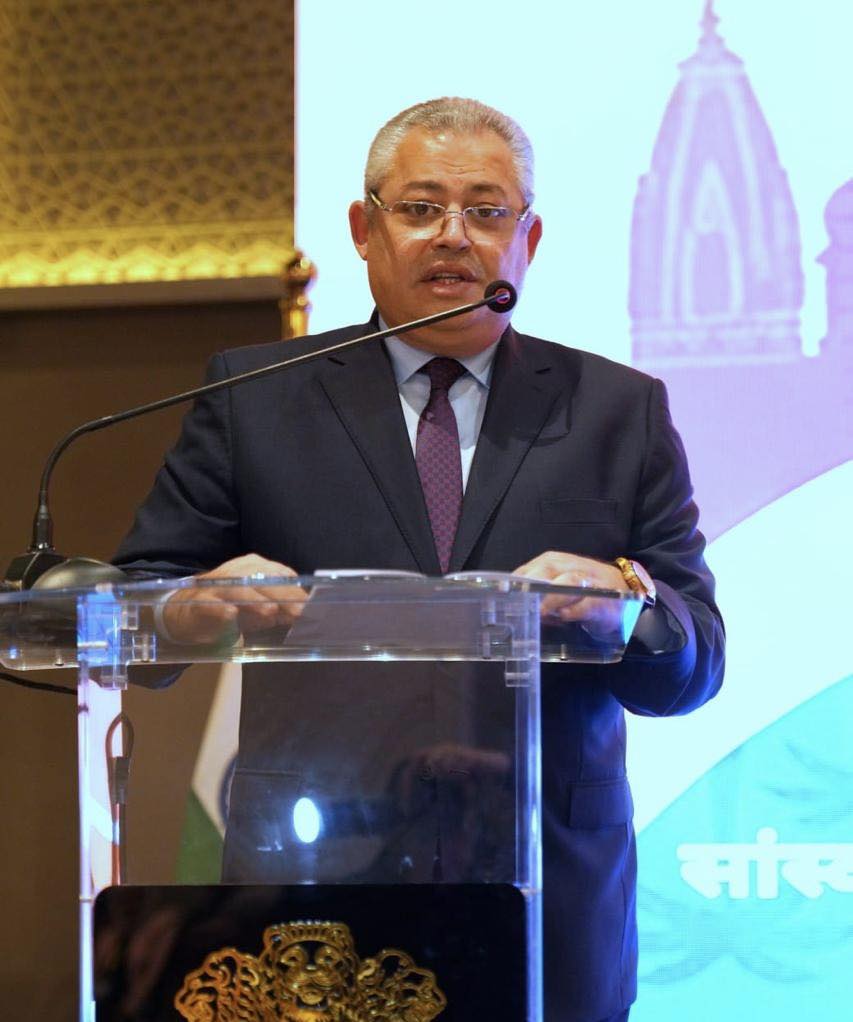
In his speech, Prof. Rami Maher Ghali expressed his pleasure at the Embassy of India’s selection of Ain Shams University as an academic partner for this important regional event, stressing that this choice reflects the University’s active and ongoing commitment to supporting different languages and cultures, promoting Indian language and culture, and strengthening academic and cultural relations between Egypt and India.
 |
 |
 |
||
The Vice President of the University affirmed that Ain Shams University and India share long-standing and steadily growing academic and cultural relations, based on a shared belief in the power of education and scientific exchange, and the importance of enhancing mutual understanding between the two ancient civilizations.
He further explained that, within this framework, Ain Shams University hosts a specialized center for teaching the Hindi language, where more than 400 students are currently studying Hindi and Urdu, reflecting the increasing demand for learning the language and students’ growing interest in Indian culture.
In the same context, he noted that Ain Shams University is proud to host nearly 500 Indian students who are currently enrolled in its medical faculties, a fact that underscores the depth of educational cooperation as well as the strong human and people-to-people ties between the two countries.
He emphasized that the African Regional Conference on the Hindi Language represents an important new step in strengthening the Egyptian Indian partnership, as it provides a distinguished platform for academic dialogue and the exchange of knowledge and expertise, thereby contributing to deeper cultural and educational cooperation between both sides.
Prof. Ghali also pointed out that Ain Shams University is a comprehensive educational institution offering outstanding academic programs across a wide range of disciplines, including medicine, dentistry, pharmacy, engineering, artificial intelligence, business administration, and many other fields. He welcomed Indian students to enroll in the University’s undergraduate and postgraduate programs and to benefit from the high quality of education and the available research opportunities.
 |
 |
 |
||
At the conclusion of his remarks, Prof. Rami Maher Ghali expressed his sincere appreciation to the Embassy of India for its continued trust in Ain Shams University and its fruitful partnership, warmly welcoming all participants and wishing them a successful and productive conference, as well as rich and constructive academic dialogue.
It is worth noting that the conference, which runs over two days, brings together a distinguished group of Hindi language professors, academics, writers, teachers, and enthusiasts from various African countries and beyond. The conference aims to promote the Hindi language globally and to enhance cultural and academic cooperation among the participating countries.
The conference also serves as an important platform for exchanging ideas and perspectives on the Hindi language and its growing global role. Hindi is one of the most widely spoken languages in the world, and its significance extends beyond being a means of communication to embodying a rich reservoir of Indian cultural heritage, values, literature, and philosophy.
Throughout the conference sessions, participants discuss a number of contemporary issues, including the role of the Hindi language in enhancing cultural communication, its position in international relations and cultural diplomacy, and the impact of Indian cinema in spreading the language and culture. The conference is expected to play an effective role in supporting the Hindi language, strengthening cultural relations between India and Egypt, and reinforcing bridges of communication between peoples.