
.svg)

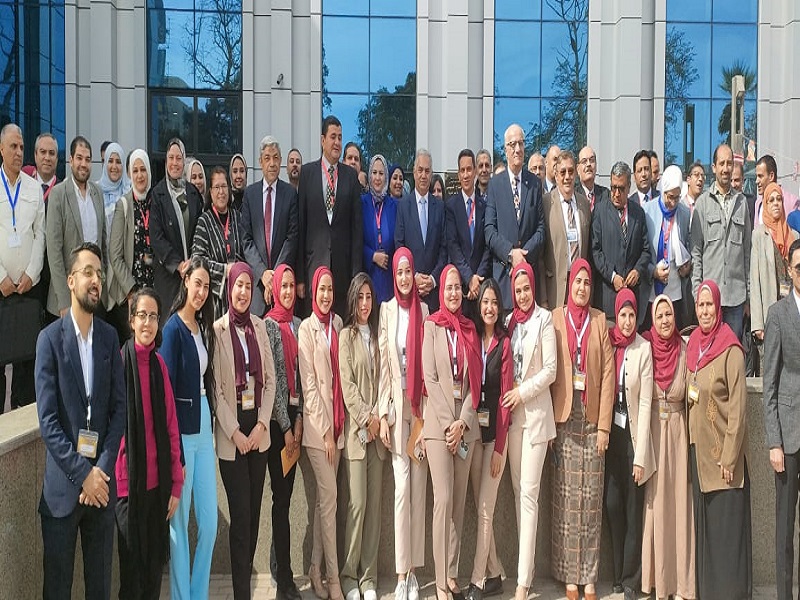
The Closing of the Conference “Inscriptions, Writings, and Emblems on Architectural Structures Across the Ages” at the Faculty of Archaeology
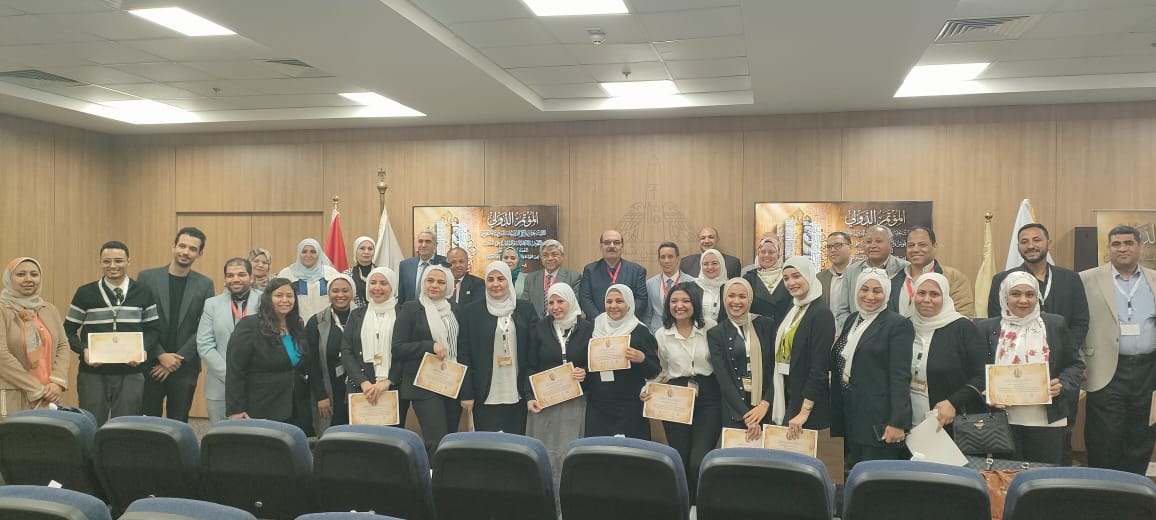
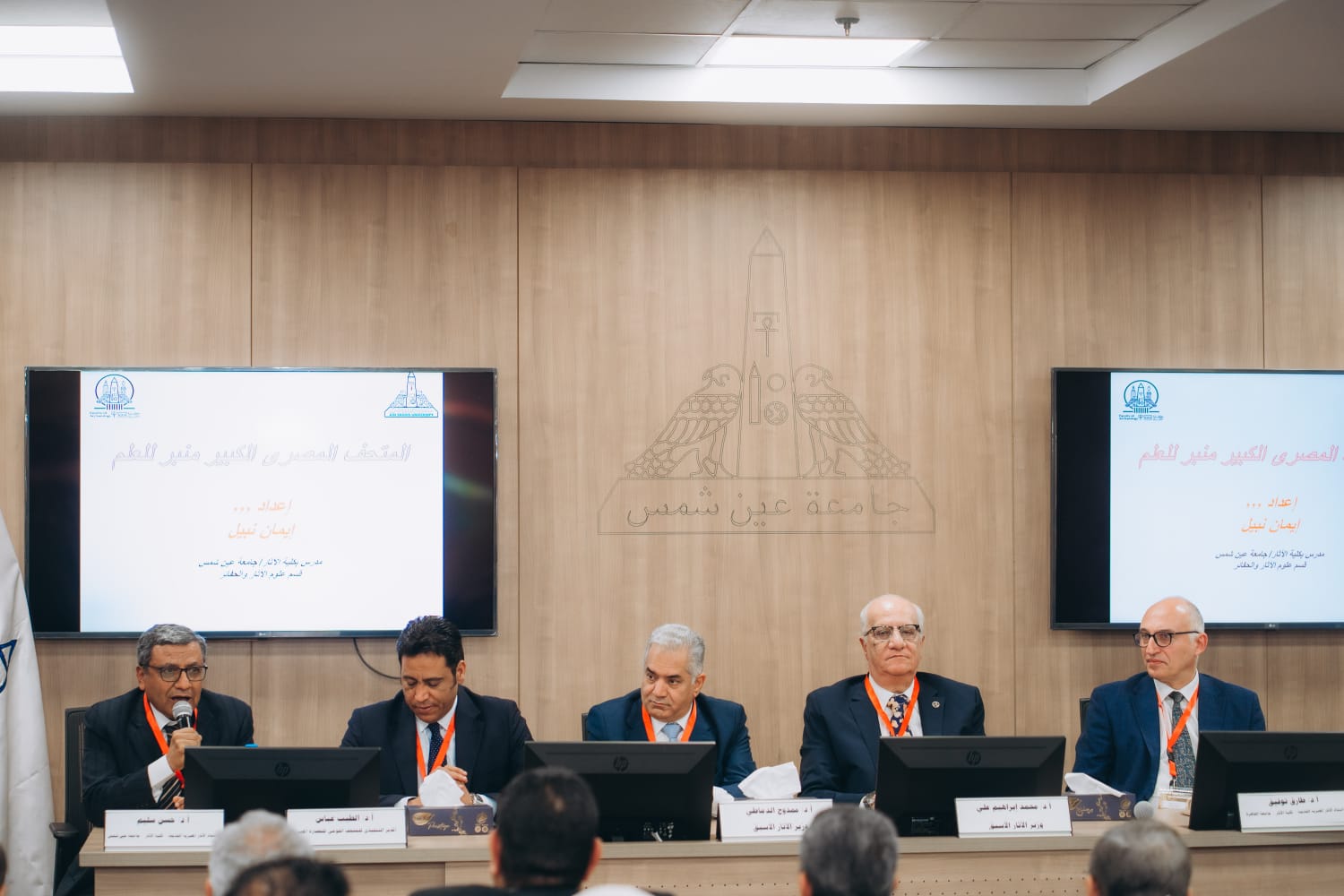
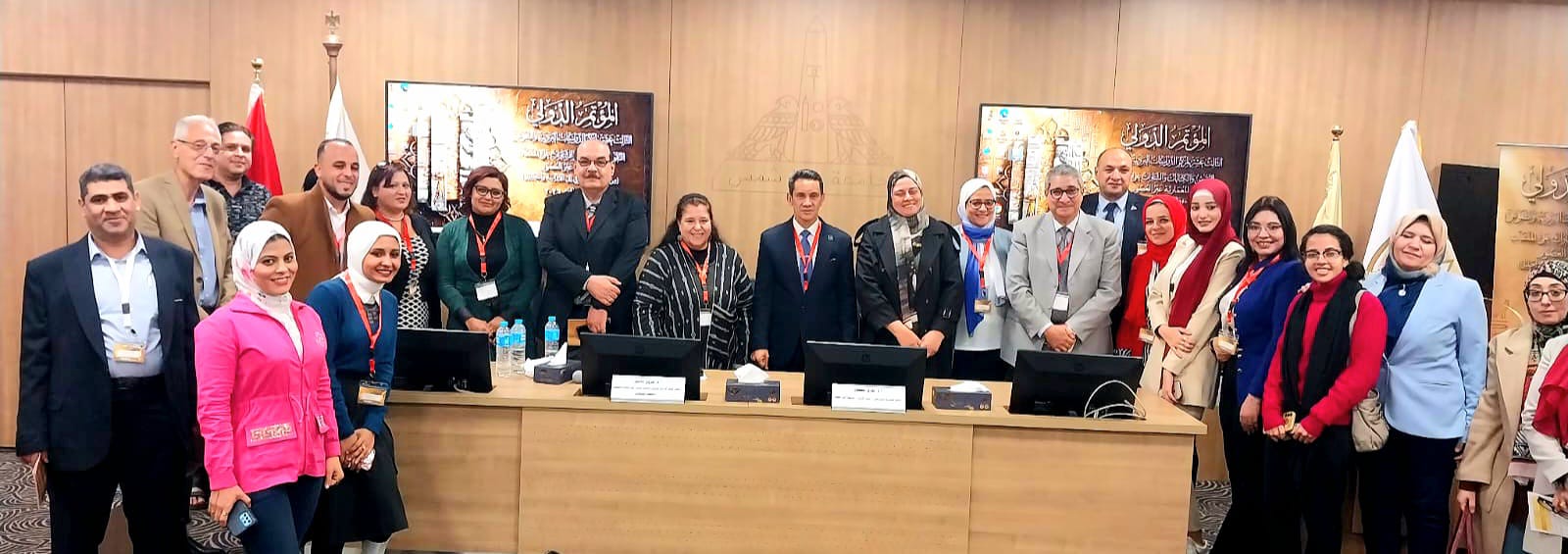
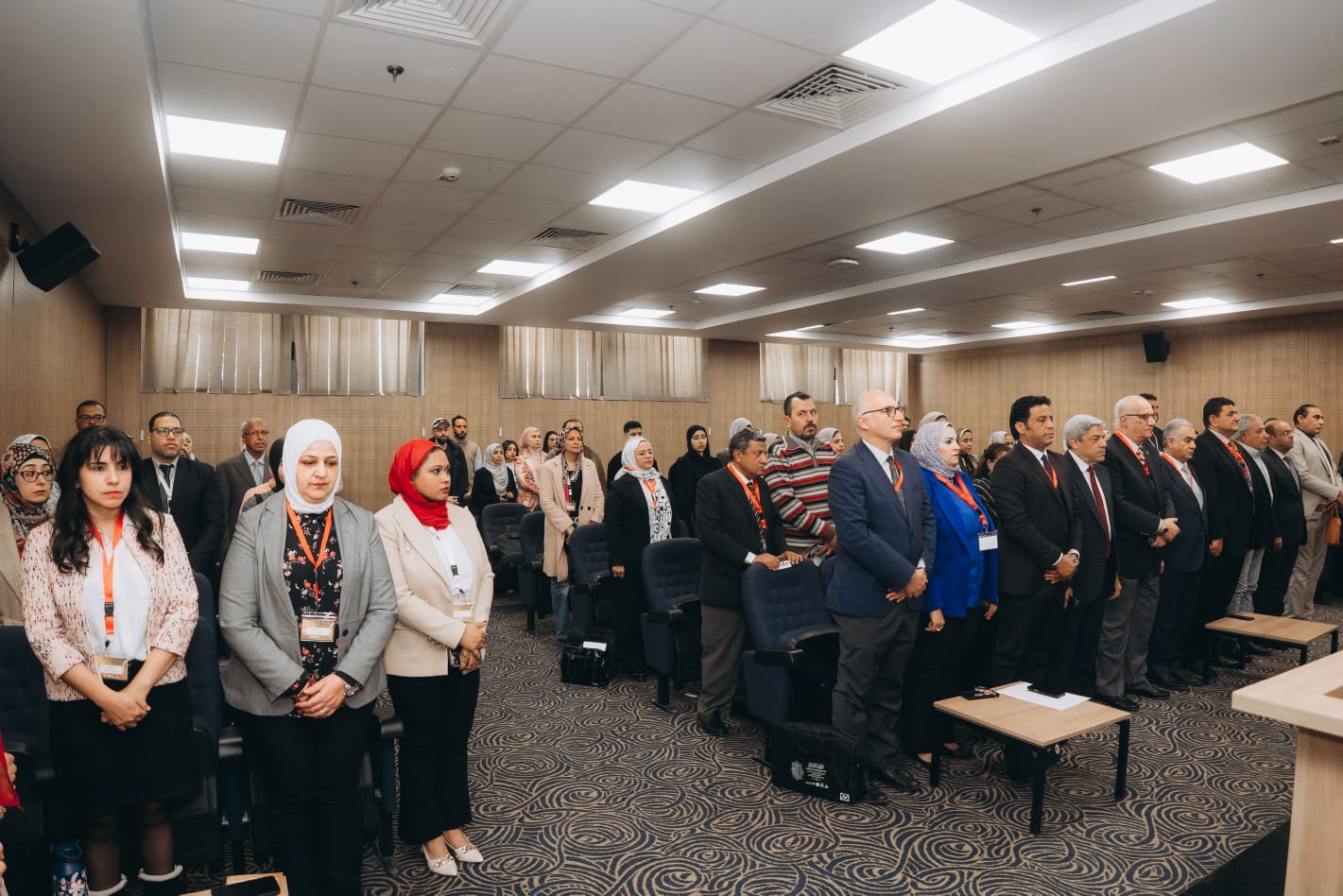
The activities of the 13th International Conference of the Papyrological Studies and Inscriptions Center at the Faculty of Archaeology, Ain Shams University, concluded yesterday, Monday, 9 February 2026. The conference was held under the title “Inscriptions, Writings, and Emblems on Architectural Structures Across the Ages (From Reading and Documentation to Study and Analysis),” over two days, 8–9 February 2026, at the University Information Network headquarters on the University’s main campus.
The conference was organized within the framework of a national vision aimed at linking academic studies with labor market needs, under the patronage of Prof. Mohamed Diaa Zain El-Abedeen, President of the University, and Prof. Ghada Farouk, Vice President for Community Service and Environmental Development. The event was supervised by Prof. Hossam Tantawy, Acting Dean of the Faculty, coordinated by Dr. Eman Nabil, Director of the Center, and supported by Mentor Group as the Gold Sponsor and Arab Contractors as the Silver Sponsor.
 |
 |
 |
 |
The conference featured intensive scientific activities, during which 59 researchers and experts from Egypt and several Arab countries, participating either in person or remotely, presented a range of specialized studies. The sessions addressed the study of inscriptions, writings, and emblems on architectural structures across different historical periods, focusing on their reading and documentation and advancing toward their analysis and interpretation within historical, civilizational, and scientific contexts.
Key recommendations issued by the conference included:
- Sustaining scientific events: Emphasizing the importance of organizing regular seminars, workshops, and conferences to highlight the role of archaeologists and conservators in managing and preserving heritage, particularly at the Grand Egyptian Museum.
- Training and educating tour guides: Organizing workshops and lectures for tour guides, in coordination with relevant syndicates, to enable accurate and scientific communication of museum display narratives to visitors.
- Recognizing architectural inscriptions as historical documents: Affirming their status as primary historical sources, no less significant than written records, due to their documented civilizational value across ages.
- Comprehensive digital documentation: Surveying and documenting architectural inscriptions using advanced digital techniques—such as high-resolution photography and 3D scanning—and creating digital databases to preserve them for future generations.
- Adopting a scientific approach to conservation: Applying precise conservation methods that consider material study, execution techniques, and historical context, while preserving artistic and archaeological value.
- Preventing unscientific interventions: Countering random or poorly planned interventions that may obscure, damage, or diminish the historical value of inscriptions.
- Legislative framework for heritage protection: Establishing clear laws and regulations that criminalize damage to architectural inscriptions and ensure their protection as an integral part of national heritage.
- Promoting interdisciplinary studies: Encouraging collaboration among conservation, archaeology, history, language, and architecture disciplines to achieve deeper understanding of inscriptions and their meanings.
- Specialized training programs: Developing training programs to enhance the skills of conservators and researchers in studying and preserving architectural inscriptions according to the latest scientific standards.
- Raising public awareness: Enhancing societal awareness of the importance of architectural inscriptions as a visual and historical memory of nations and a tool for understanding the evolution of civilizations.
- Encouraging scientific research and academic publishing: Supporting specialized studies at the local and international levels to deepen knowledge in the field of inscriptions and architectural writings.
- Integrating heritage into cultural and tourism development: Incorporating architectural inscriptions into cultural and tourism development plans while safeguarding them from unplanned exploitation.
- Local and international cooperation: Strengthening partnerships among research institutions and specialized centers to exchange expertise and develop joint strategies to protect this unique heritage.
- Establishing a unified digital archive: Proposing the creation of a comprehensive digital database and archive for architectural inscriptions to facilitate access and protect them from deterioration and natural disasters.
- Comparative studies across eras and civilizations: Encouraging comparative analytical studies to highlight cultural interactions and influences through inscriptions as a shared civilizational language.
In conclusion, emphasis was placed on the pivotal role of the Faculty of Archaeology and the Center for Papyrological Studies and Inscriptions in supporting scientific and applied efforts to protect architectural inscriptions and writings as a living record of human memory and an authentic witness to the development of civilizations across the ages.
In his closing remarks, Prof. Hossam Tantawy, Dean of the Faculty of Archaeology, affirmed that the conference represented a high-level scientific platform for exchanging expertise and ideas, and that its recommendations will contribute significantly to advancing specialized scientific research and safeguarding cultural heritage.