.svg)

The Faculty of Engineering hosts a meeting of the Board of Directors of the “SPRING DUO” project
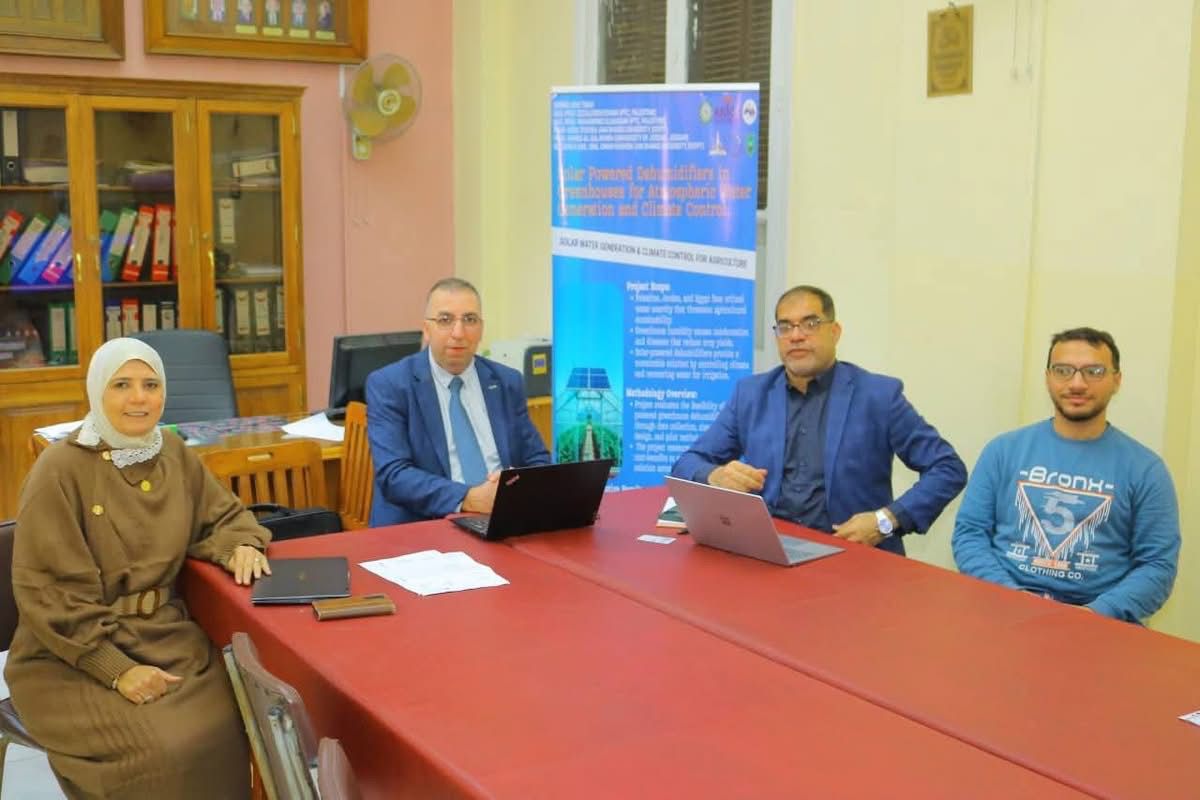
As part of its commitment to supporting applied scientific research and strengthening regional and international partnerships, while aligning education and research with community needs and sustainable development, the Faculty of Engineering at Ain Shams University hosted a meeting of the Board of Directors of the Spring Dew project, under the leadership of Prof. Amr Shaat.
Spring Dew is a distinguished regional research project funded by the Arab Alliances for Scientific Research and Innovation. It aims to develop innovative solutions for extracting moisture from the air and generating water inside agricultural greenhouses, contributing to water conservation, reducing the spread of fungal diseases, and enhancing the efficiency and sustainability of agricultural production. The project brings together partners from Egypt, Jordan, and Palestine.
 |
 |
The meeting was attended by Prof. Ezzedine Adwan, the project’s lead coordinator from Palestine; Prof. Hoda Sousa, the project coordinator in Egypt and Head of the Irrigation and Hydraulics Department at the Faculty of Engineering, Ain Shams University; and Dr. Ahmad Al-Salaymeh, the project coordinator in Jordan from the University of Jordan, in addition to members of the project’s board.
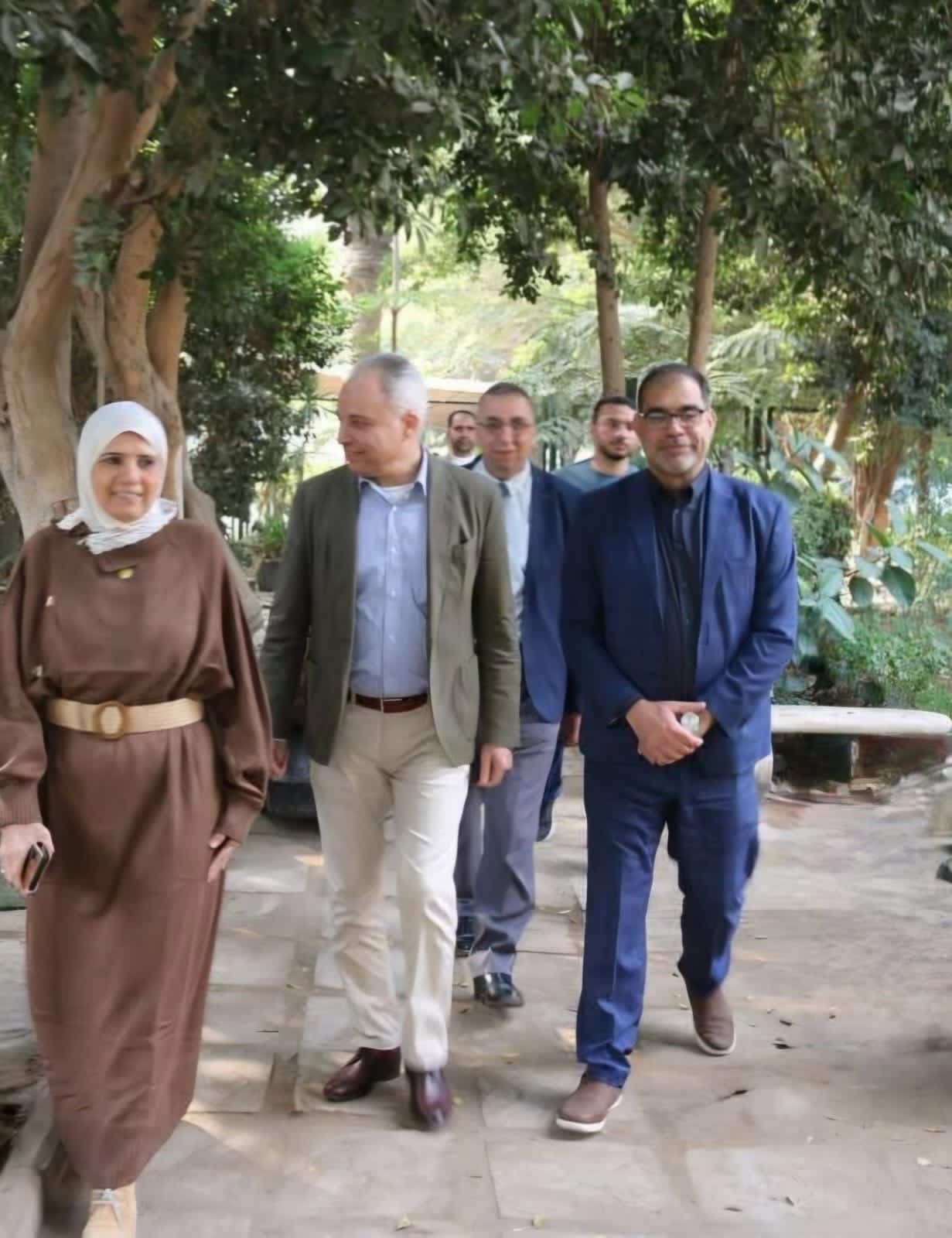
During the visit, Prof. Amr Shaat toured the smart agricultural greenhouse implemented with support from the project, expressing his appreciation for the progress achieved and reaffirming the faculty’s full support to overcome any challenges and ensure the project’s research and practical objectives are met.
For his part, Prof. Ezzedine Adwan outlined the project’s core goals, which focus on producing water from air inside greenhouses by reducing humidity levels. This approach helps limit humidity-related fungal diseases and reduces water consumption for irrigation, thereby improving agricultural efficiency and sustainability.
Prof. Hoda Sousa welcomed the hosting of this important scientific meeting at Ain Shams University, praising the efforts of the university administration and the funding body in reaching this advanced stage of implementation. She also expressed hope that the project would serve as a starting point for supporting desert development and promoting sustainable water resource management, particularly considering growing population pressures and climate change challenges.
Hosting the project’s board meeting reflects the faculty’s growing commitment to adopting innovative scientific solutions that support sustainable agriculture and environmental protection, while reinforcing its position among regional and international universities that pursue practical strategies to address climate change and reduce carbon emissions.
The project represents an advanced applied model integrating scientific research with real-world implementation, as it enables water generation from air within greenhouses without relying on energy-intensive conventional water sources. This contributes to lowering the carbon footprint associated with irrigation, transportation, and treatment processes, while promoting the responsible use of natural resources.
Reducing humidity inside greenhouses also decreases dependence on pesticides and fungal disease control measures, positively impacting environmental health and the quality of agricultural output.
Ain Shams University’s participation, through the Faculty of Engineering and the Irrigation and Hydraulics Department, underscores its commitment to achieving the Sustainable Development Goals, particularly those related to sustainable water management, food security, and climate action.
The implementation of a smart greenhouse on campus further strengthens the university’s role as a hub for innovation and technology transfer, while providing valuable training and research opportunities for students and researchers in the fields of smart agriculture and environmental engineering.