

Former Minister of Culture Helmy El-Namnam Hosted by the Faculty of Arts for a Seminar on Culture and Artificial Intelligence
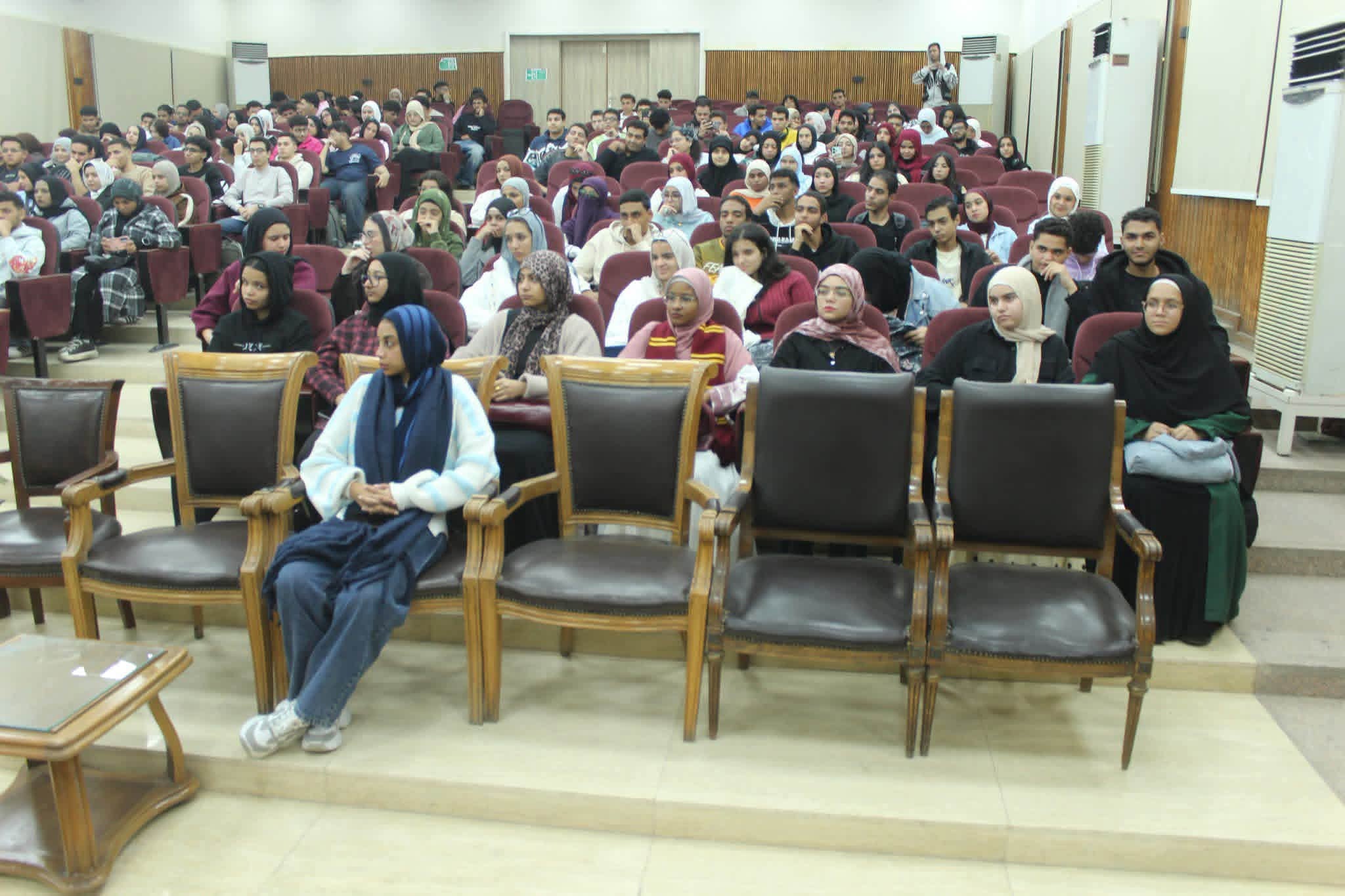
Under the patronage of Prof. Mohamed Diaa Zain El-Abedeen, President of Ain Shams University, and Prof. Hanan Kamel Metwally, Dean of the faculty of Arts, the Faculty hosted journalist, intellectual, and former Minister of Culture Helmy El-Namnam for a seminar entitled “Exploring the Future of Culture and the Challenges of Artificial Intelligence.”
In her opening remarks, Prof. Hanan Kamel Metwally welcomed Mr. Helmy El-Namnam and expressed her pleasure at hosting him. She noted that the event held special significance as he is an alumnus of the Faculty of Arts at Ain Shams University, where he began his academic journey before pursuing a distinguished career through dedication and hard work, eventually becoming one of the prominent figures in Egyptian cultural life and serving as Minister of Culture.
The Dean emphasized that Mr. El-Namnam’s career serves as an inspiring example for the Faculty’s students, reflecting determination and perseverance. She stressed the importance of learning from successful figures who began their journeys through education and hard work, overcame challenges, and ultimately reached influential positions in society, offering students real-life experiences from which they can draw valuable lessons and inspiration.
 |
 |
 |
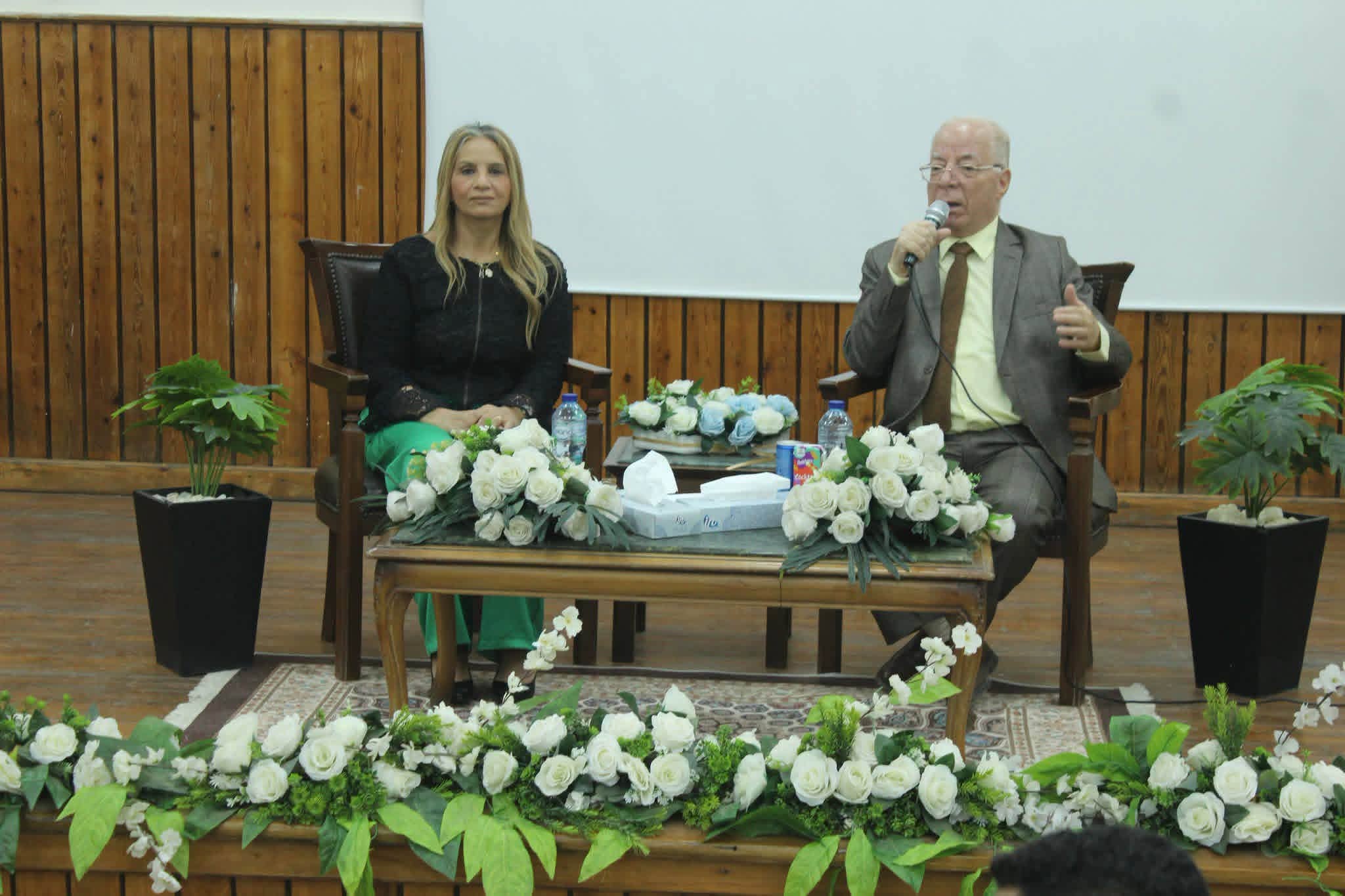
For his part, Mr. Helmy El-Namnam expressed his pride in returning to the Faculty of Arts and Ain Shams University, both of which played an important role in his early life and intellectual and personal development. He recalled memories of places associated with his youth and people he had known during those years, whose influence remains deeply rooted in his memory.
He emphasized that his connection to the University and the Faculty extends beyond memories of his student years, reflecting a profound sense of belonging and gratitude toward an institution that helped shape his awareness and the beginnings of his career. He expressed his happiness at returning, this time as a guest engaging with new generations of students.
El-Namnam then turned to the seminar’s main theme, delivering an extensive discussion on the current state and future of Egyptian culture amid the widespread use of social media and the rapid advancement of artificial intelligence technologies. He highlighted the opportunities these developments offer for exploring global cultures and exchanging knowledge and ideas, while also addressing the challenges they pose to young people’s awareness and their ability to preserve their cultural identity.
He discussed artificial intelligence’s ability to generate written, audio, and visual content without full human involvement. He explained that it has become possible to create texts, images, audio recordings, and videos that closely resemble reality, depicting events, voices, or scenes that never actually occurred but appear authentic to audiences. This makes evaluating such content increasingly difficult and raises new questions about how to verify what we see, hear, and read.
He explained that the risks extend beyond the spread of misinformation to undermining people’s perception of reality itself and fostering widespread doubt, even about established cultural, historical, religious, and social foundations. When individuals can no longer confidently trust what they see or hear, their ability to distinguish truth from falsehood diminishes, leaving their awareness increasingly vulnerable to confusion and manipulation by the constant flow of content.
In this context, El-Namnam raised questions about young people’s ability to distinguish credible information from falsehoods and how they can navigate the overwhelming volume of information and artificially generated content, particularly given the relative shortage of documented information in the Arab world and the difficulties associated with accessing it. He emphasized the importance of knowledge, cultural awareness, consulting reliable sources, and developing critical thinking, research, and comparative analysis skills, enabling young people to become informed individuals capable of understanding, evaluating, and making independent judgments rather than merely accepting everything presented to them.
He also addressed the opportunities social media provides for engaging with other cultures, broadening young people’s horizons, and discovering diverse human experiences and intellectual perspectives. He stressed that benefiting from these opportunities does not require abandoning one’s own culture or distancing oneself from one’s roots. Rather, it begins with understanding and taking pride in Egyptian civilization and appreciating its value, allowing individuals to engage confidently with the world and embrace enriching aspects of other cultures without compromising their distinct cultural identity.
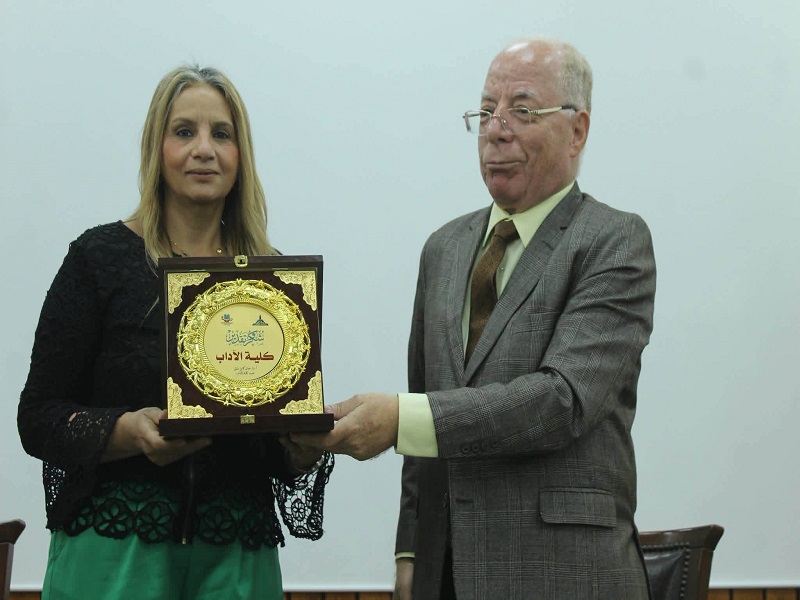
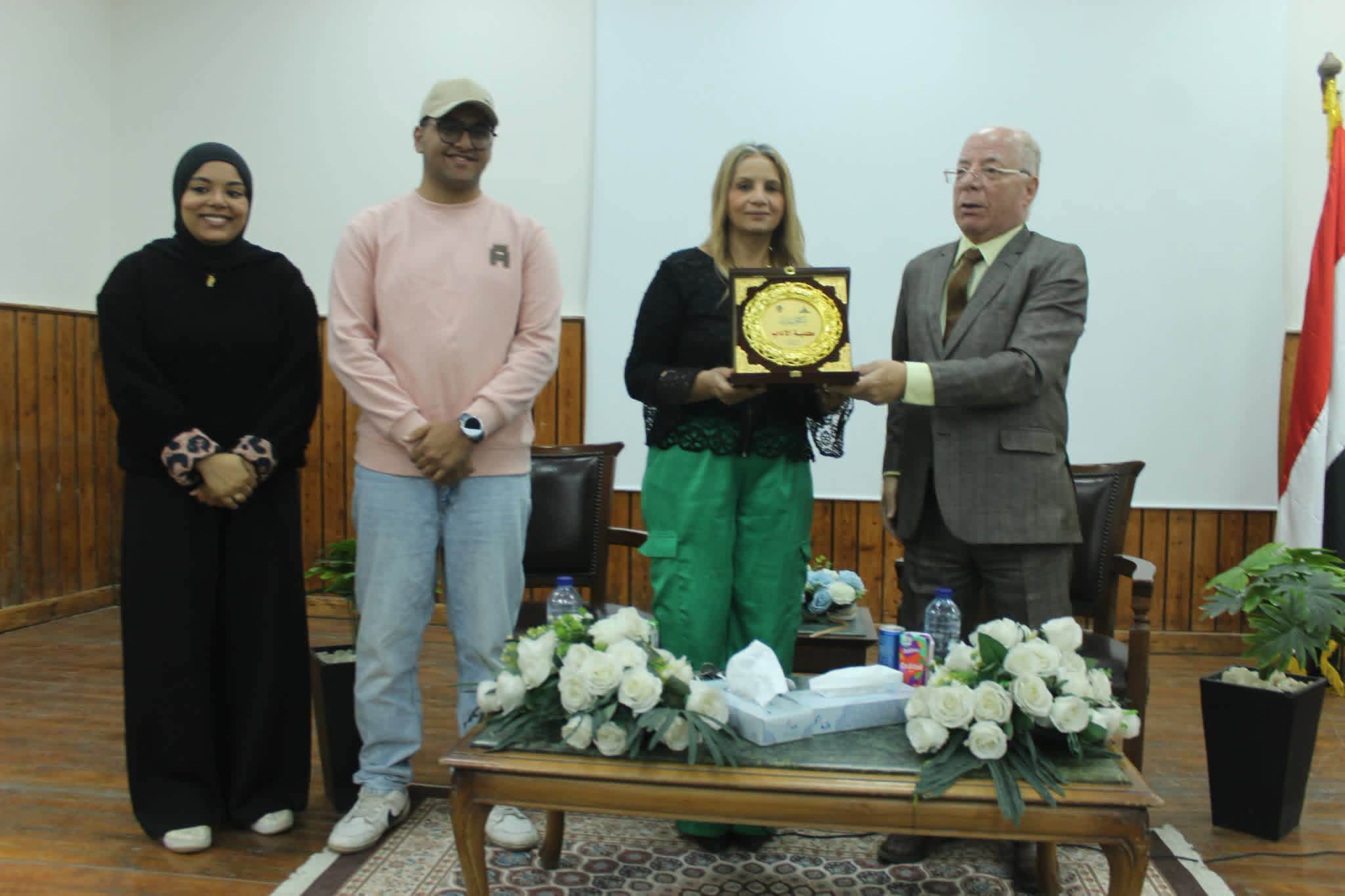
At the conclusion of the seminar, the Dean of the Faculty honored Mr. Helmy El-Namnam and presented him with the Faculty's commemorative shield in recognition of his cultural and intellectual career and contributions to public life. She also presented him with one of her published works, and commemorative photographs were taken.