.svg)

Ain Shams University Discusses "National Security Challenges Amidst Ongoing Regional Changes" During Cultural Season Events
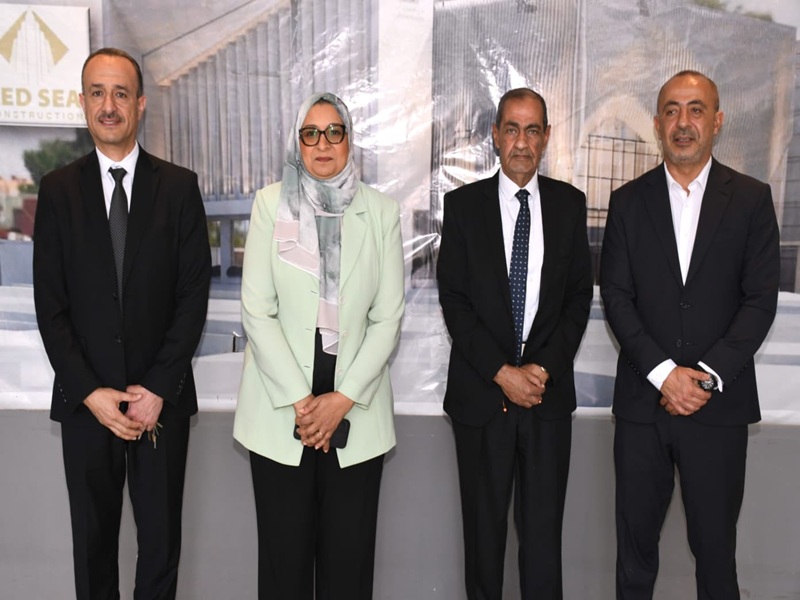
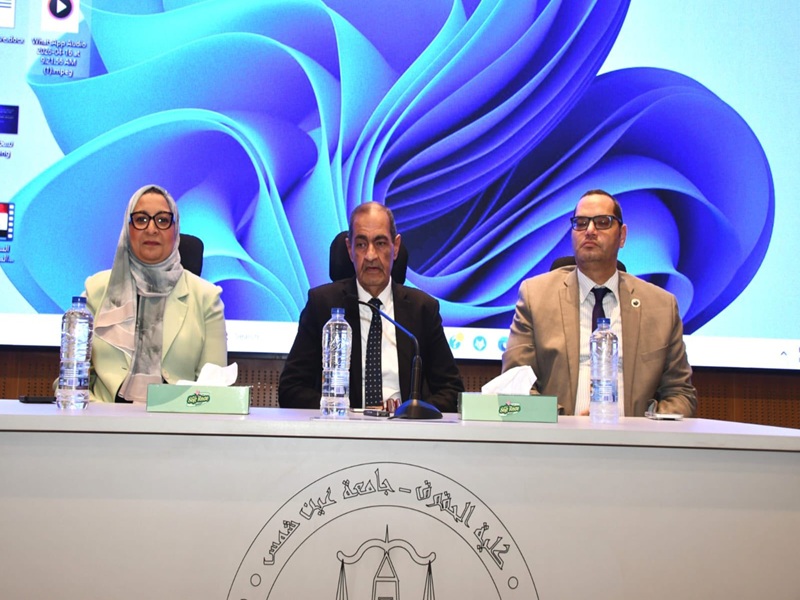
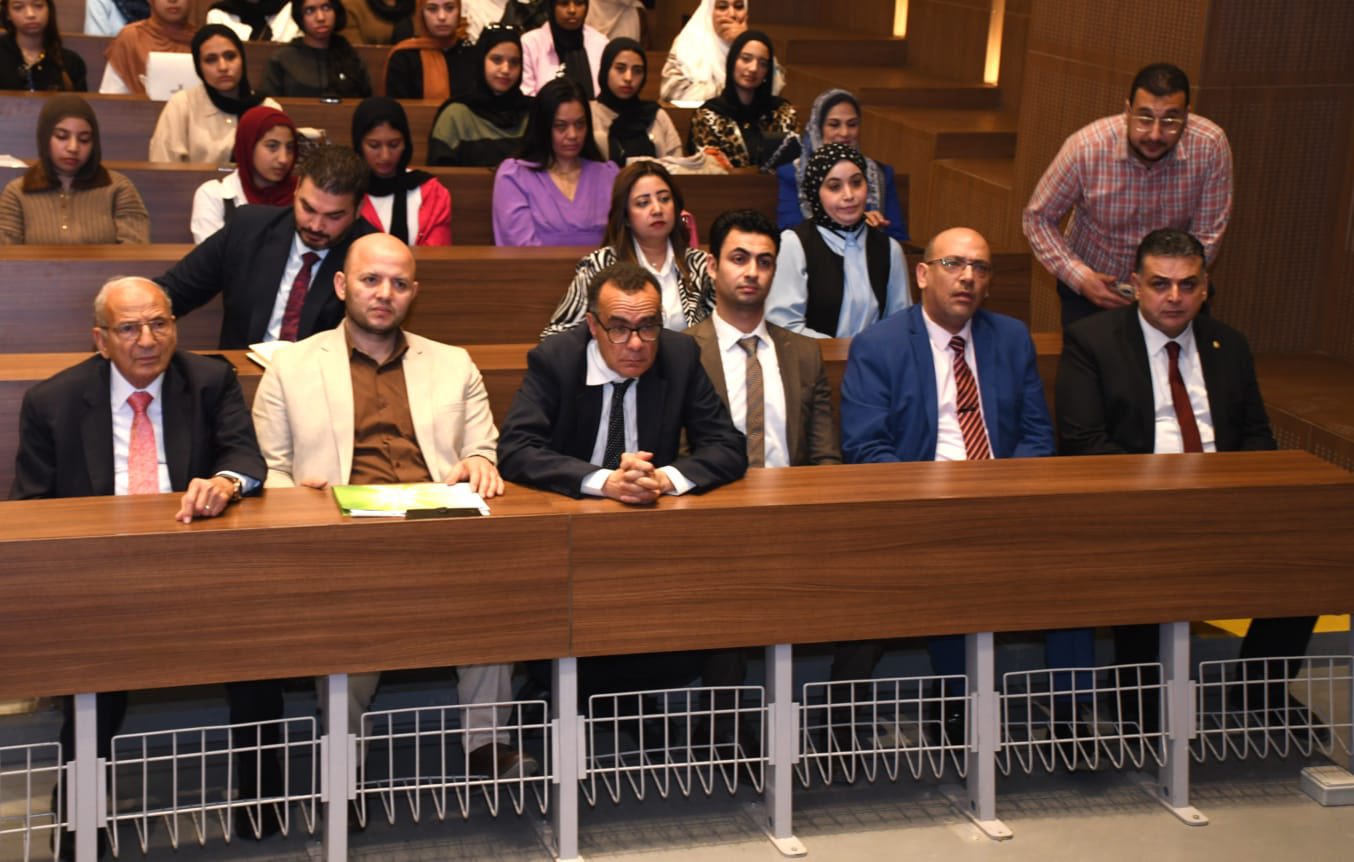
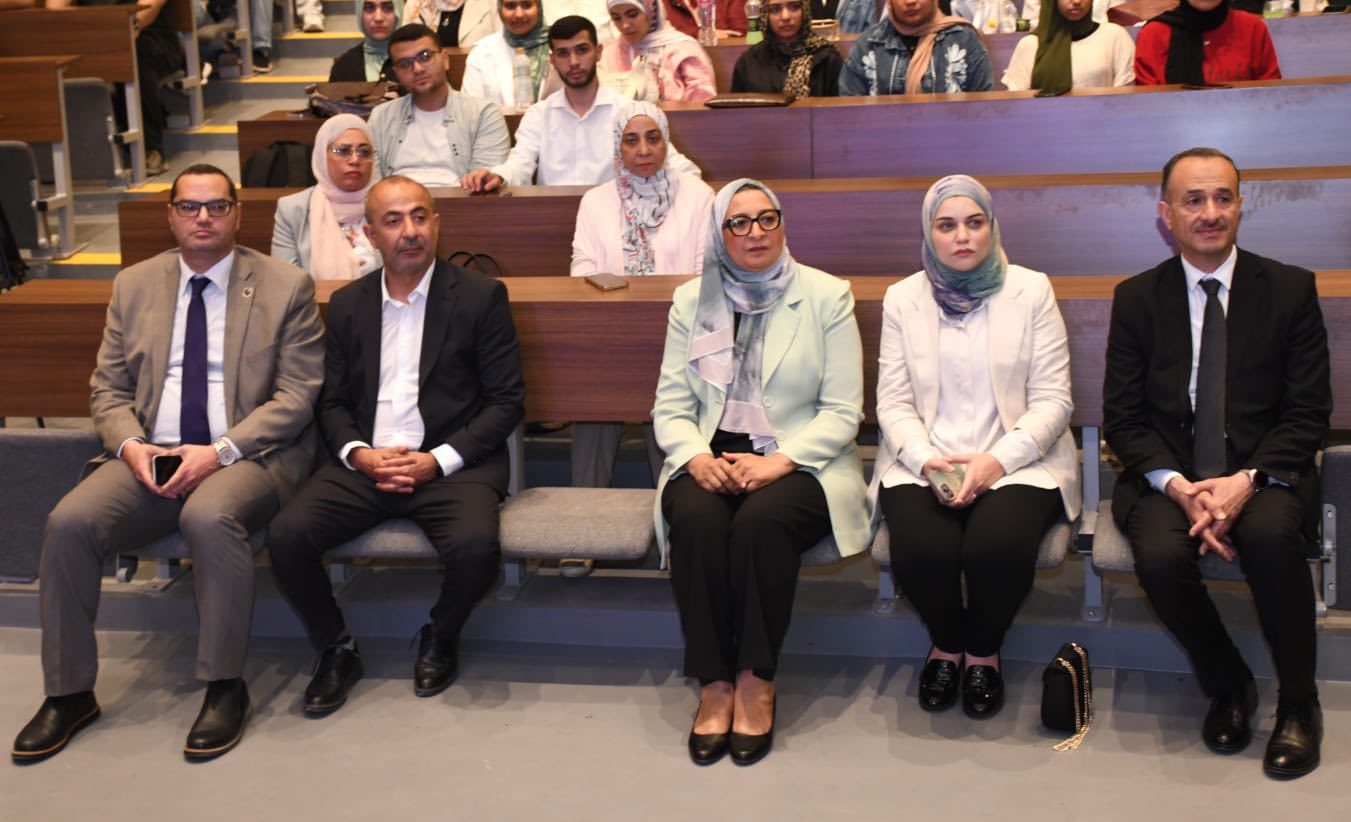
As part of the cultural season activities of Ain Shams University, Prof. Ghada Farouk, Vice President of the University for Community Service and Environmental Development, inaugurated the seminar “National Security Challenges in Light of Current Regional Changes,” during which journalist Mr. Osama El-Dalil, Head of the International Affairs Department at Al-Ahram Al-Arabi magazine and an Egyptian geopolitical analyst, spoke, in the presence of Prof. Yassin El-Shazly, Dean of the Faculty of Law, Prof. Yumna Safwat, Dean of the Faculty of Languages, Prof. Heba Barakat, Vice Dean of the Faculty of Girls, Prof. Mohamed Morsi, Vice Dean of the Faculty of Business, Prof. Hanan Salem, Vice Dean of the Faculty of Arts, and Major General Hossam El-Sherbiny, Assistant Secretary of the University for Community Service and Environmental Development.
 |
 |
 |
||
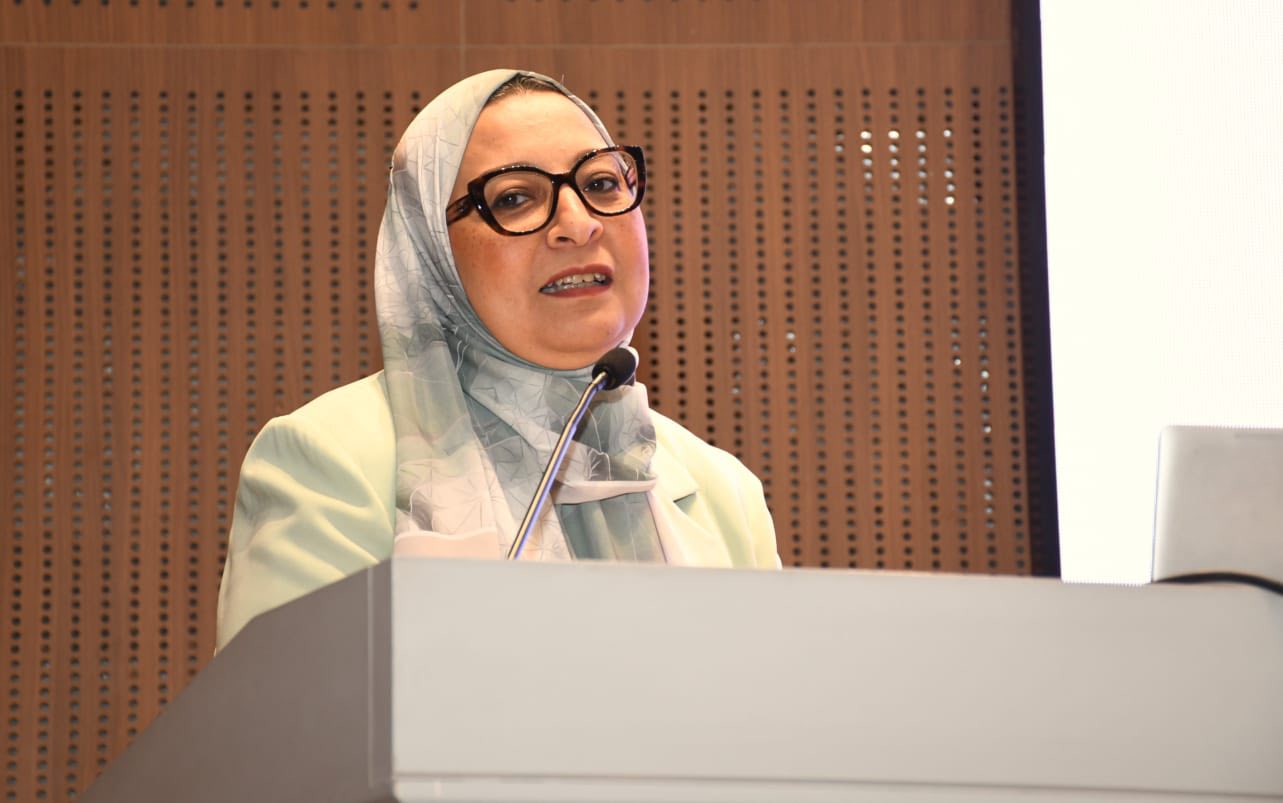
In her opening remarks, Prof. Ghada Farouk emphasized the sector's commitment to its social and educational role towards the university community by organizing events that foster dialogue and discussion on national and regional issues affecting our present and future. Foremost among these is the issue of national security, which has become more comprehensive and complex than ever before, as the region witnesses rapid changes and intertwined challenges. This necessitates raising awareness among our youth and empowering them to understand the nature of these challenges and address them with awareness and responsibility.
She also expressed her appreciation for hosting Mr. Osama El-Dalil at the symposium, given his expertise in analyzing international political issues related to national security, particularly in the Middle East region.
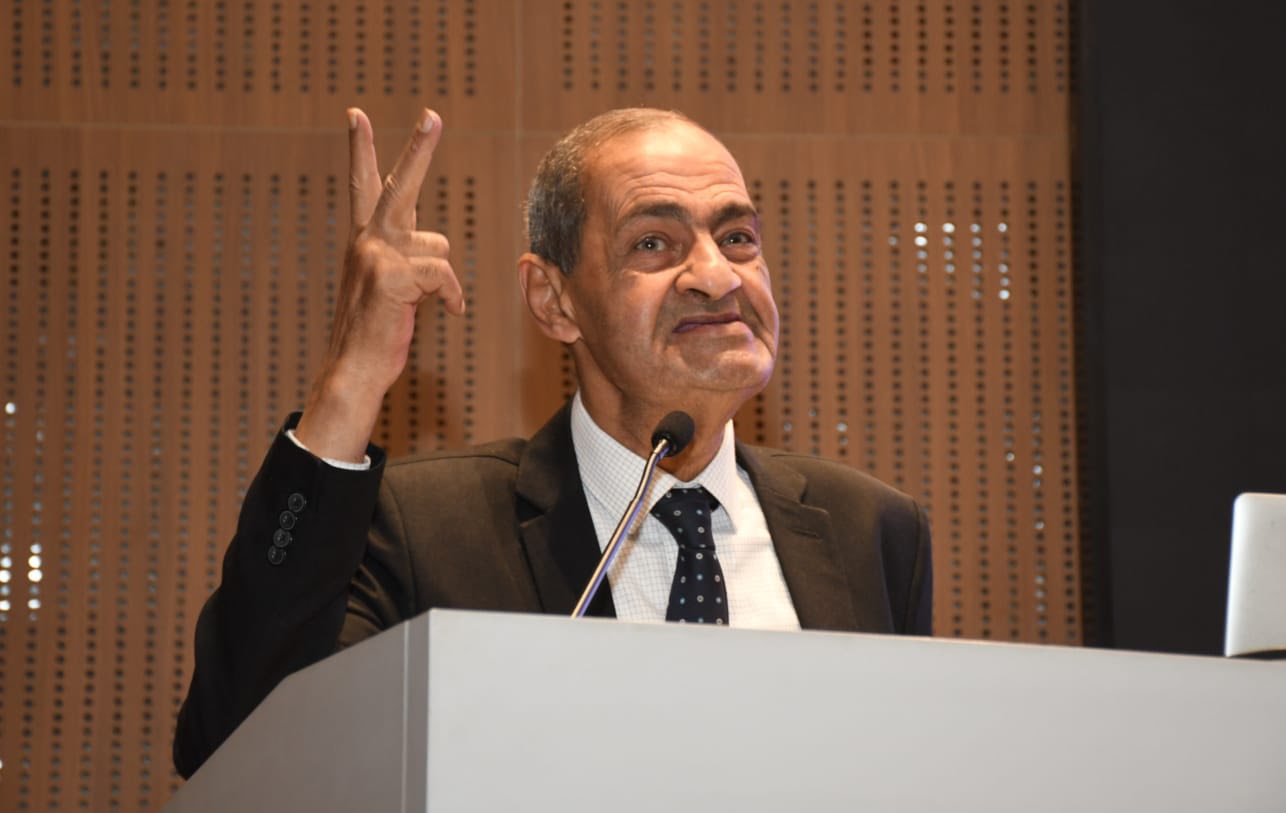
Mr. Osama Al-Dalil opened the seminar by defining national security and state sovereignty from a comprehensive perspective, focusing on the economic dimension and the impact of modern global crises. This was done within the framework of discussing the current challenges facing nations. He explained that national security is fundamentally linked to risks and threats, not opportunities, and encompasses a range of interconnected dimensions. It is no longer limited to the military aspect alone, but extends to include economic, food, water, and technological aspects.
 |
 |
 |
||
He pointed out that the state rests on three main pillars: land, people, and sovereignty. He emphasized that state sovereignty is the most important and sensitive element, as it signifies the absolute right to impose one's will on land, sea, and air. This sovereignty may be complete or partial in certain circumstances.
He also stressed that preserving sovereignty requires possessing instruments of power, foremost among them military capability, given that wars are, in essence, a means of imposing political will by force.
He spoke about geography, which plays a pivotal role in shaping national security strategies, noting that challenges vary from one country to another depending on its location and resources, whether it is a landlocked country, one with limited access to the sea, or one possessing strategic resources.
He also explained the importance of soft power as one of the most important tools for enhancing national security in the modern era, as this power arises through international alliances, diplomatic relations, and cultural and political influence, enabling countries to achieve their interests without resorting to direct confrontation. Building a balanced network of relations with various countries and international organizations contributes to supporting the state's position and enhancing its ability to influence its regional and international environment. He pointed to the strength of the Egyptian character in challenging difficulties, from adapting to geography and establishing a strong infrastructure, as well as its strength in facing human challenges, such as combating terrorism in light of tense global conditions in all neighboring countries.
He explained that there is a close link between security and development, as genuine development cannot be achieved without security and stability, and development, in turn, strengthens the state and its stability.
In this context, he pointed to the Egyptian experience, which clearly reflected this integration, where the state was able to build and develop while simultaneously facing security and terrorist challenges. This reflects the resilience and cohesion of state institutions, as well as its great confidence in the capabilities of its youth and their role in supporting the development and construction process.
Highlighting the pivotal role of media in influencing public opinion, the speaker urged young people to be discerning in their choices and select information sources, which are often sources of misinformation and rumors. He then discussed the geographical location of the Strait of Hormuz and its crucial importance to the world in connecting maritime navigation, particularly for the passage of oil tankers.
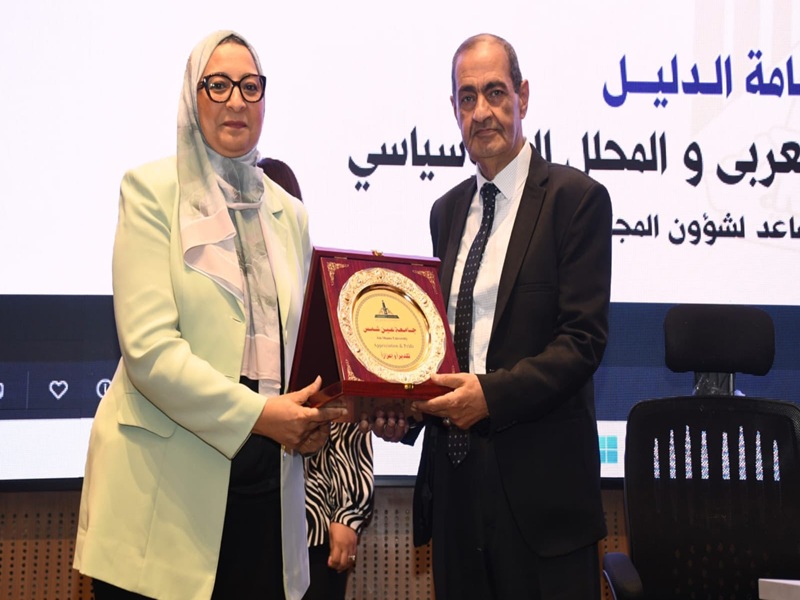
At the conclusion of the meeting, Prof. Ghada Farouk presented the guest with the university's shield.
It is worth noting that the seminar was organized by the Community Service and Environmental Development Sector in coordination with the Faculty of Law.