.svg)

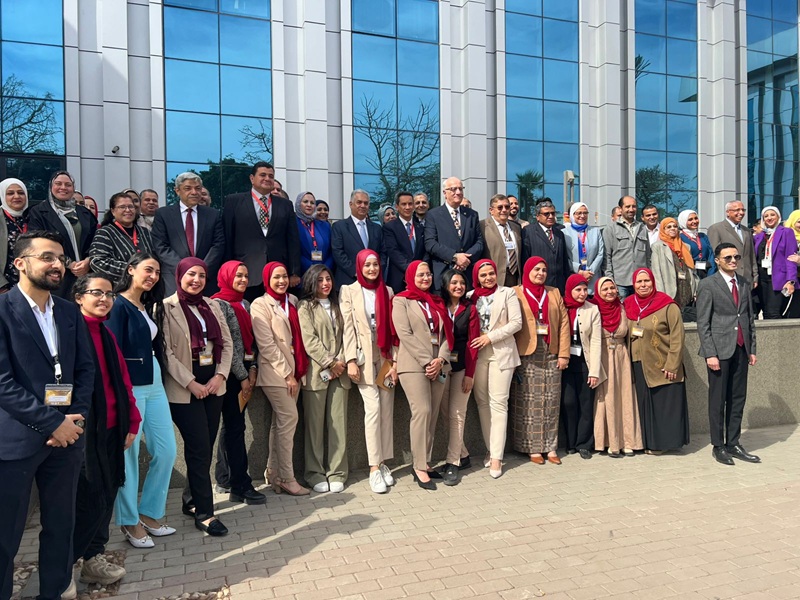
With the participation of 59 researchers and experts... The International Conference of the Center for Papyrological and Epigraphic Studies at the Faculty of Archaeology on “Inscriptions on Architectural Structures Throughout the Ages” is launched
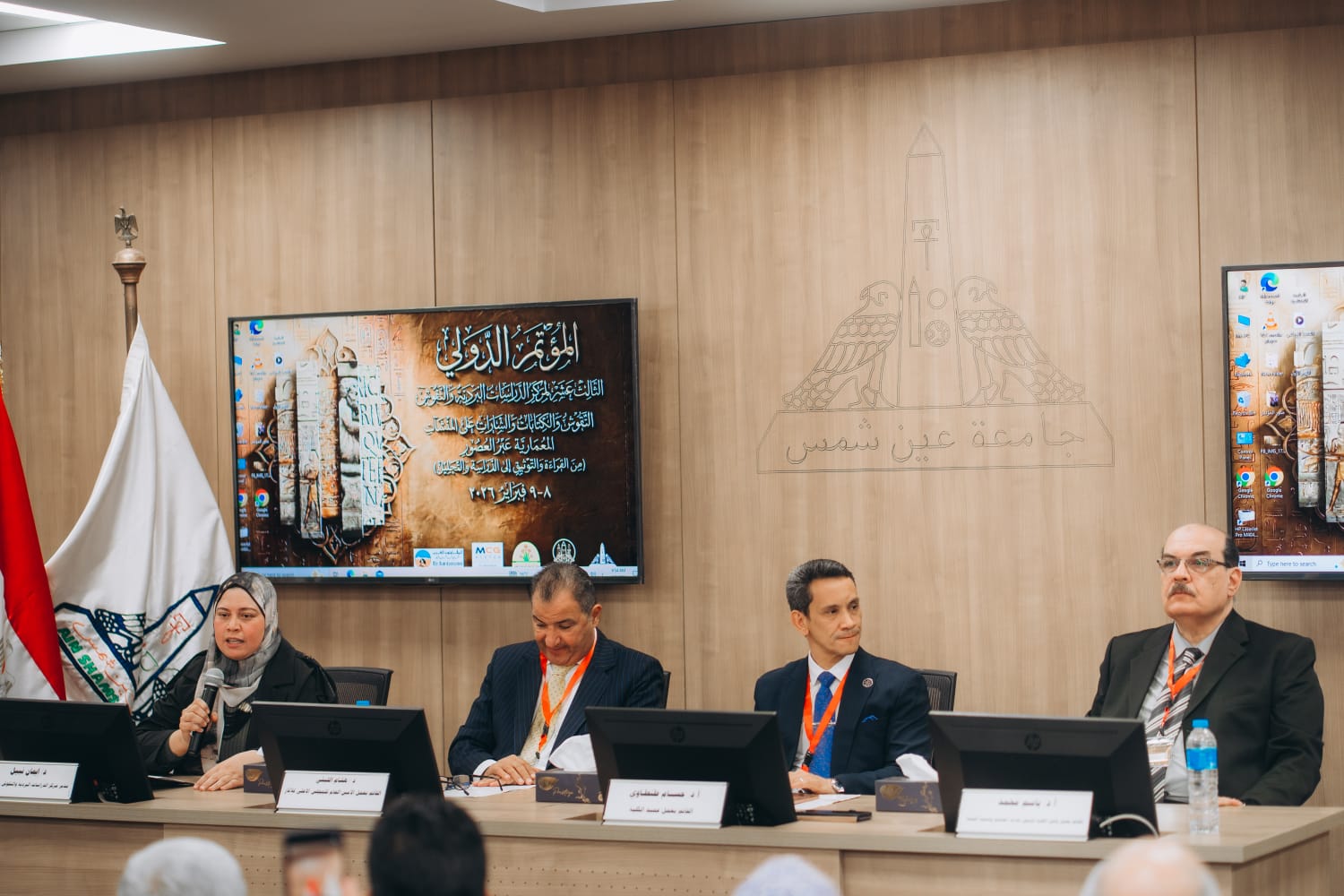
The 13th International Conference of the Center for Papyrological and Epigraphic Studies at the Faculty of Archaeology, Ain Shams University, commenced under the title: “Inscriptions, Writings, and Symbols on Architectural Structures Throughout the Ages (From Reading and Documentation to Study and Analysis).” The conference, held on February 8th and 9th, 2026, at the University Information Network on the main campus, is part of a national vision to connect academic studies with the job market.
 |
 |
It is held under the patronage of Prof. Mohamed Diaa Zain El Abedeen, President of the University, and Prof. Ghada Farouk, Vice President of the University, and under the supervision of Prof. Hossam Tantawy, Acting Dean of the Faculty. The conference is coordinated by Dr. Iman Nabil, Director of the Center, and supported by Mentor Group (Gold Sponsor) and Arab Contractors Company (Silver Sponsor).
Prof. Hossam Tantawy, Dean of the Faculty, began his address by welcoming the distinguished scholars and researchers, emphasizing that Ain Shams University has become a symbol of the nation's vision and a model for implementing the national strategy for higher education.
 |
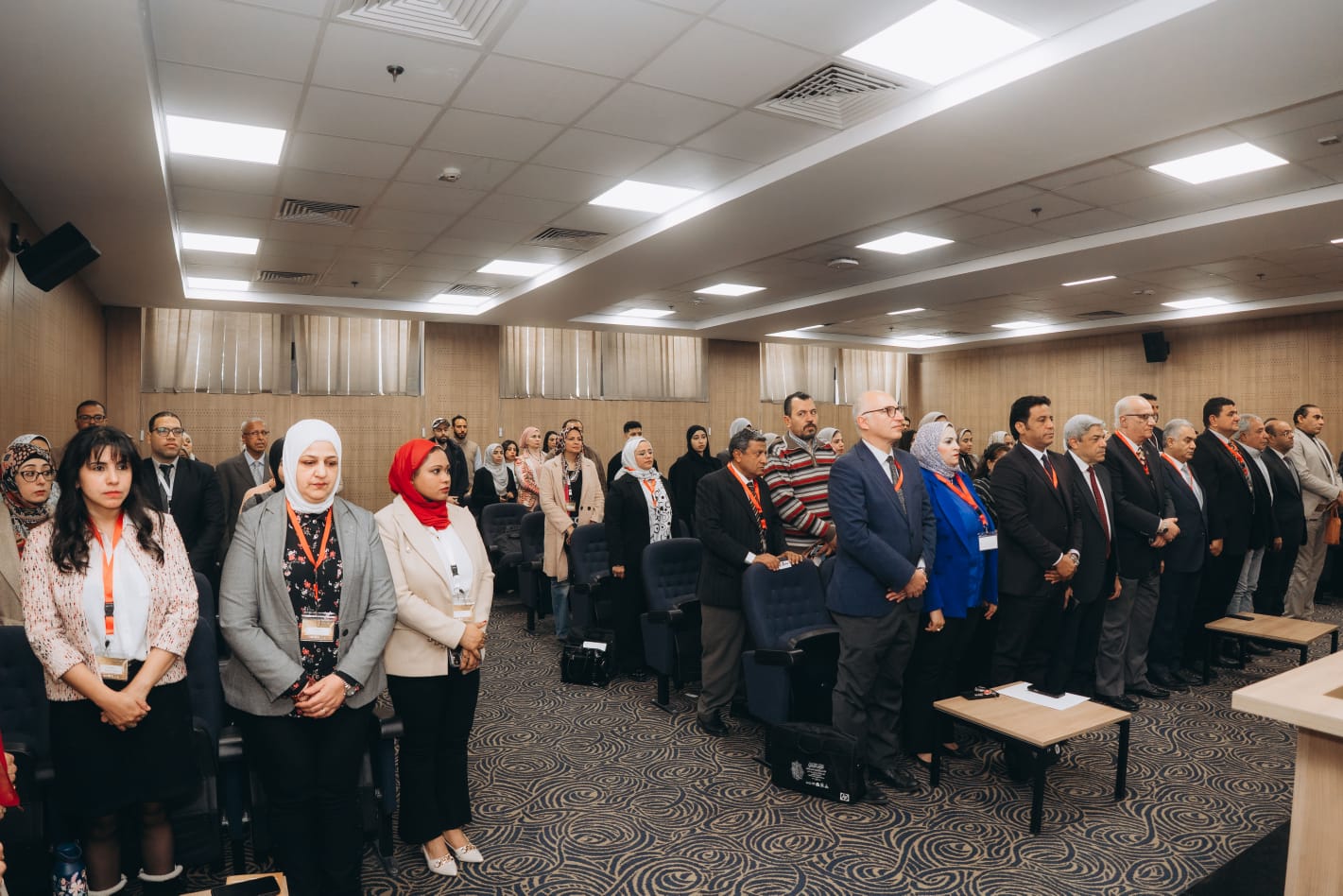 |
He added that the conference's theme represents added value in presenting an innovative knowledge product that meets societal needs, stressing that we are not studying "dead letters," but rather reviving the memory of a nation and deciphering symbols that reflect human creativity and philosophy throughout the ages.
He pointed out that architectural structures represent an integral part of human heritage, requiring a delicate balance between modernization and preservation. He explained that the conference includes six scientific sessions with the participation of 59 researchers specializing in restoration, excavation, and Egyptian and Islamic antiquities, chaired by 14 leading experts. He concluded his address by thanking the university leadership, former ministers of antiquities, and the conference sponsors.
 |
 |
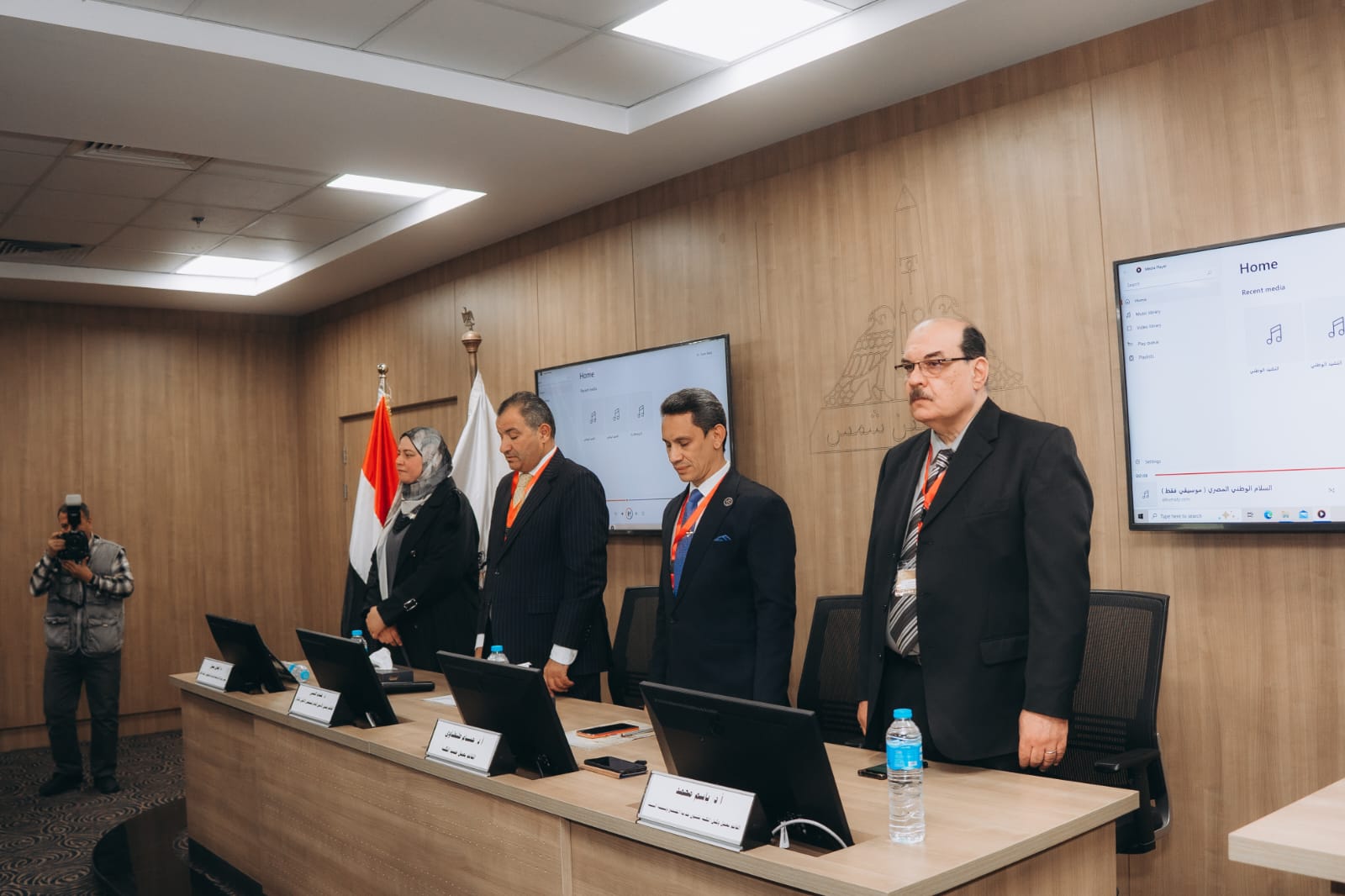
For his part, Dr. Hisham El-Leithy, Acting Secretary-General of the Supreme Council of Antiquities, affirmed that the walls of antiquities are not silent borders, but rather eloquent records of the identity of nations. He pointed out that the conference precisely links the humanities and modern technologies under the theme "The Authenticity of the Past and the Ambition of the Future," aiming to draw inspiration for innovation from the facades of temples, mosques, and churches, and to delve into the symbolic meanings recorded by the ancient Egyptians and Arab calligraphers.
Prof. Bassem Mohamed Sayed, Acting Vice Dean of the Faculty for Community Service and Environmental Development and Conference Rapporteur, also welcomed the attendees, emphasizing that the high level of scholarly engagement and the rigorous research presented made the conference a significant international forum both within Egypt and abroad. He expressed his gratitude to all the organizing committees.
In the same vein, Dr. Iman Nabil, the center's director, affirmed in her address that architecture and writing represent "the record of eternity," stating, "Human history is a written memory, and the ancient Egyptians understood that writing is the spirit that inhabits buildings and grants them permanence."
She added that architecture has embraced thought and belief throughout the ages, noting that modern digital technology is now a pivotal tool for accurately documenting this heritage and ensuring its transmission to future generations. She explained that the conference features 49 carefully selected research papers, forming a comprehensive scientific framework for reinterpreting human creativity and envisioning the future.
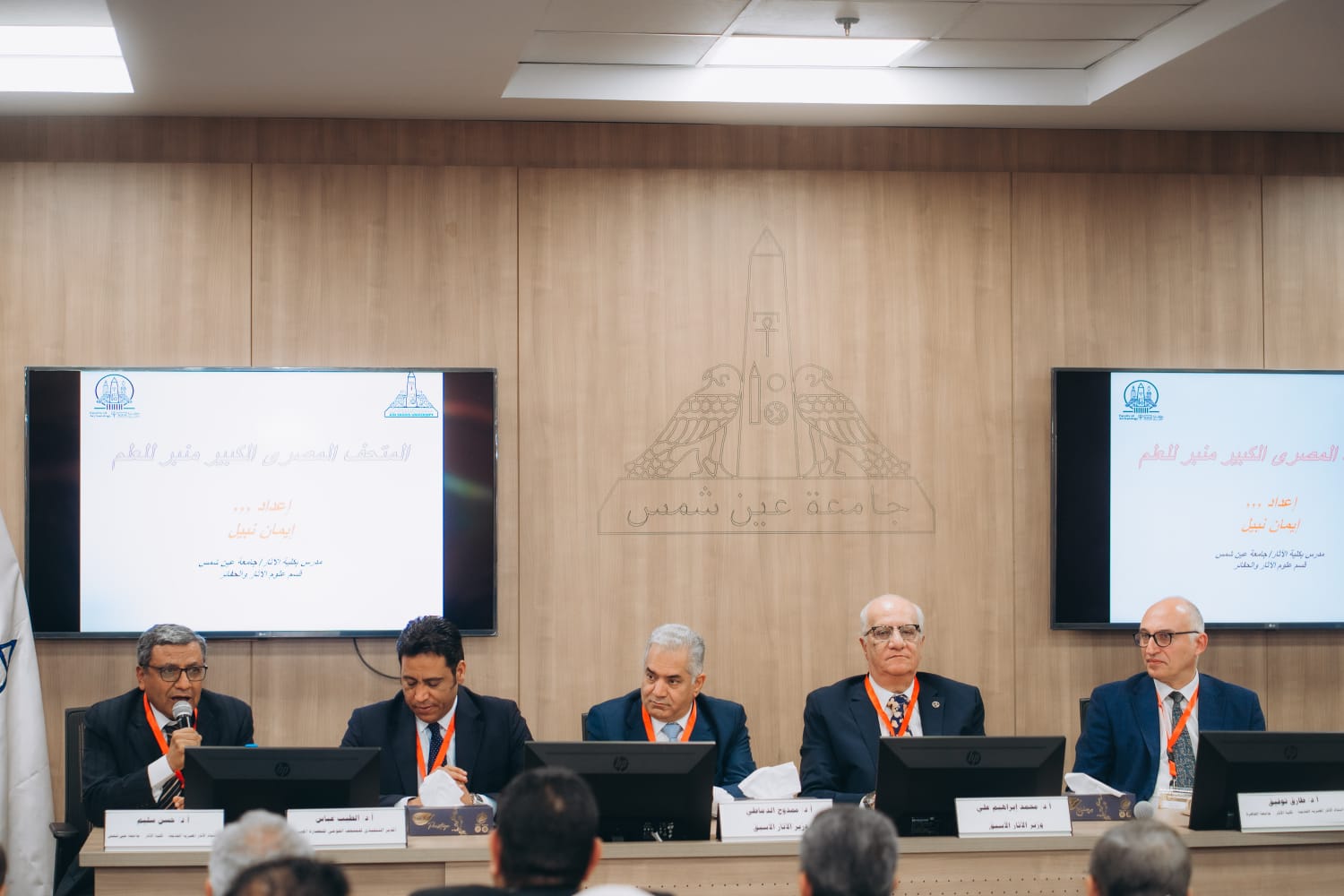
The conference opening featured a session titled “The Faculty of Archaeology’s Contribution to the Grand Egyptian Museum,” moderated by Prof. El-Tayeb Abbas, Executive Director of the National Museum of Egyptian Civilization and former Assistant Minister of Antiquities for Grand Egyptian Museum Affairs, and Prof. Tarek Sayed Tawfik, General Supervisor of the Grand Egyptian Museum.
During the session, several faculty staff and their assistants discussed their various roles in the transfer, restoration, preventative maintenance, storage, database development, and other specialized scholarly endeavors of archaeological artifacts.
One of the most prominent speakers at this session was Prof. Mohamed Ibrahim Ali, the former Minister of Antiquities, who explained that his work on the Grand Egyptian Museum did not begin with his appointment to the ministry, but rather in 2007 as a member of the scientific committee responsible for selecting the artifacts to be displayed.
He emphasized that after assuming the Ministry of Antiquities for the first time in Dr. Kamal Ganzouri's government in 2011, it was essential to make the decisive decision to sign the contract for the museum's construction—the third and final phase of the project—despite the delicate internal circumstances the country was facing at the time.
He noted that the implementation contract with B-Six and Orascom was signed on January 10, 2012, a symbolic indication of the state's continued commitment to development despite the challenges. He confirmed that work on the museum officially commenced in March 2012 in the presence of high-level national and international leaders.
Dr. Mamdouh El-Damaty, the former Minister of Antiquities, further elaborated, emphasizing that bringing the Grand Egyptian Museum to its current form was a race against time amidst economic challenges. He stressed that the greatest challenge was the skepticism surrounding the project's feasibility.
He explained that managing the complex financing files in parallel with the massive transfer of artifacts required exceptional engineering and archaeological precision, noting that the museum's restoration center was the cornerstone for preserving the visual identity of the artifacts before their display.
Prof. Hassan Selim, Professor of Egyptian Archaeology at the Faculty, spoke about the philosophy of the Grand Egyptian Museum's display, explaining that placing the statue of King Ramses II in the reception hall sends a message to the world that Egypt is a symbol of heroism and peace. He also highlighted statues from the Middle Kingdom, such as those of Senusret I and Senusret III, emphasizing that the selection of display locations was the result of meticulous scientific studies befitting the grandeur of Egyptian civilization.
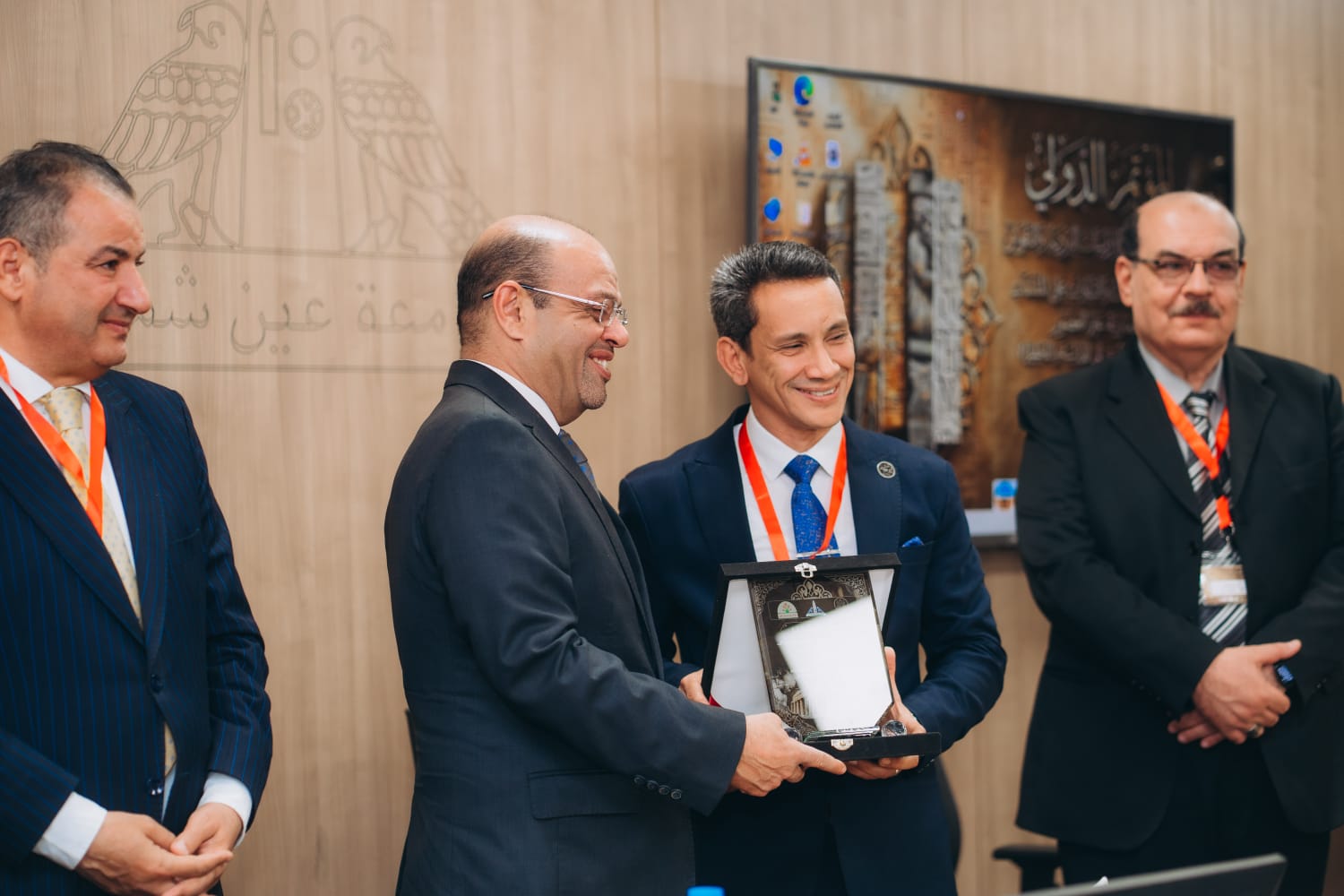
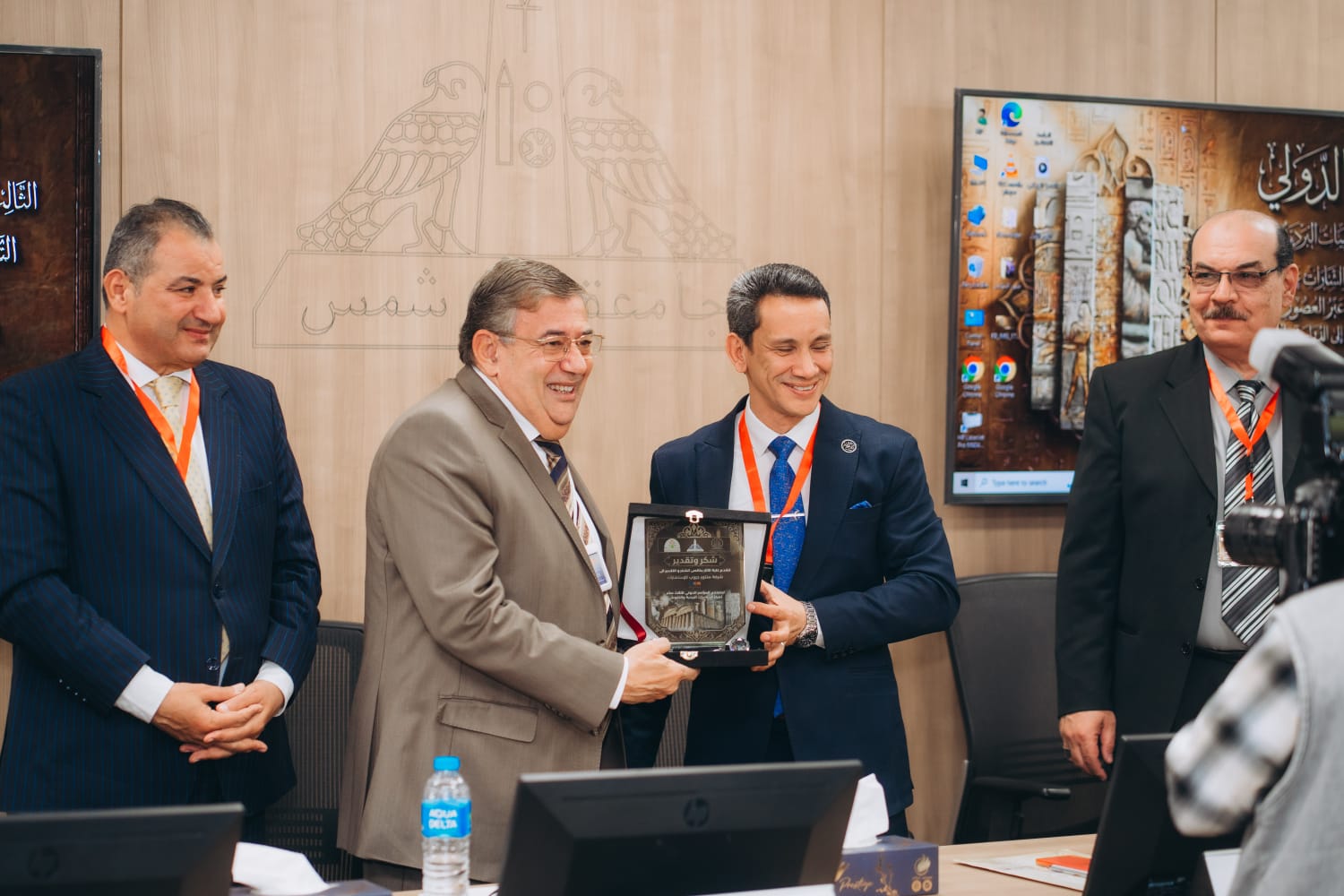
In a gesture of appreciation reflecting the importance of cooperation between academic institutions and the private sector, Prof. Hossam Tantawy, Dean of the Faculty, honored the conference sponsors, presenting the Faculty's shield and certificates of appreciation to:
Mentor Group (Gold Sponsor of the Conference).
Arab Contractors Company (Silver Sponsor of the Conference).