.svg)

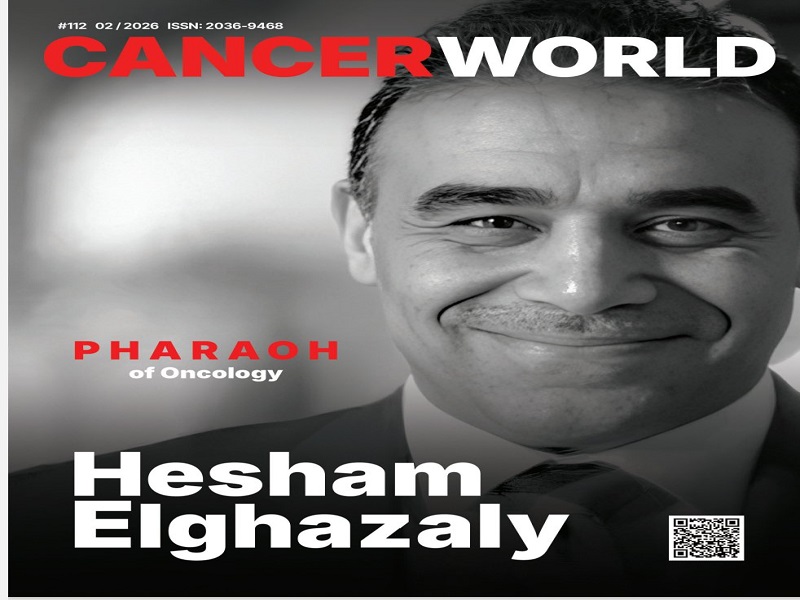
Director of the Medical Research Center at Ain Shams University Leads Egypt's Cancer Fight on the Cover of Cancer World Magazine
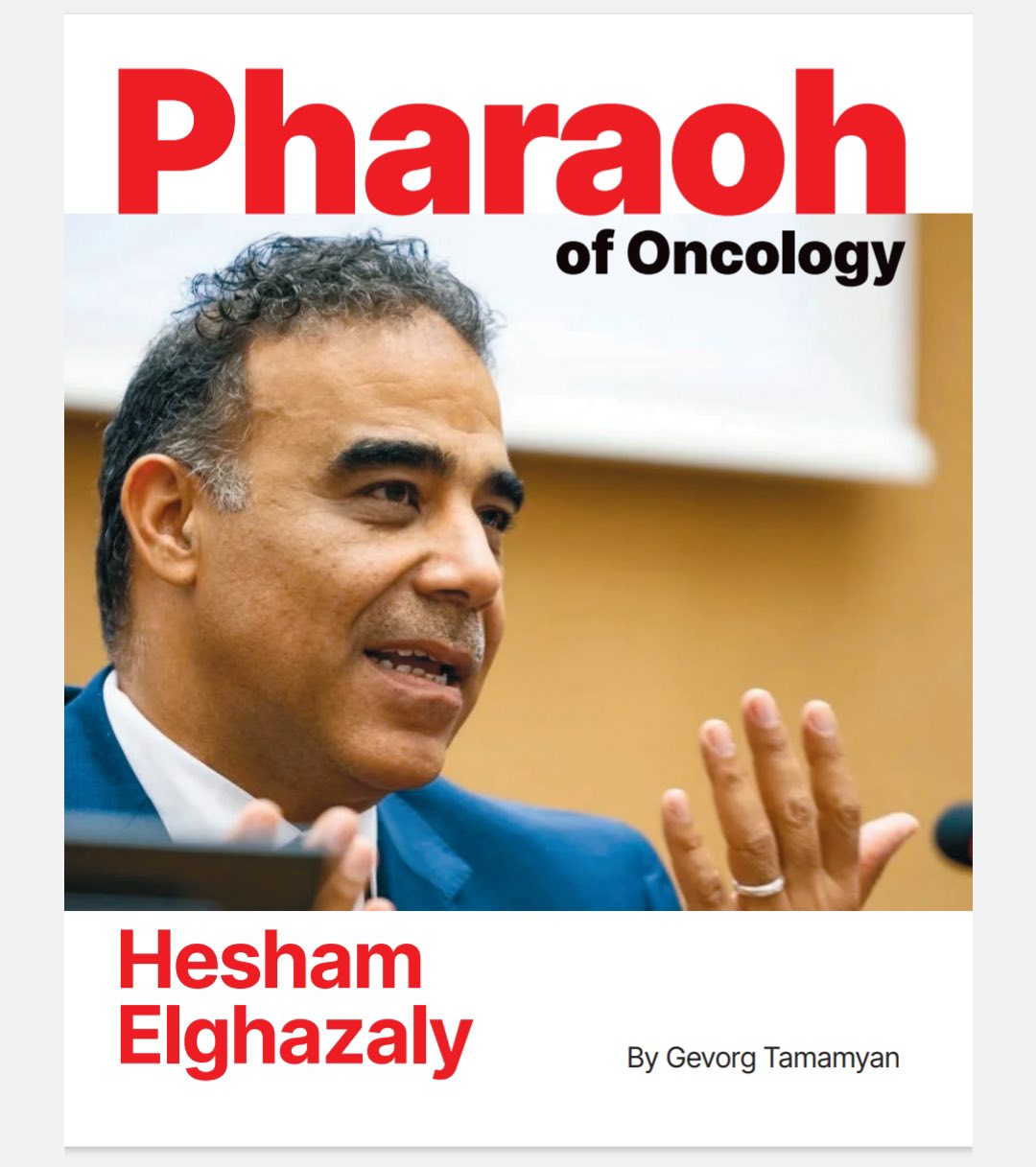
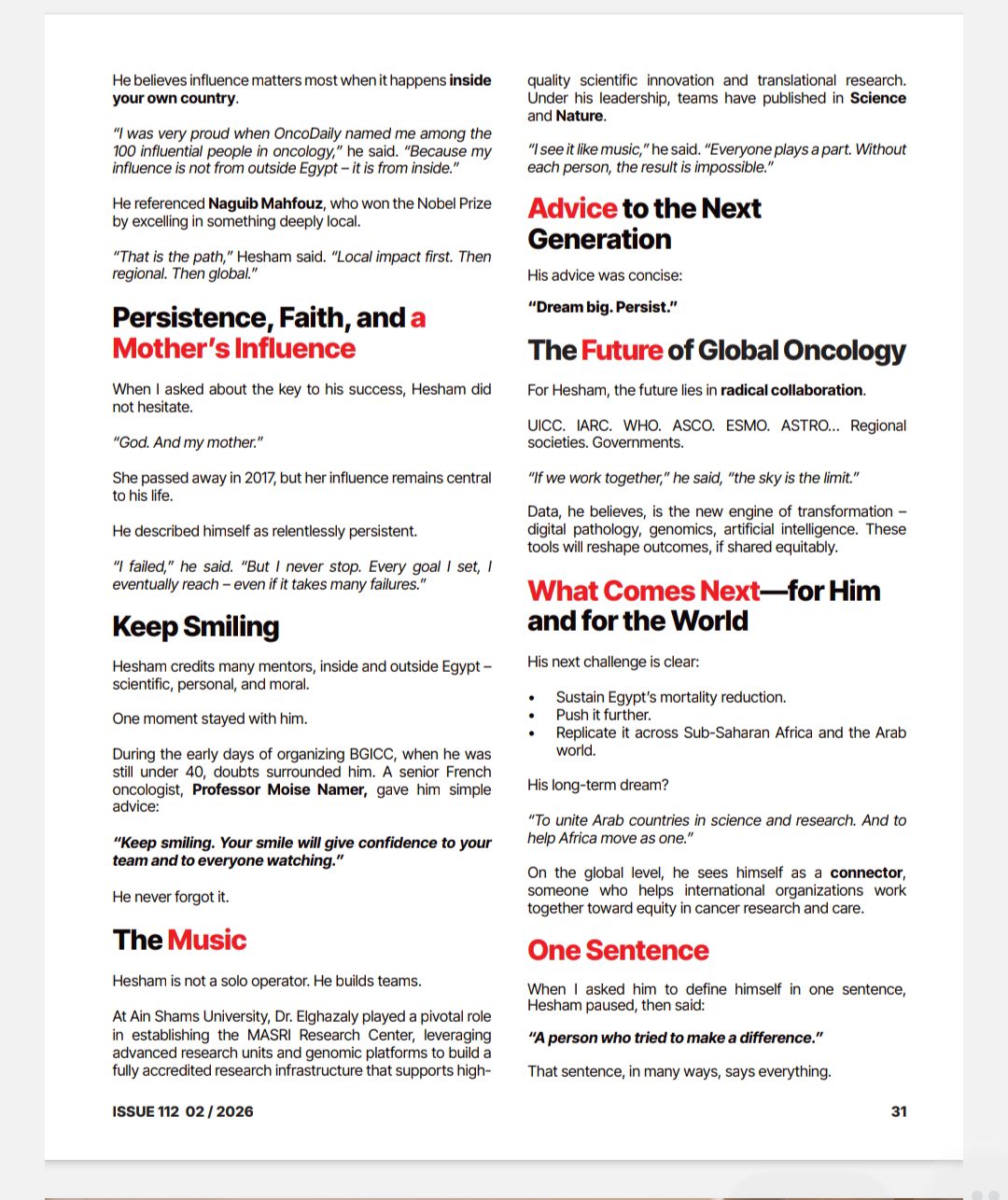
In its February 2026 issue, Cancer World magazine featured a striking cover story: "The Pharaoh of Oncology," referring to Prof. Hisham El-Ghazaly, President of the Egyptian Cancer Society, Head of the National Committee for the Presidential Initiative for Women's Health, and Director of Medical Research Center Masri. The magazine emphasized that Egypt's achievements were not a celebration of one individual, but rather a documentation of a journey that built a system and proved, with concrete data, that health policies can truly save lives.
The magazine emphasized that highlighting the role of an Egyptian physician reflects a practical experience that has reshaped the landscape of cancer control in a country with a population exceeding 100 million, through an institutional model based on integration, governance, and measurable results.
 |
 |
 |
||
The magazine also highlighted, through its editors' visit to Egypt in January 2026, the concerted efforts of all stakeholders in the fight against cancer in Egypt, their commitment to confronting challenges, capitalizing on all available opportunities, collaborating with all local and international entities, and their success in achieving promising results by all measures.
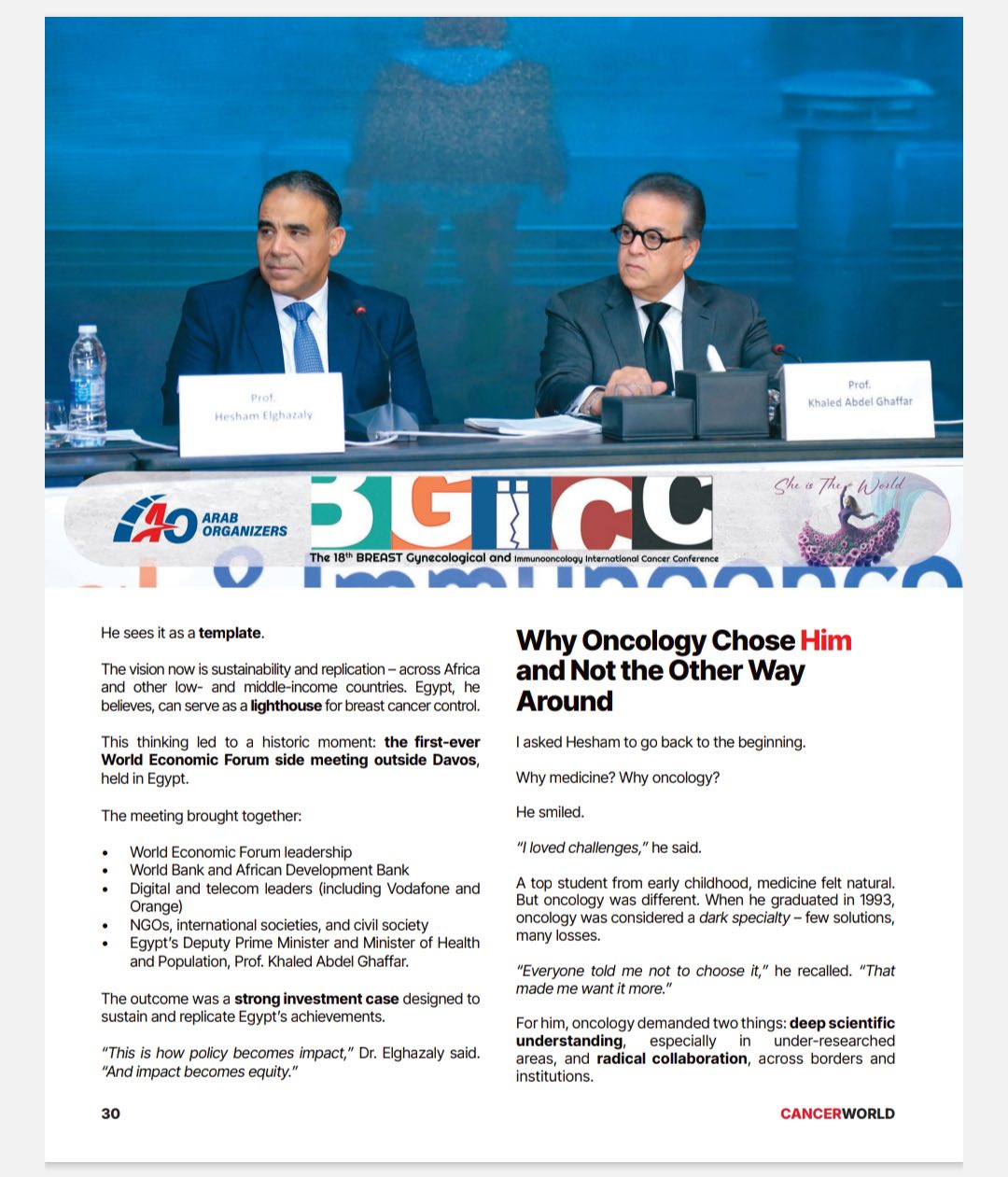
The magazine also praised the transformation of the BGICC conference, under the leadership of Dr. Hisham El-Ghazaly, President of the Egyptian Society of Oncology and Chairman of the Scientific Committee of the Presidential Initiative for Women's Health, from its initial focus on breast cancer, gynecological cancers, and immunotherapy, into one of the largest oncology summits in the region, following the convergence of three major platforms:
BGICC (Breast Cancer, Gynecological Cancers, and Immunotherapy)
OncoBronco (Lung Cancer)
IGILUC (Liver, Gastrointestinal, and Urological Tumors)
Cairo recently hosted a gathering of over 5,000 oncologists, experts, and health policymakers at an event that participants compared to global conferences of the American Society of Clinical Oncology (ASCO) and the European Society for Medical Oncology (ESMO). The event also saw the participation of leaders from the World Health Organization (WHO), the Union for International Cancer Control (UICC), the International Agency for Research on Cancer (IARC), and the American Society for Radiation Oncology (ASTRO), along with ministers and decision-makers from several countries.
Cancer World highlighted the Egyptian experience with the Presidential Initiative for Women's Health as a model for translating political vision into tangible results. These results included: a decrease in advanced breast cancer cases from 70% in 2019 to 20%; a reduction in the time to diagnosis from over 120 days to 49 days; the review of 100% of cases by multidisciplinary oncology committees; and a 15% decrease in mortality between 2022 and 2024. These results exceed the WHO initiative's target of a 2.5% annual reduction in mortality.
In his interview with the magazine, El-Ghazaly emphasized that the factors behind the success were based on supporting political will, designing sound systems, accountability, and integration among state institutions. Currently, the focus is shifting to ensuring sustainability through international cooperation and investment, positioning Egypt as a shining example to be emulated globally.
El-Ghazaly stressed that true success lies in achieving local success and impact, then expanding it regionally and globally. He affirmed that the next phase depends on data integration, international cooperation, and investment in genomics and artificial intelligence.
Cancer World's selection of Prof. Hisham El-Ghazaly, Professor of Oncology, Head of the Presidential Initiative for Women's Health, and Director of the Research Center at the Faculty of Medicine, Ain Shams University, was not a metaphor but rather a description of his scientific leadership. He has built a comprehensive institutional model and made Egypt a regional platform for redefining cancer control.