.svg)

In Strategic Partnership with the Egyptian Red Crescent…Ain Shams University Launches a Specialized Training Program to Qualify Community Observatory and Egyptian Red Crescent Volunteers
Under the patronage of Prof. Mohamed Diaa Zain El Abedeen, President of Ain Shams University; Prof. Ghada Farouk, Vice President for community service and Environmental Development; and Prof. Rami Maher, Vice President for Education and Student Affairs, Ain Shams University launched a specialized training program for volunteers of the Community Observatory and the Egyptian Red Crescent. The initiative reflects the University's commitment to promoting a culture of volunteerism, empowering young people, and preparing student leaders capable of making meaningful contributions to community service and the achievement of the Sustainable development Goals (SDGs).
The program is implemented within the framework of activating the cooperation protocol between Ain Shams University; and the Egyptian Red Crescent and builds on the University's efforts to establish the Community Observatory as a scientific platform for monitoring and analyzing social issues and phenomena. It also seeks to equip young people with the skills needed to transform research findings into impactful development initiatives that generate sustainable community outcomes.
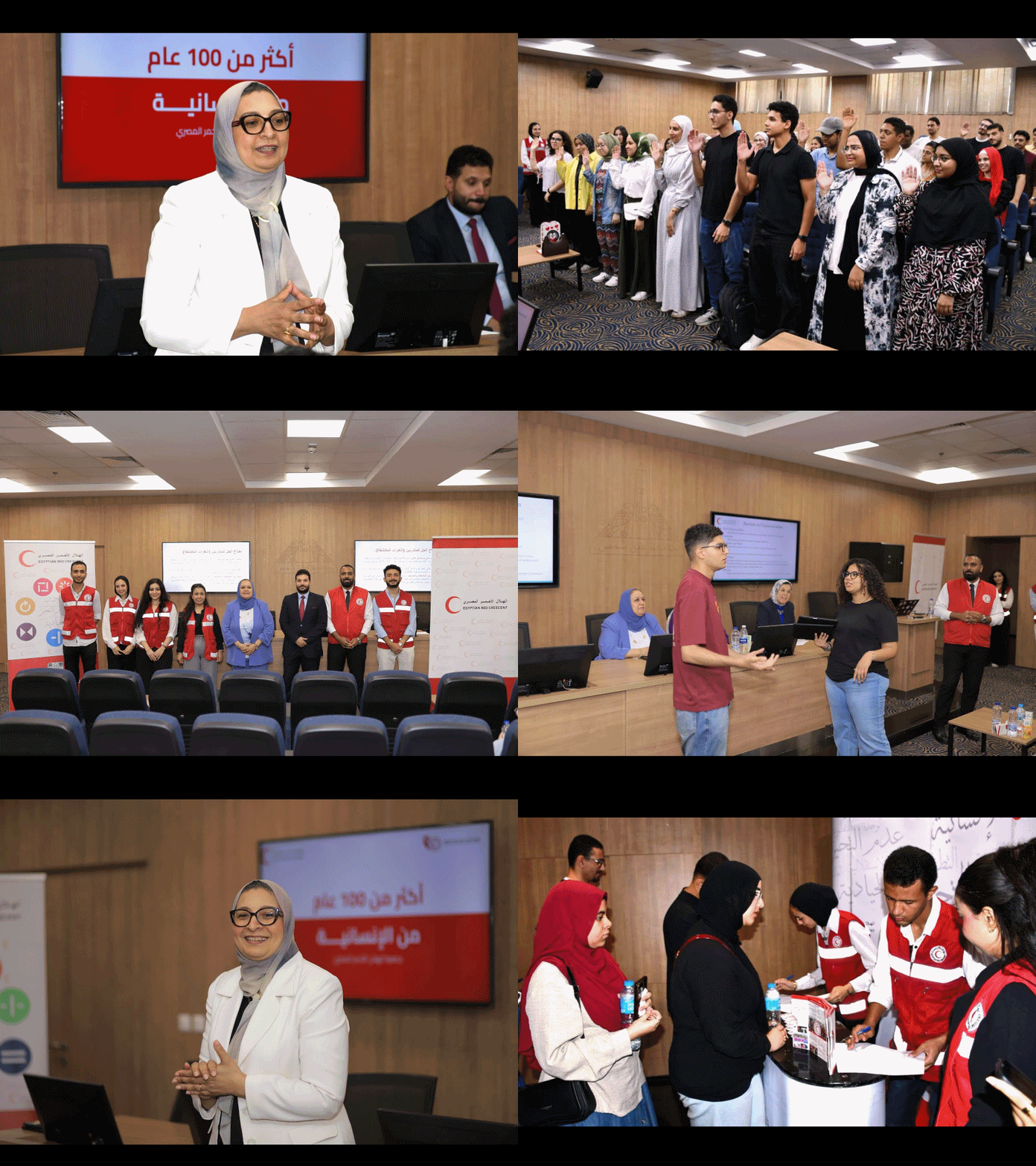
The opening ceremony was attended by Prof. Ghada Farouk, Vice President for Community Service and Environmental Development; Dr. Amal Imam, Executive Director of the Egyptian Red CrescentSociety; Dr. Gehan Ragab, Professor of Marketing at the Faculty of Commerce and Supervisor of the Community Observatory ; Dr. Soheir Safwat, Professor of Sociology and Head of the Department of Philosophy and Sociology at the Faculty of Education; Mr. Mahmoud Gamal, Director of the Youth and Volunteering Department at the Egyptian Red Crescent; in addition to a number of faculty members and students.
In her address, Prof. Ghada Farouk emphasized that community service and volunteerism are among Ain Shams University;s highest priorities, stressing the University's belief that young people are the cornerstone of building the future and achieving sustainable development She noted that the University adopts an integrated model that combines academic knowledge with field-based practice to prepare graduates equipped with the awareness, skills, and capabilities needed for active community engagement.
She explained that the Community Observatory serves as an advanced scientific mechanism for identifying and analyzing community needs and challenges through rigorous research methodologies, thereby supporting decision-makers in designing realistic and effective development initiatives. She added that the Observatory reflects the University's innovative approach to community service by integrating scientific research with volunteer work to create sustainable developmental impact.
Professor Farouk further highlighted the University's vision of the Community Observatory as a comprehensive platform that goes beyond data collection to include the analysis of social phenomena, impact assessment, and the development of evidence-based solutions in collaboration with strategic partners, foremost among them the Egyptian Red Crescent This approach contributes to building a robust knowledge base that supports the enhancement of community services and strengthens partnerships with governmental institutions and civil society organizations.
She also affirmed that the training program represents the first practical step toward preparing qualified student teams equipped with the research, fieldwork, and humanitarian skills required to participate effectively in community monitoring and volunteer initiatives. Such efforts, she noted, reinforce a culture of civic participation while promoting values of belonging and social responsibility among youth. She encouraged students to embrace volunteer work as a valuable opportunity for personal development, leadership, and service to the nation.
For her part, Dr. Amal Imam, Executive Director of the Egyptian Red Crescent Society, emphasized that volunteerism is both a humanitarian mission and a reflection of young people's sense of social responsibility. She reviewed the organization's humanitarian role in disaster relief, healthcare services, emergency response, and community initiatives, noting that volunteer work helps develop leadership, communication, and humanitarian skills. She also encouraged students to join the Egyptian Red Crescent's volunteer teams and actively participate in its humanitarian programs.
Meanwhile, Dr. Gehan Ragab, Professor of Marketing at Ain Shams University; and Supervisor of the Community Observatory, presented the Observatory's vision and its role in establishing a comprehensive database on social issues and community phenomena. She stressed that successful community initiatives must be based on accurate data and sound scientific analysis to ensure that efforts are directed toward the most vulnerable groups and achieve the greatest possible social impact.
She added that the Observatory contributes to producing reports and social indicators that support evidence-based decision-making, guide development initiatives, and assess their impact. Student participation, she explained, provides valuable practical experience that enhances research and fieldwork skills while strengthening students' ability to contribute to sustainable development.
Dr. Soheir Safwat, Professor of Sociology and Head of the Department of Philosophy and Sociology at the Faculty of Education, delivered a presentation on the scientific principles of conducting field studies. She highlighted the importance of designing questionnaires according to rigorous research methodologies, collecting and analyzing data systematically, and drawing scientifically sound conclusions that can inform community development plans and initiatives. She emphasized that data quality is the cornerstone of successful research and the achievement of the Community Observatory 's objectives.
Mr. Mahmoud Gamal, Director of the Youth and Volunteering Department at the Egyptian Red Crescent, also delivered a presentation outlining the organization's volunteer system, including volunteer recruitment procedures, the importance of adhering to the organization's Code of Conduct, the essential skills expected of volunteers, and the opportunities available to participate in humanitarian initiatives and activities throughout the year.
The program concluded with an interactive discussion session during which students' questions regarding volunteer opportunities, the roles of volunteers within both the Community Observatory and the Egyptian Red Crescent, and future training opportunities were addressed. Participants reaffirmed the importance of continuing training and capacity-building programs to prepare young leaders equipped with the knowledge, awareness, and practical skills necessary to contribute effectively to community development.
This program is part of a series of initiatives organized by the Community Observatory at Ain Shams University; in partnership with the Egyptian Red Crescent, within the framework of the University's strategy to promote volunteerism, empower youth, and strengthen collaboration with civil society organizations. These efforts support the achievement of theSustainable development Goals while reinforcing Ain Shams University;s role as a national center of expertise dedicated to human development and community service.