

Graduate Studies and Research Sector Council Discusses Developing the Scientific Equipment System, Promoting Innovation, and Implementing Mechanisms for Evaluating Research Outputs
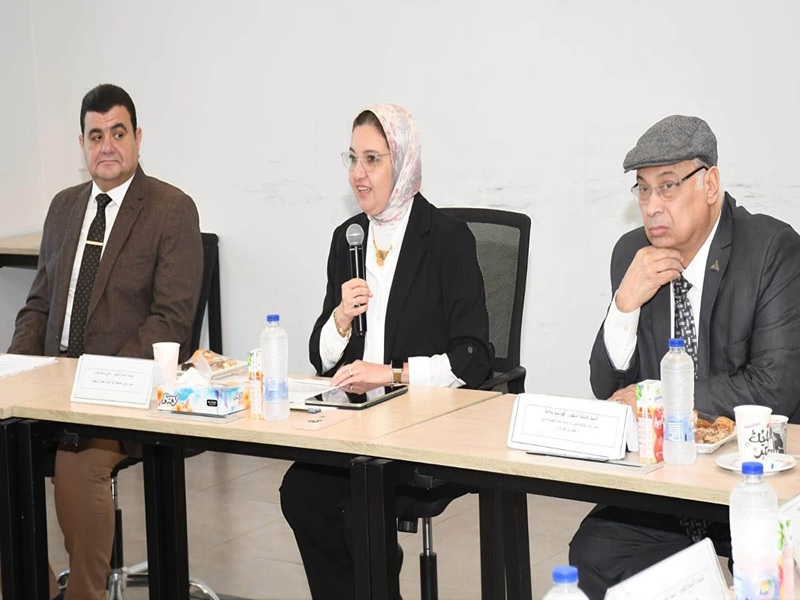
The Graduate Studies and Research Sector Council at Ain Shams University held a meeting chaired by Prof. Amani Osama Kamel, Vice President for Graduate Studies and Research, and attended by the Vice Deans for Graduate Studies and Research and Council members. The meeting addressed several issues related to developing the graduate studies and scientific research system, promoting innovation, and enhancing the efficiency of the University’s research infrastructure.
Prof. Amany Osama Kamel opened the meeting by extending her sincere congratulations and appreciation to Prof. Sahar Moussa, praising her contributions during her tenure as Dean of the Faculty of Nursing and describing her as an exemplary dean in recognition of her dedication and outstanding institutional contributions.
She also congratulated Prof. Hayam Refaat Tantawy on the issuance of the presidential decree appointing her Dean of the Faculty of Nursing, wishing her continued success in fulfilling her responsibilities. She also honored Prof. Ghada Khalifa, former Vice Dean of the Institute of Agricultural Research in Arid Regions at the Faculty of Agriculture, in recognition of her dedication and contributions during her tenure.
Prof. Amany Osama Kamel commended the efforts of those responsible for scientific equipment, praising the faculties for their careful selection of coordinators responsible for entering scientific equipment data. She emphasized that the nominations reflected the selection of distinguished personnel possessing the necessary competence and expertise.
She also stressed the importance of maintaining organized workflows and coordinating efforts to complete the inventory and update equipment records, establishing an accurate and comprehensive database that supports the development of the University’s scientific equipment system and maximizes the utilization of its research capabilities.
As part of ongoing efforts to develop the international scientific publishing system, the Council reviewed the latest developments concerning the Shams Scholar platform. Prof. Amany Osama Kamel emphasized the importance of monitoring performance indicators through interactive dashboards, completing data entry, and increasing completion rates. She highlighted the need to intensify efforts during the current phase to finalize the system and achieve the established targets.
She also reaffirmed her commitment to monitoring the challenges facing faculty members and faculties and working to overcome them in coordination with the Vice Deans, ensuring tangible progress in implementing the system.
The Council also discussed the responsibilities associated with identifying innovative ideas emerging from scientific research and academic theses. It emphasized the importance of incorporating these responsibilities into the relevant committee’s mandate in preparation for their approval and the activation of its institutional role in identifying and evaluating promising ideas, exploring opportunities to utilize them, and transforming them into practical applications and feasible innovative projects.
In this context, Prof. Amany Osama Kamel stressed the need to activate the electronic application designated for identifying and evaluating innovative research outputs. She emphasized the importance of ensuring that graduate studies officials and department heads across the faculties complete the required data, enabling the University to identify, adopt, and support promising ideas and transform scientific research outcomes into added value that serves society and contributes to development.
She explained that the new mechanism is based on introducing the concept of self-assessment for academic theses, whereby researchers, upon completing their theses, prepare a self-assessment identifying the Technology Readiness Levels and Commercial Readiness Levels (TRLs & CRLs). This approach will help explore opportunities to develop research outcomes and transform them into applicable innovations and products.
This assessment is planned to be linked to the procedures for forming thesis examination committees and the stage preceding the awarding of academic degrees. This will allow examiners’ observations and recommendations to be utilized in enriching research outcomes and further developing ideas with genuine potential for innovation and practical application.
As part of the University’s efforts to support specialized training programs, strengthen capacity building and expertise in environmental sustainability, carbon emissions measurement and management, and keep pace with global trends toward transitioning to a green economy and achieving the Sustainable Development Goals, the Council reviewed a proposal submitted by the Faculty of Graduate Studies and Environmental Research to implement a comprehensive training program in greenhouse gas accounting and carbon footprint management. The proposal outlined the program’s training structure, its various levels, and the fees established for each level, enabling the provision of specialized, progressive training tailored to the professional and academic needs of the target groups.
As part of efforts to develop the international scientific publication rewards system, Prof. El-Gohary El-Saeed Attia, Coordinator of the University's International Publication Committee, presented amendments to the implementing regulations, including renaming the committee the ”Higher Committee for Reviewing the International Publication, Innovation, and Scientific Journals System at Ain Shams University,” alongside revisions to the regulations governing rewards for scientific publications and patents.
In this regard, Prof. Amany Osama Kamel explained that the amendments aim to allocate international publication rewards to support research published in first-, second-, and third-quartile journals (Q1–Q3), while strengthening incentives for research ranked among the world’s top 1% and 5%. These measures are intended to encourage excellence, improve the quality of scientific output, and enhance the credibility of scientific publishing.
Prof. Hany Nady, Vice Dean of the Faculty of Education and Director of the Central E-Learning Unit, presented a performance monitoring report on the progress of e-learning platforms across the faculties. He explained that the evaluation process is based on four main pillars designed to ensure continuous development and improve the efficiency of the educational system.
These pillars include accessibility and the provision of logistical resources and accounts for faculty members and students; the quality of digital academic content, including presentations, assignments, and interactive activities; the extent of student engagement with course materials through assignment submissions and participation in discussion forums; and faculty members’ monitoring of student progress, provision of feedback, and grading of assignments to ensure the successful completion of the educational process.
In this context, Prof. Amany Osama Kamel expressed her sincere thanks and appreciation to Prof. Hany Nady, praising his remarkable dedication, precision, and outstanding achievements. She emphasized the importance of extending the benefits of his expertise and efforts to the University’s various faculties, facilitating the exchange of knowledge and best practices and helping faculties improve their performance and achievement levels.
During the meeting, Prof. Mahmoud Fayez, Director of the University’s Networks and Information Technology Center, reviewed efforts to develop the scientific equipment inventory system. He stressed the need for all laboratory personnel to register every available piece of equipment without exception and indicate whether it could be made accessible to researchers from outside their laboratories, ensuring the establishment of an accurate and reliable database.
He also presented engagement indicators for the Shams Scholar platform and outlined improvements to its electronic interface, including consolidating the steps for importing scientific publications into a single simplified screen. This feature enables faculty members to link and import their research directly from international databases such as Scopus and ORCID, easily and efficiently, helping ensure data accuracy while saving time and effort for researchers and the review team.
Prof. Rasha Ismail, Dean of the Faculty of Computer and Information Sciences, also presented the periodic report monitoring digital transformation and the automation of Graduate Studies and Research Sector services through the University Management System (UMS). The report covered the development of the students’ academic records page on the University’s official website and progress in electronic integration between graduate studies departments across the faculties and the Sector.
She explained that several required system updates had been completed, most notably enabling the electronic uploading and attachment of documents during student enrollment procedures, as well as attaching the necessary documents when preparing committee formation memoranda. Improvements were also introduced to the mechanisms for displaying academic program information, regulations, and examination types.
She further noted the activation of the student data history feature, allowing authorized personnel to review previously entered information and procedures when examining committee formation memoranda. This enhances review accuracy, facilitates file tracking, supports procedural integration, and simplifies the electronic delivery of graduate studies services, saving time and effort while improving administrative efficiency.
Prof. Miriam Farid Ayad, Director of the University’s Quality Assurance and Accreditation Center, presented the Center’s monthly report, noting the issuance of Academic Reference Standards (ARS) in accordance with the guiding framework, following the commencement of the implementation of the National Qualifications Framework, which establishes specific requirements for learning outcomes at different academic levels.
She emphasized the importance of faculties reviewing and updating the Academic Reference Standards for their graduate programs and comparing them with the specifications of the National Qualifications Framework to ensure that academic programs comply with approved standards and quality assurance and accreditation requirements.
She also announced plans to organize orientation meetings for directors of quality assurance units, beginning with the graduate studies faculties, to explain the new specifications and their implementation mechanisms. These meetings aim to promote a unified understanding, integrate quality assurance efforts, and improve the standards of academic programs.
At the conclusion of the meeting, Dr. Dina Lasheen, Director of the International Students Administration, reviewed progress in verifying, completing, and updating the records of international graduate students across the University’s faculties, emphasizing the importance of ensuring the accuracy of students’ essential information. The presentation also addressed updating international student databases according to the standardized template and reviewed statistics on students admitted to graduate programs for the 2026/2027 academic year.