


The Faculty of Business Organizes a Seminar Titled “The Egyptian Economy…Today's Outlook and Tomorrow's Vision” in the Presence of the Deputy Prime Minister for Economic Affairs
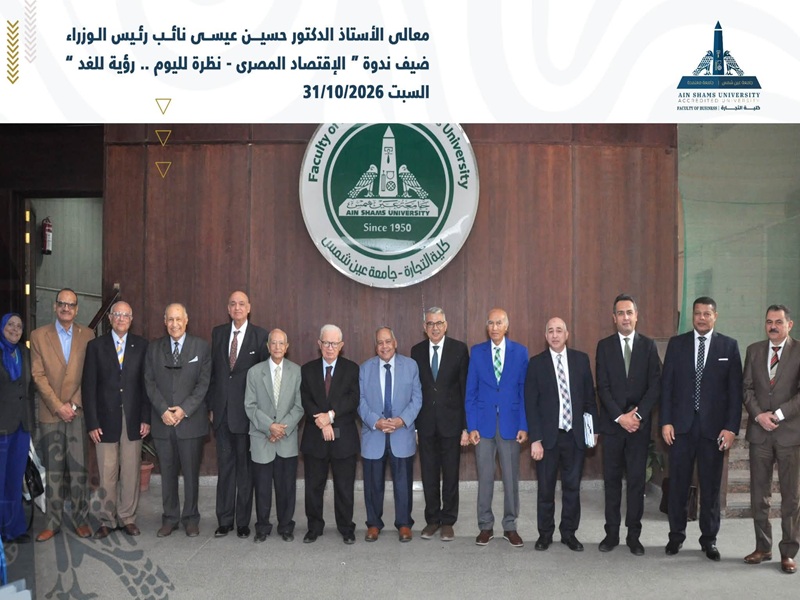
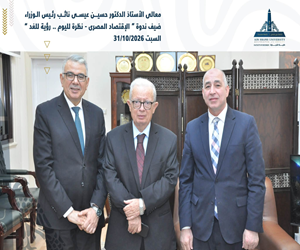
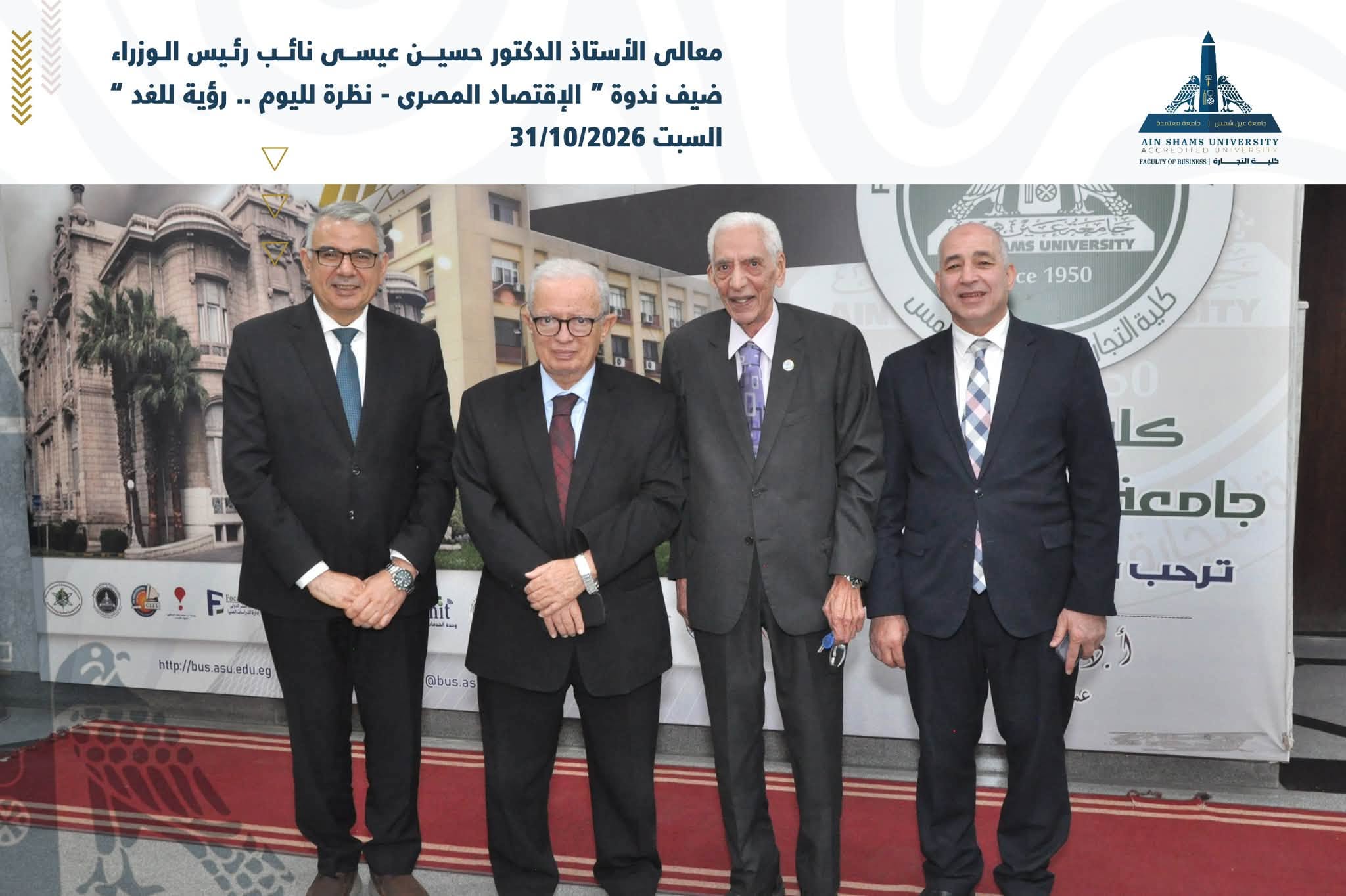
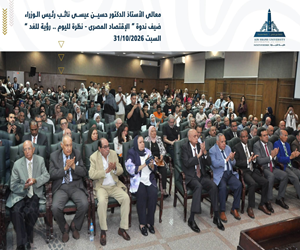
The Faculty of Business at Ain Shams University organized a major academic and economic seminar titled “The Egyptian Economy…Today's Outlook and Tomorrow's Vision,” attended by Dr. Hussein Eissa, Deputy Prime Minister for Economic Affairs. The seminar aimed to discuss developments in the Egyptian economy, priorities for the coming period, the government's vision for its economic transformation program, and the role of academic institutions and the private sector in supporting development.
 |
 |
 |
||
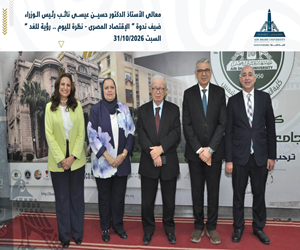
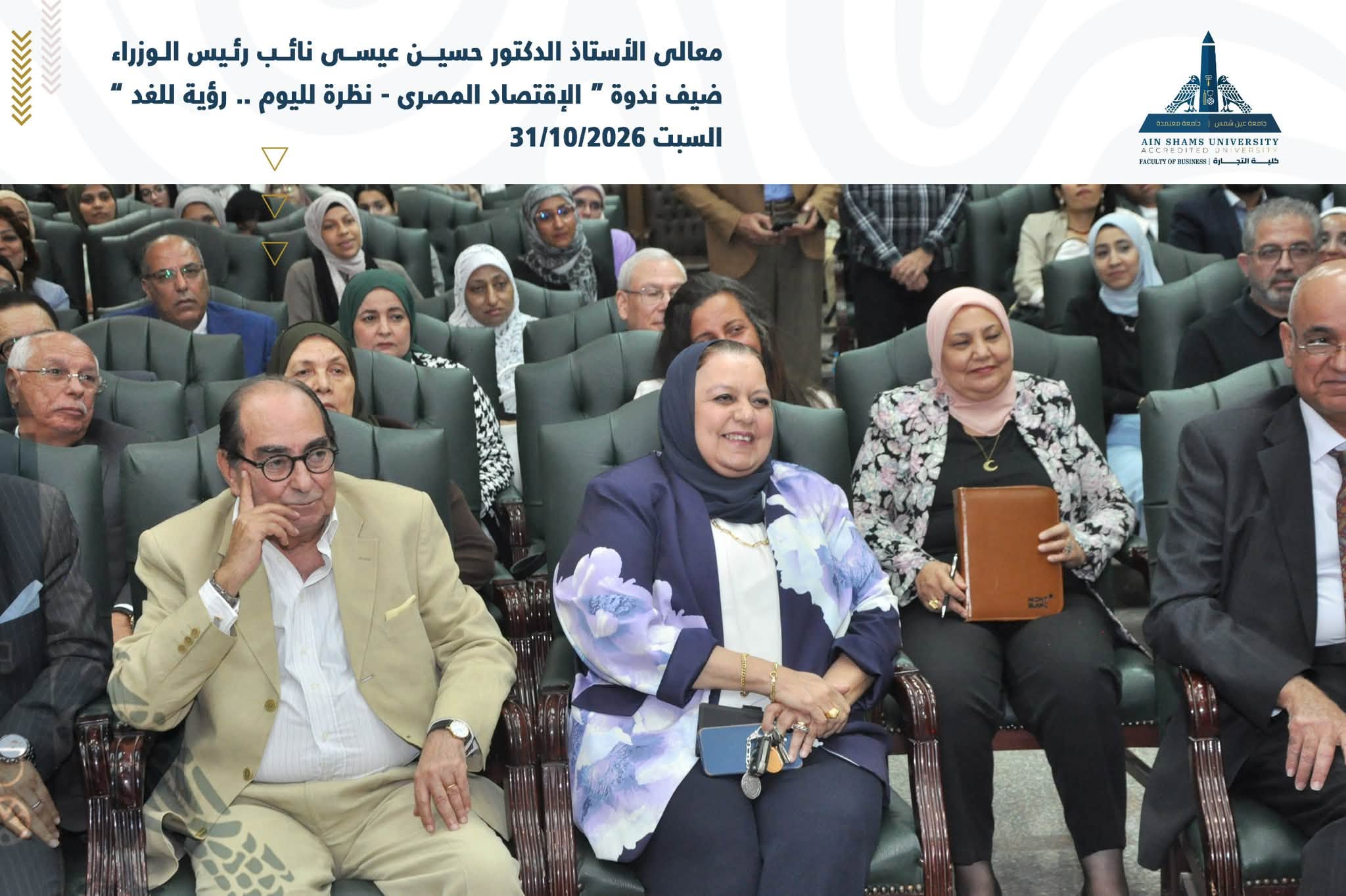
The seminar was held under the patronage of Prof. Mohamed Diaa Zain El-Abedeen, President of Ain Shams University, and the supervision of Prof. Farid Moharram El-Garhy, Dean of the Faculty of Business, with the participation of several deans of faculties of commerce, former deans of the faculty, experts, specialists, faculty members, and students.
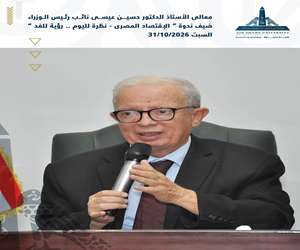
In his opening remarks, Prof. Farid Moharram El-Garhy, Dean of the Faculty of Business at Ain Shams University, welcomed Dr. Hussein Eissa, emphasizing that the seminar was being held at a crucial time amid successive developments in the global and Egyptian economies, highlighting the need to strengthen dialogue on current economic challenges and priorities for the coming period.
The Dean stressed the importance of strengthening communication between academic institutions and decision-makers and drawing on academic and executive expertise to discuss economic issues. He noted that such engagement helps bridge the gap between theoretical knowledge and practical realities while providing faculty members, researchers, and students with opportunities to participate in discussions on the future of the national economy.
 |
 |
 |
||
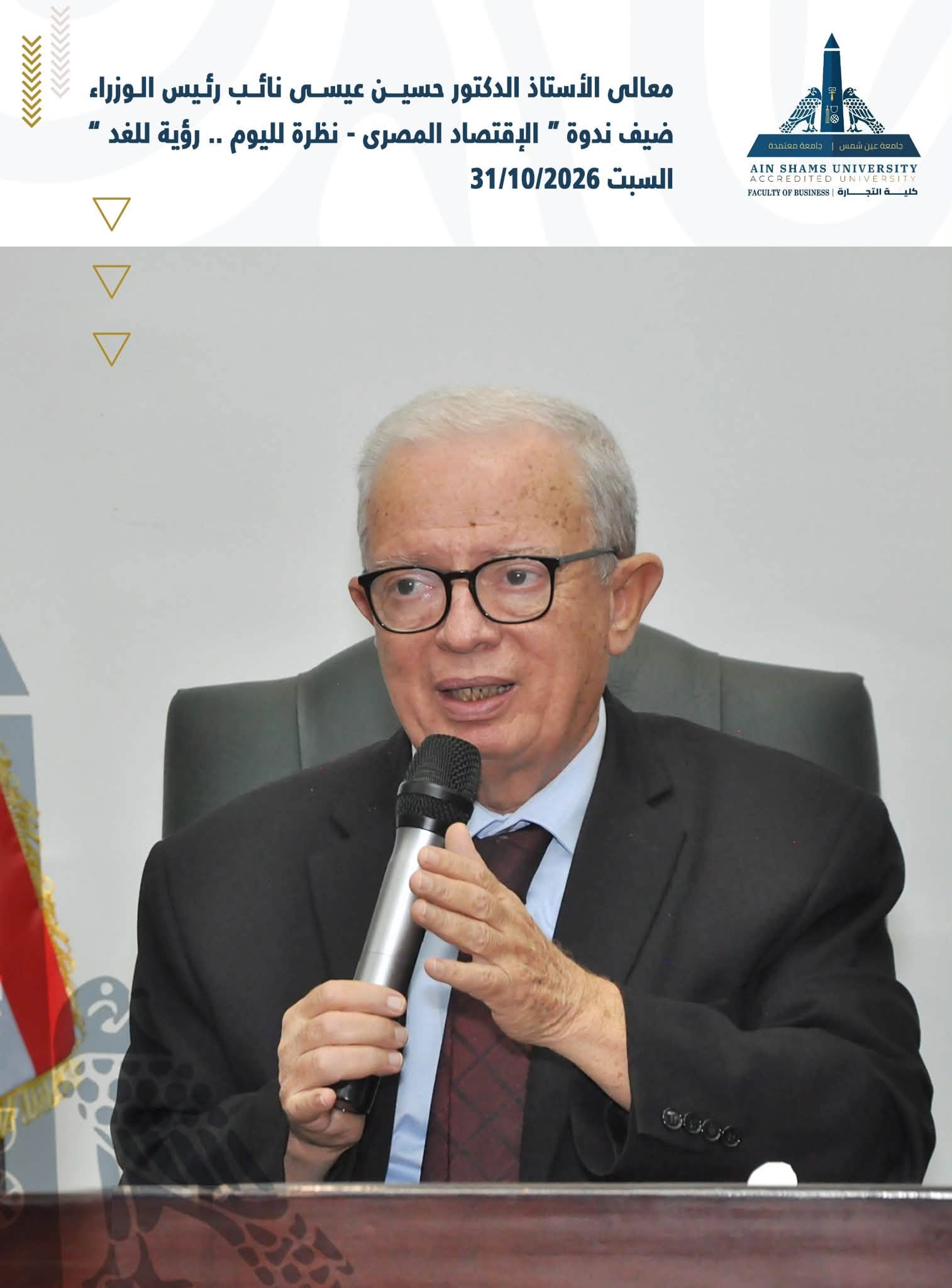
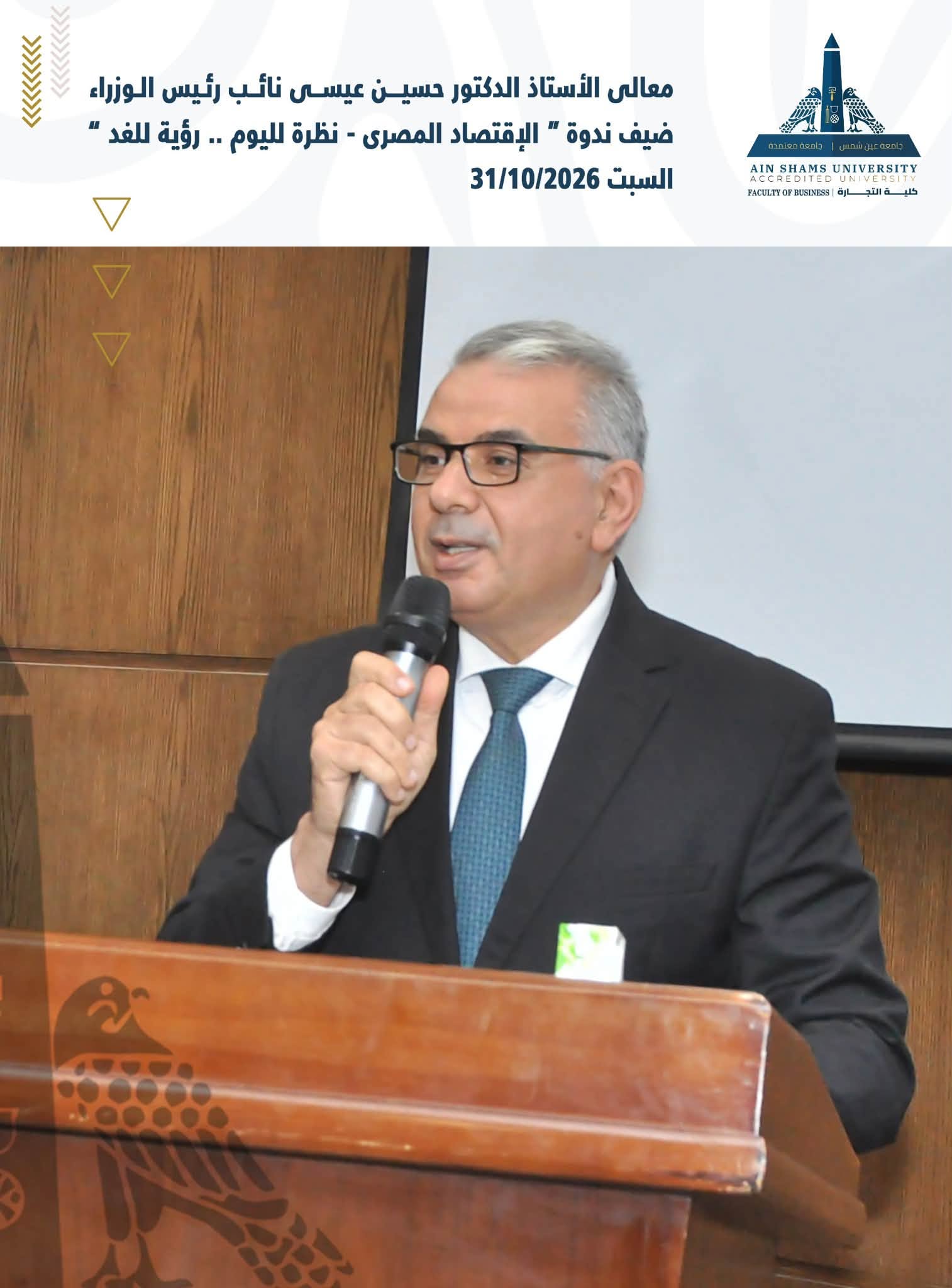
For his part, Dr. Hussein Eissa, Deputy Prime Minister for Economic Affairs, outlined the government's role in developing an Egyptian economic program to be implemented over three years. He emphasized that Egypt needs a comprehensive economic transformation program to move the economy from stabilization and recovery from shocks toward expansion and growth. He explained that the program would extend beyond macroeconomic indicators and fiscal and monetary policies to encompass productive and service sectors.
Eissa revealed that the government intends to publish the economic transformation program on the Cabinet's official website within seven to ten days, allowing experts, specialists, and universities to participate in public consultations and submit proposals. The government aims to finalize the program by the end of December 2026, covering the period from 2027 to 2030.
 |
 |
 |
||
He explained that the program aims to increase productivity in the industrial, agricultural, tourism, energy, and telecommunications sectors, enhance the competitiveness of the Egyptian economy, and strengthen its integration into the global economy and international supply chains. It will also focus on developing healthcare and educational services, not only by increasing funding but also by improving operational systems and service delivery methods.
The Deputy Prime Minister noted that the program places citizens and improvements in their quality of life at the heart of economic policies, with particular attention to the middle class and improving its living conditions. It also prioritizes teachers, doctors, and university faculty members, including efforts to raise minimum wages for these groups.
 |
 |
 |
||
He also reviewed the State Ownership Policy Document, its various editions, and its implementation plan as a framework for regulating the state's role in economic activity and enhancing private sector participation.
Regarding the state budget, the Deputy Prime Minister highlighted the efforts of the Ministries of Finance and Planning to implement program-based and performance-based budgeting. He explained that work is underway to present the traditional budget alongside an analytical program and performance budget during the next fiscal year, enabling public expenditure to be linked to programs, objectives, and measurable outcomes.
The seminar featured an open discussion and question-and-answer session involving several deans of faculties of commerce, former deans of the Faculty of Business at Ain Shams University, experts, specialists, faculty members, and students. Discussions addressed a range of economic issues, challenges facing the Egyptian economy, and proposed approaches to addressing them in the coming period.
The discussions also explored the blue economy and the importance of utilizing Egypt's marine resources and the economic opportunities they offer, alongside issues related to investment, production, and the management of state assets.
Eissa addressed the importance of social protection programs, including Takaful and Karama, Decent Life (Hayah Karima), and the 100 Million Healthy Lives Initiative, as part of the state's efforts to improve citizens' living standards. He also emphasized the need to develop essential services and enhance the efficiency of their delivery.
Regarding the informal economy, Eissa explained that integrating informal activities into the formal economy should be based on mutual benefits. He stressed the importance of convincing business owners that joining the formal economy would offer them greater advantages than remaining outside it, rather than merely bringing them into the tax system.
He emphasized the importance of relying on positive incentives to encourage informal businesses to formalize their operations, rather than beginning with penalties, which should only be applied after establishing a clear regulatory framework and providing opportunities for compliance. He noted that a committee comprising the Ministers of Investment, Planning, and Finance had been formed to examine proposals for integrating the informal economy, which he estimated accounts for approximately 60% of the Egyptian economy.
The Deputy Prime Minister also addressed public debt, explaining that several measures related to domestic and external debt are under consideration, including extending debt maturities, reviewing interest rates, and negotiating debt-for-investment swaps with certain creditors.
He highlighted the importance of improving the operational efficiency of state-owned assets and utilizing them to generate returns that could support debt management. He stressed that debt assessments should not focus solely on liabilities but should also consider the assets created through borrowing.
On investment, Eissa affirmed that the private sector would be a key partner in implementing projects during the coming period. He highlighted plans to increase investment in industry, agriculture, tourism, energy, and telecommunications to diversify the investment structure and strengthen the productive capacity of the Egyptian economy.
He revealed that the Ministry of Investment is working to establish an interactive electronic one-stop-shop platform that will enable investors to complete procedures digitally without having to visit multiple government agencies. The platform is being developed in cooperation with several entities under the supervision of the Ministry of Communications and Information Technology, with an expected completion period of 12 to 15 months.
He also pointed to growing investment interest in the Egyptian market from several Asian countries, noting that some investment projects may rely on their own energy sources, including solar and wind power. Eissa further discussed efforts to restructure state-owned companies and economic authorities and maximize the utilization of state assets.
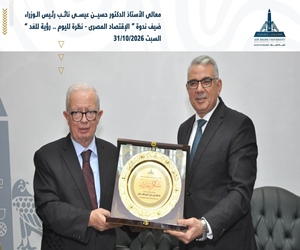
At the conclusion of the seminar, the Faculty of Business honored Dr. Hussein Eissa, Deputy Prime Minister for Economic Affairs, in recognition of his participation and contributions to enriching economic dialogue, in the presence of academic leaders, experts, and students.