
.svg)

The Education and Student Sector launches a comprehensive guide to safe digital citizenship and awareness of the cybercrime law
As part of the education and student sector's commitment to raising legal and digital awareness among students, and considering it a cornerstone for protecting the future of youth, the sector emphasized the importance of understanding the Egyptian Cybercrime Law, as it is the framework governing the use of digital platforms and protecting everyone's rights. In this context, and in line with the state's efforts to promote digital literacy in the age of artificial intelligence, the Supreme Council of Universities launched a comprehensive awareness campaign under the slogan "Your Guide to Safe Digital Citizenship: Awareness, Protection,
 |
 |
Security." The campaign aims to inform youth of their digital rights and responsibilities under Egyptian law and provide them with the necessary guidance to avoid falling victim to cybercrimes.
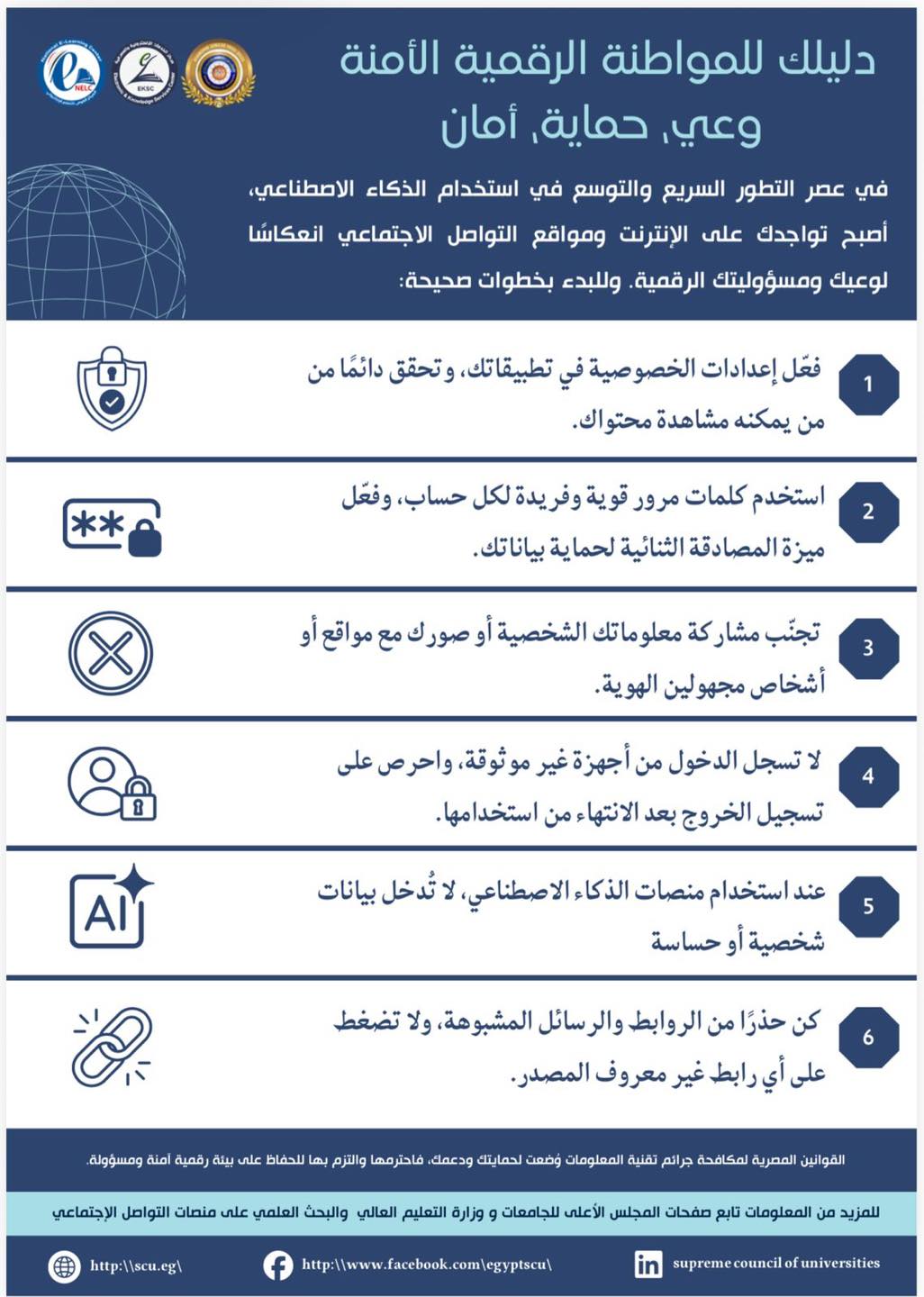
6 Golden Steps to Protect Your Digital Presence
The guide explains that your online presence and social media activity reflect your awareness and responsibility. To ensure a safe and secure start, follow these steps:
Enable Privacy: Start by enabling privacy settings in all applications and regularly check your followers and who can see your content.
Secure Accounts: Use strong and unique passwords for each account, and be sure to enable two-factor authentication.
Protect Personal Data: Avoid sharing photos or sensitive information with unknown individuals or entities.
Be Cautious with Public Devices: Do not log in from untrusted devices, and always log out immediately after use.
Deal with Artificial Intelligence: When using AI platforms, absolutely refrain from entering any personal or sensitive data.
Avoid Suspicious Links: Be wary of messages and links from unknown sources and never click on them.
Know Your Law: Your Digital Rights and Obligations
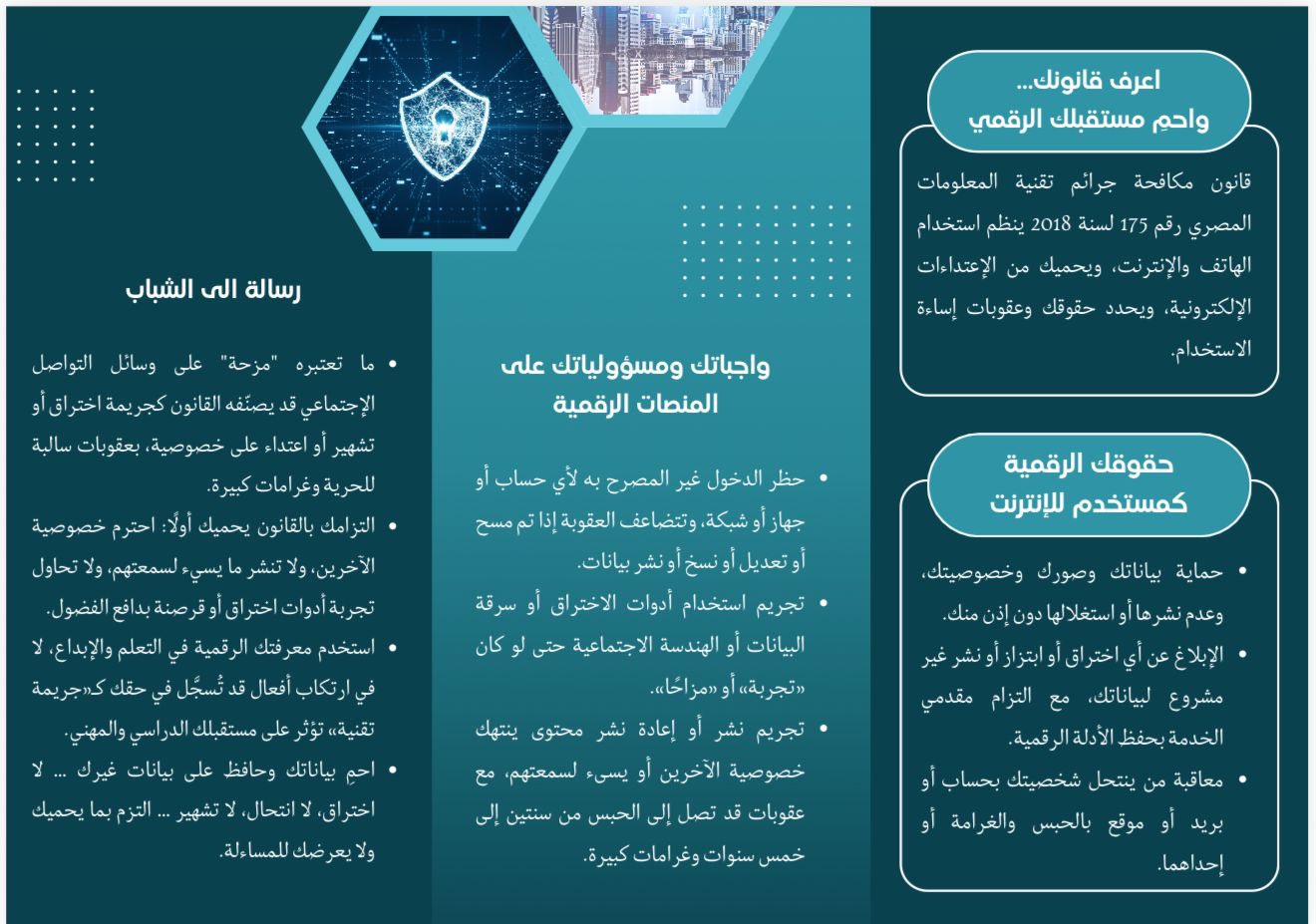
The campaign highlighted Egypt's Cybercrime Law No. 175 of 2018, which regulates the use of phones and the internet and provides legal protection against cyberattacks:
First: Your Rights as a User:
The right to protect your data, photos, and privacy from unauthorized publication or exploitation.
The right to report any hacking or extortion attempt, with service providers obligated to preserve digital evidence.
The right to prosecute anyone impersonating you through fake accounts or websites, as the law punishes perpetrators with imprisonment and fines.
Second: Your Legal Responsibilities:
Unauthorized access to any account or device is strictly prohibited, and the penalty is doubled if you delete, modify, or publish someone else's data.
The law criminalizes the use of hacking tools, data theft, or "social engineering," even if done for "experimentation" or "pranks."
Publishing content that violates the privacy of others or damages their reputation is punishable by imprisonment for two to five years, in addition to substantial fines.
An Important Message to Youth: "Joking" Could End Your Future
The Supreme Council of Universities issued a direct message to youth, warning that actions some might consider "just a joke" on social media could be classified by law as fully-fledged crimes (hacking, defamation, invasion of privacy).
The message emphasized the necessity of using digital knowledge for learning and creativity, instead of committing acts that could be classified as "cybercrimes" and negatively impact academic and professional futures.
The guide concluded by affirming that respecting the law is the only guarantee for maintaining a safe and responsible digital environment for everyone.