.svg)

With the attendance of leading figures in law and energy…Launching the Annual International Conference of the Faculty of Law
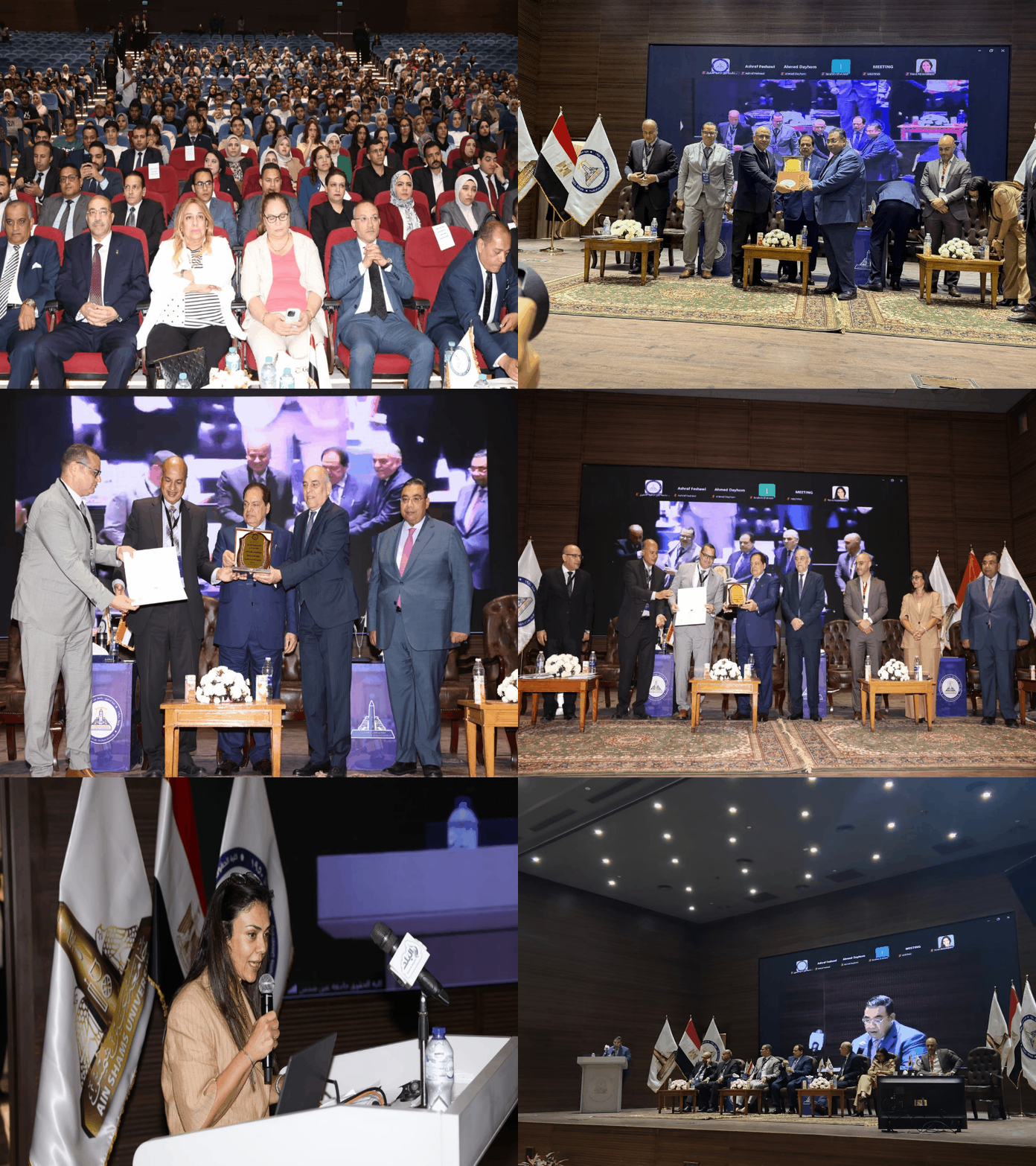
Ain Shams University Faculty of Law launched its annual international scientific conference 2026 under the title “Law and Energy,” held at the faculty’s new auditorium over two days, May 2–3.
The conference is held under the patronage of Prof. Mohamed Diaa Zain El-Abedeen, President of Ain Shams University; Prof. Amany Osama Kamel, Vice President for Graduate Studies and Research; Prof. Yassin El-Shazly, Dean of the Faculty of Law; and Prof. Mohamed Ibrahim El-Shafie, Vice Dean for Education and Student Affairs, with coordination by Prof. Tarek Zaghloul, Professor of Criminal Law and Conference Rapporteur.
The opening session witnessed the participation of prominent figures, including Eng. Abdullah Ghorab, former Minister of Petroleum; MP Mohamed Abou El-Enein, former Head of the Industry and Energy Committee in Parliament; Counselor Ahmed Saad, Head of the Judicial Studies and Training Center; Dr. Etienne Durand, Head of International Partnerships at the University of Essex Faculty of Law; and Ms. Mariam El-Khouly, Deputy Head of Mission of the International Committee of the Red Cross (ICRC) in Cairo. The event also brought together academics, judges, international experts, and leading figures from the energy and petroleum sectors, in partnership with distinguished institutions such as the University of Essex (UK) and the ICRC.
At its core, the conference aims to formulate a comprehensive legal vision governing the energy sector, examining legislative foundations that ensure sustainable development and effective governance of vital resources. It also seeks to bridge academic research with real-world practice by analyzing major international contracts, addressing civil and criminal liability arising from various forms of energy use, and emphasizing the protection of the right to a clean environment.
The conference further explores the geopolitical dimensions of energy, particularly considering ongoing developments in the Middle East, dedicating a focused track to analyzing energy as a central factor in the emergence and dynamics of armed conflicts—whether as a cause or a tool of conflict. It also highlights the importance of the green transition by examining legal frameworks for green hydrogen and renewable energy regulations.
Within the framework of cooperation protocols with judicial bodies and international institutions, the conference features active participation from the Judicial Studies and Training Center at the State Lawsuits Authority as a scientific and training partner. Contributions from international partners, including the University of Essex and the ICRC, further enrich the academic and practical dimensions of the discussions.
Speakers emphasized the strategic link between law and energy, describing energy as a pillar of national security and a key driver of political and economic stability. They highlighted the need for balanced legal frameworks capable of adapting to rapid global changes, particularly in ensuring energy security and sustainable development.
Discussions also addressed investment and arbitration in energy contracts, stressing the importance of legal certainty in attracting investment and safeguarding state rights. The role of arbitration and mediation in resolving international commercial disputes was underscored as essential for ensuring investor confidence and sustaining long-term partnerships.
The Dean of the Faculty of Law affirmed that hosting the conference reflects the faculty’s commitment to addressing strategic issues affecting both national and global economies and to presenting innovative legal solutions that support sustainable development. He highlighted the importance of connecting national legislation with international standards and praised the participation of judiciary members, energy experts, and leading arbitration centers.
International partners, including representatives from the University of Essex and the ICRC, praised the faculty’s academic standing and its expanding global collaborations, emphasizing shared visions for strengthening international academic cooperation and humanitarian legal frameworks.
The conference includes seven scientific sessions covering topics such as contractual law and civil liability, environmental law and emissions reduction, cross-border energy governance, criminal protection of petroleum resources, international arbitration in energy disputes, and the protection of energy infrastructure during armed conflicts.