

The Faculty of Al-Alsun Opens Discussions on the Future of the Translation Industry in the Age of Artificial Intelligence and Labor Market Requirements
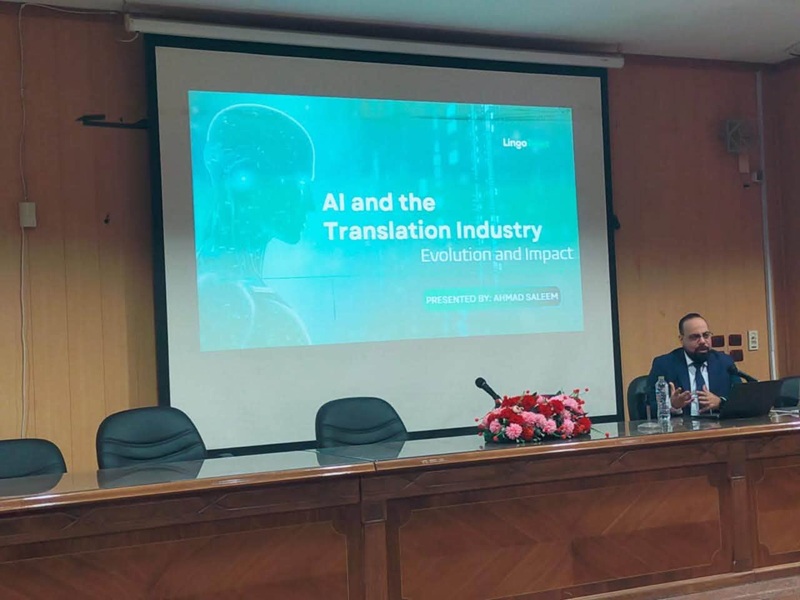
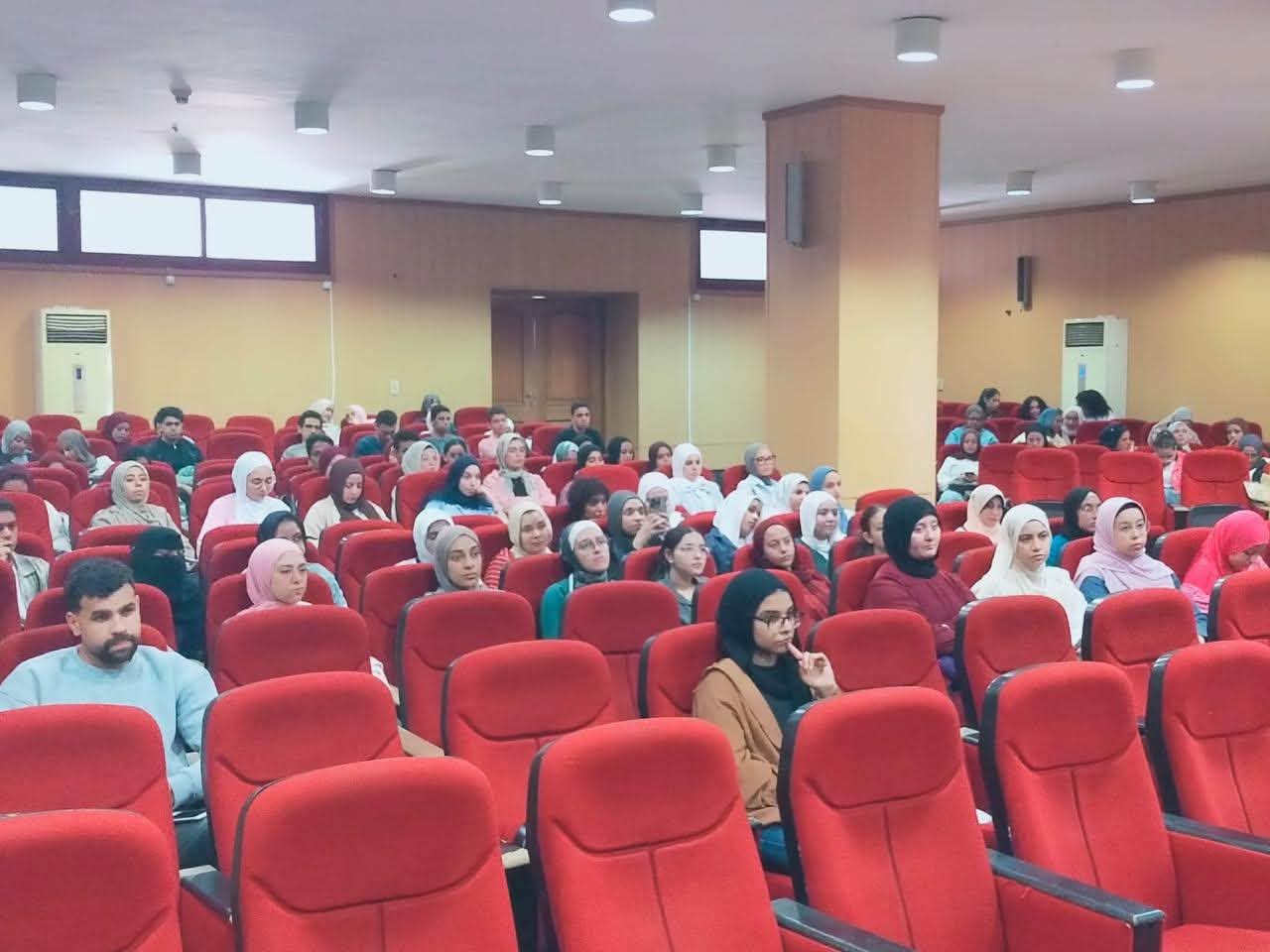
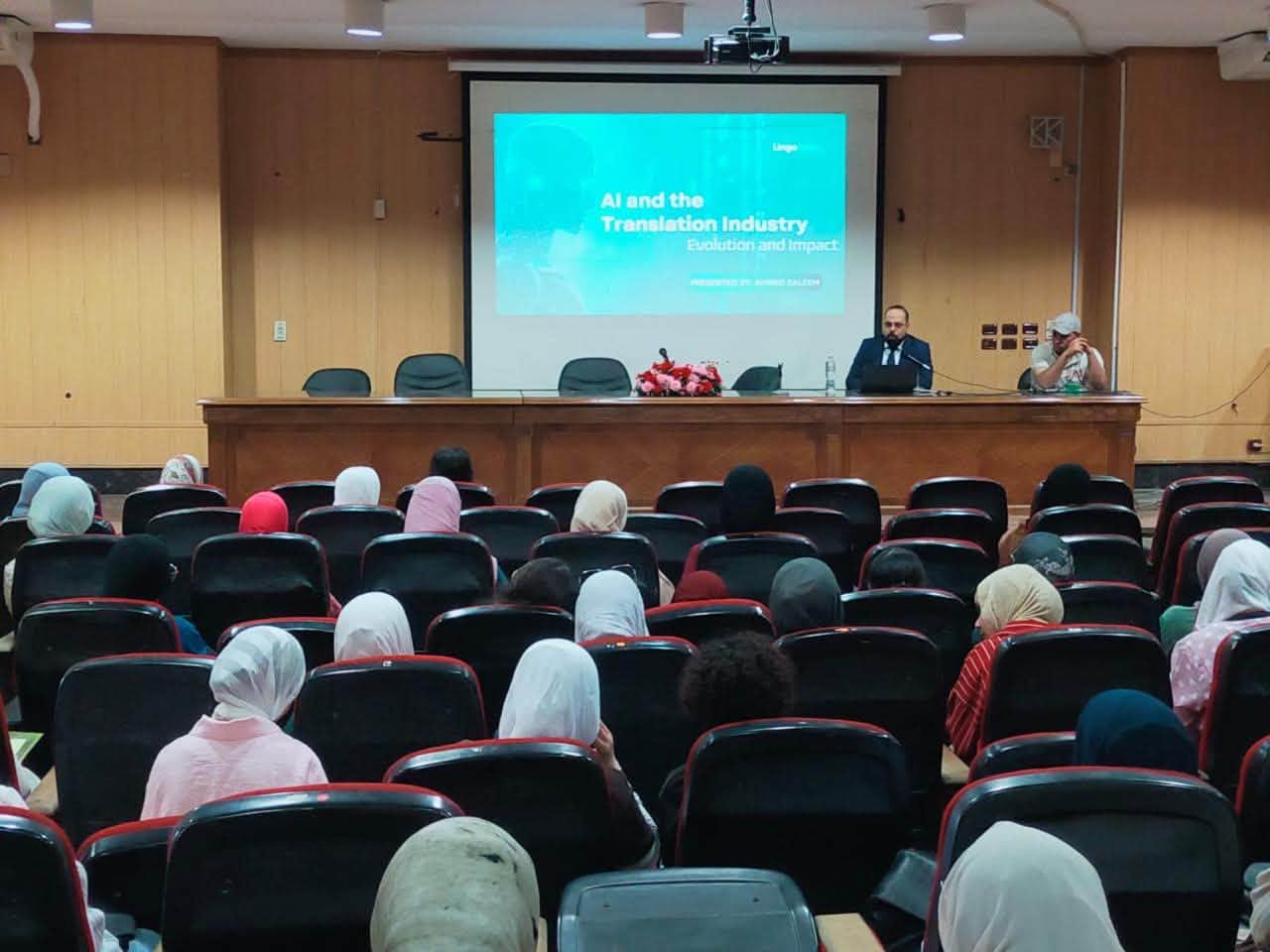
As part of Ain Shams University's strategy to keep pace with rapid technological transformations, develop its education and training system, and strengthen the integration of academic knowledge with professional applications, and under the patronage of Prof. Mohamed Diaa Zain El-Abedeen, President of Ain Shams University; Prof. Rami Maher Ghali, Vice President for Education and Student Affairs; and Prof. Yomna Safwat Salem, Dean of the Faculty of Al-Alsun, the Faculty organized a seminar entitled “Artificial Intelligence and Its Impact on the Translation Industry and Labor Market.” The seminar was organized by the Community Service and Environmental Development Sector, in cooperation with the Faculty's Field Training Committee and LingoTrust and was held in the Faculty's Conference Hall. Attendance at the seminar counted toward students' field training requirements.
For her part, Prof. Yomna Safwat Salem, Dean of the Faculty of Al-Alsun, emphasized that keeping pace with the technological revolution and rapid transformations in the translation industry is a priority in the faculty’s vision for developing the educational process. She noted that preparing graduates capable of competing in modern labor markets is no longer limited to proficiency in foreign languages but also requires advanced technological awareness, the ability to use artificial intelligence tools efficiently and professionally, and strong critical thinking, analytical, and evaluation skills, ensuring the preservation of the translator's professional and human value.
She added that the faculty is committed to developing its training and professional qualification system and strengthening cooperation with specialized institutions and companies. These efforts provide students with opportunities for direct engagement with professional expertise, exposure to real-world practices, and the integration of academic knowledge with actual labor market requirements. She emphasized that investing in students' skills and practical capabilities is a fundamental pillar in preparing distinguished graduates who can adapt to changing demands and compete at both local and international levels.
 |
 |
The seminar was organized as part of the faculty’s commitment to keeping pace with ongoing developments in the translation industry, exploring the future of language-related professions amid the rapid advancement of artificial intelligence applications, and providing interactive opportunities that combine academic preparation with professional experience, thereby enhancing students' readiness to enter the labor market and meet its evolving requirements.
The seminar featured Mr. Ahmed Abdel Moneim Selim, CEO and Founder of LingoTrust Translation and Training Company, who reviewed the transformation taking place in the translation industry through the adoption of artificial intelligence technologies. He highlighted the fundamental changes these technologies have brought to working methods, language service delivery mechanisms, quality standards, and professional efficiency, as well as their implications for the future of translators and the evolving nature of their roles in the labor market.
The seminar addressed the most prominent applications of artificial intelligence in translation and their contributions to improving performance, accelerating task completion, and enhancing the efficiency of language-related processes. Discussions also explored the professional opportunities created by these technologies, the challenges they present to practitioners, and the comprehensive set of skills translators will need in the coming years, combining linguistic proficiency, technological competence, critical review and evaluation skills, and the conscious and responsible use of artificial intelligence tools.
The seminar also explored professional development requirements in the translation sector and the importance of moving beyond the traditional concept of translation practice toward a more comprehensive model that incorporates modern technologies and utilizes their capabilities while preserving the central role of human expertise in ensuring linguistic accuracy, cultural appropriateness, and the quality of translation outputs.
The seminar reflects the Faculty of Al-Alsun at Ain Shams University's commitment to establishing an educational model that combines academic excellence, practical training, and openness to technological advancements. Through expanding professional partnerships, developing field training opportunities, and enhancing students' awareness of the requirements of future professions, the faculty seeks to improve the quality of its educational outcomes and reaffirm its role in preparing qualified language and translation professionals capable of actively contributing to shaping the future.