.svg)

From Scientific Vision to International Accreditation… MASRI Cancer Biobank Marks a Scientific Milestone with ISO 20387 Accreditation
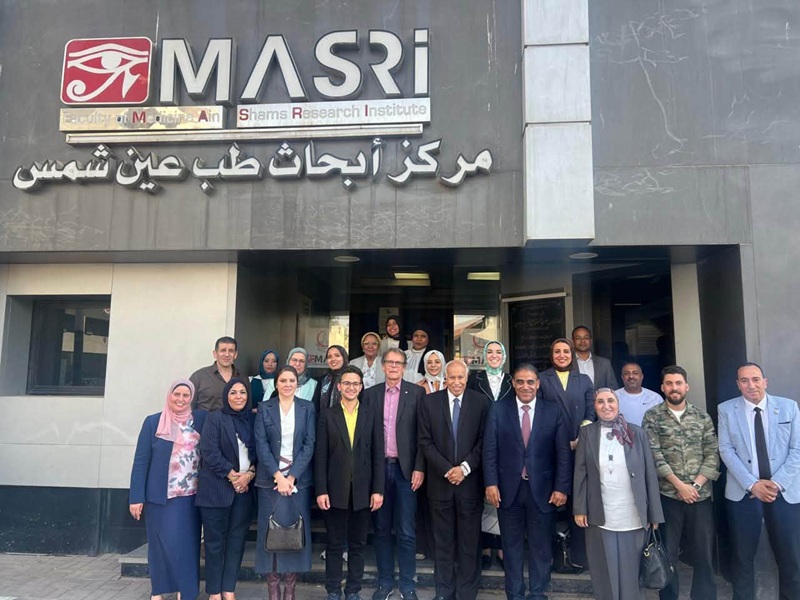
In a pioneering scientific and research achievement for Ain Shams University, the MASRI Cancer Biobank at the Medical Ain Shams Research Institute (MASRI) has received international accreditation from the Egyptian Accreditation Council (EGAC) in accordance with ISO 20387, the international standard for biobanking. The accreditation was achieved under the patronage of Prof. Ali El-Anwar, Dean of the Faculty of Medicine and Chairman of the University Hospitals Board of Directors, and in the presence of assessors and representatives of European accreditation bodies. This milestone reflects the University’s leadership in advancing research infrastructure and precision medicine and reinforces Biobank’s position as a leading research resource in cancer research.
The accreditation marks the culmination of years of continuous work to establish an integrated biobanking system in accordance with the highest standards of quality and efficiency, transforming an ambitious vision into a scientific reality capable of providing reliable biological resources to support scientific research and medical innovation.
MASRI Cancer Biobank is the first cancer-specific biobank in Egypt and Africa to receive this accreditation, representing a significant addition to Ain Shams University’s research ecosystem. It strengthens the University’s capacity to provide advanced research infrastructure for cancer research and precision medicine while expanding opportunities for scientific collaboration with academic and research institutions at both national and international levels.
The Biobank currently has a storage capacity of approximately 28,000 biological samples within an integrated system for sample preservation, management, and linkage to associated data. It focuses on several of the most common adult cancers, including breast, colorectal, lung, liver, and bladder cancers.
These samples constitute a strategic research resource that can be utilized in studies of tumor biology, biomarker discovery, molecular and genomic research, and the development of diagnostic, prognostic, and treatment-response tools. This aligns with global trends in precision medicine and opens new horizons for drug discovery and the development of more precise approaches to cancer diagnosis and treatment.
The accreditation journey extended well beyond establishing storage infrastructure. It involved building a comprehensive biobanking system encompassing infrastructure and equipment development, sample and data management systems, quality policies, standard operating procedures, traceability systems, sample quality assurance, as well as the qualification and training of personnel.
Every stage of the sample lifecycle was aligned with the requirements of ISO 20387, beginning with sample collection, receipt, and processing, through storage and data management, and ultimately to the release and distribution of samples for research purposes, in accordance with established quality standards and scientific ethics.
The Biobank is led by Dr. Hesham El-Ghazaly, Director of the Biobank; Dr. Amany Maher, Executive Director; and Dr. Manal El-Mahdy, Technical Director, alongside the quality team comprising Dr. Rania El-Sharkawy and Dr. Ahmed Khattab. Their collective efforts, teamwork, and commitment to continuous development played a key role in meeting the accreditation requirements and achieving this milestone.
Achieving this accreditation confirms that reaching this stage is not the end of the journey, but rather the outcome of a scientific vision and sustained institutional effort by an integrated team that recognized the importance of establishing a biobank in accordance with international standards and successfully overcame challenges to build a sustainable research system capable of keeping pace with global advances.
The international accreditation is expected to enhance the capacity of MASRI Cancer Biobank to support high-quality medical and biomedical research, particularly in cancer research and precision medicine, while also expanding opportunities for research collaboration with academic and research institutions in Egypt and abroad.
This achievement reflects Ain Shams University’s commitment to developing sustainable research infrastructure aligned with international standards, strengthening its ability to transform biological resources and associate research data into strategic tools that support scientific discoveries, advance innovative medical solutions, and contribute to the future development of healthcare.