.svg)

Handover of the “Katamaros” Manuscript Following Its Restoration at the Conservation Lab of the Papyrological Studies and Inscriptions Center at the Faculty of Archaeology
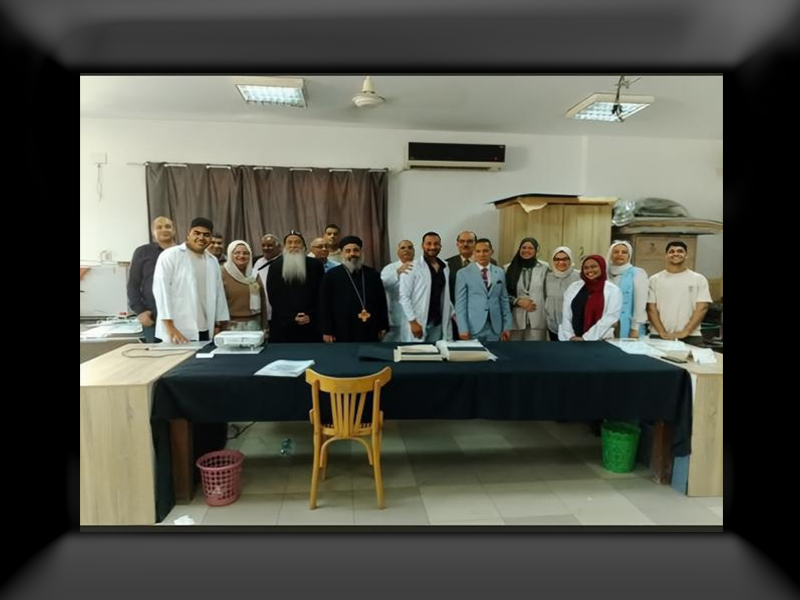
The Conservation Laboratory of the Papyrological Studies and Inscriptions Center at the Faculty of Archaeology, Ain Shams University, witnessed the handover of the Coptic manuscript “Katamaros Book” following the completion of its restoration. The event was attended by Prof. Hossam Tantawy, Acting Dean of the Faculty; Prof. Bassem Mohamed, Acting Vice Dean for Community Service and Environmental Development; Dr. Nawal Gaber, Acting Vice Dean for Education and Student Affairs; and Dr. Iman Nabil, Director of the Center, along with members of the Center.
The handover ceremony was held in the presence of a distinguished group of specialists and scholars in Coptic studies, including Monk Archpriest Justus Al-Orshalimi, researcher in Coptic and Christian history in the Holy Land and member of the Egyptian Writers Union; Archpriest Wissa Hefzy Saeed, priest of the Monastery of Archangel Michael in Talkha, Minya Al-Qamh, Sharqia Governorate; Engineer Azer Gorst Azer, Chairman of the Board of the Coptic Sunday Schools House in Cairo; Engineer David Emad Shawky, researcher in Coptic studies; and Dr. Isaac Ibrahim Al-Bagoushi, researcher in Coptic studies and member of the Coptic History Committee.
During the event, Dr. Isaac Ibrahim Al-Bagoushi delivered a speech highlighting the religious and heritage significance of the “Katamaros Book” manuscript. He reviewed the unsuitable preservation conditions it had endured over past periods, as well as previous non-scientific restoration attempts that negatively affected its condition. He commended the restoration team’s efforts, noting that following the completion of the restoration, the manuscript is now in a stable condition that allows for accurate scientific study and further research utilization.
Dr. Iman Nabil and the restoration team also presented a detailed presentation and a documentary film showcasing the stages of the restoration process, which lasted one year and three months. They explained the precise scientific methods employed to preserve the manuscript’s components and safeguard its historical value.
This achievement reflects the scientific and practical role of the Center’s Conservation Laboratory in preserving manuscripts and safeguarding documentary heritage using the latest scientific techniques, ensuring the sustainability of these treasures for future generations. It also underscores the importance of collaboration between academic institutions and heritage organizations in protecting cultural identity.
The Center’s administration expressed its sincere appreciation to the restoration team for their outstanding scientific efforts in completing this meticulous work. The team included Dr. Iman Selim, Manal Mohamed Ragab, Ahmed Saqr, Hend Ibrahim, Dr. Mohamed Allam, and Kyrillos Hanna, under the supervision of Dr. Iman Nabil, who led the project with high scientific and professional competence throughout the restoration period.