
.svg)

With the participation of a select group of decision-makers and innovators: The 14th Ain Shams University International Conference discusses the role of DeepTech in sustainable development
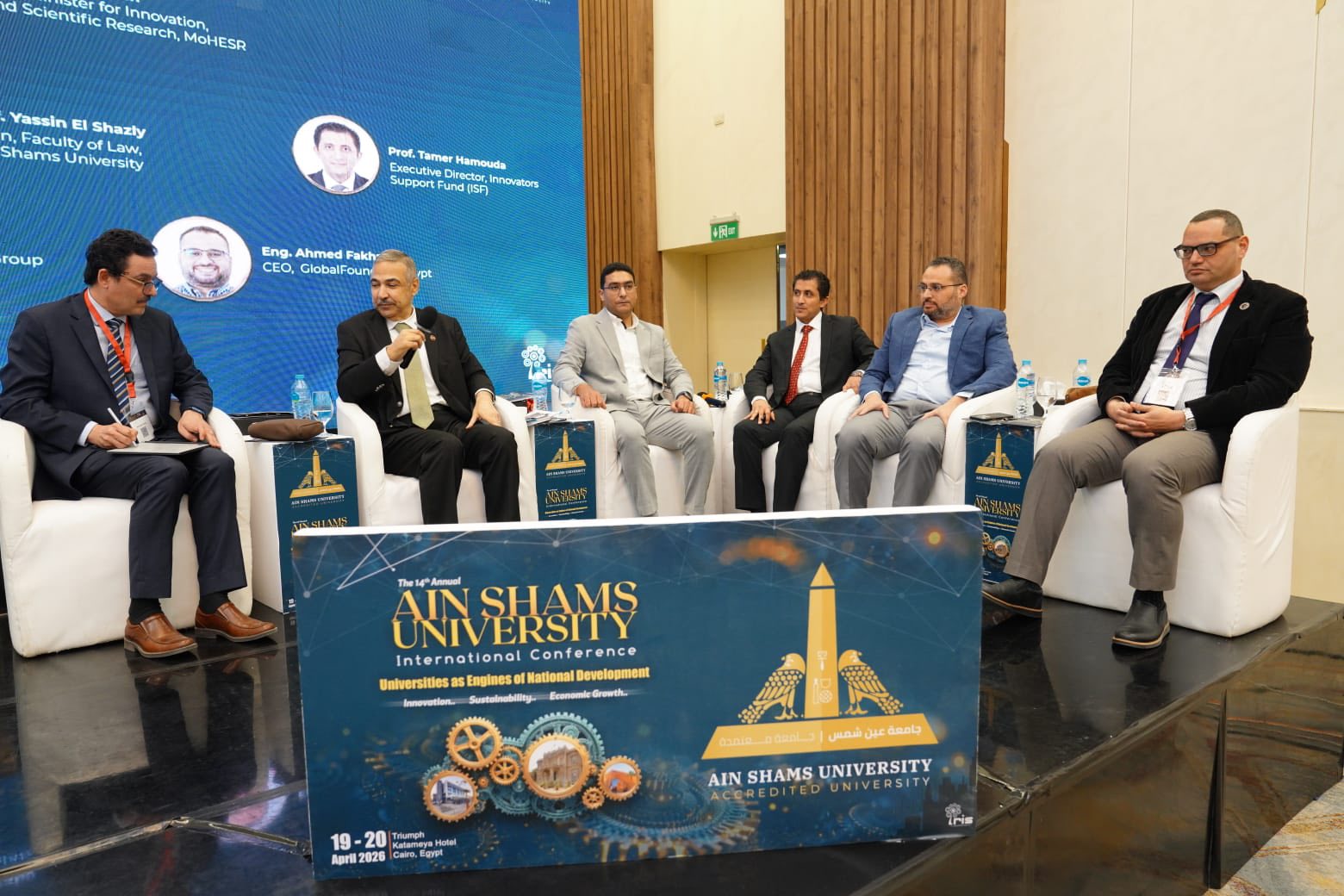
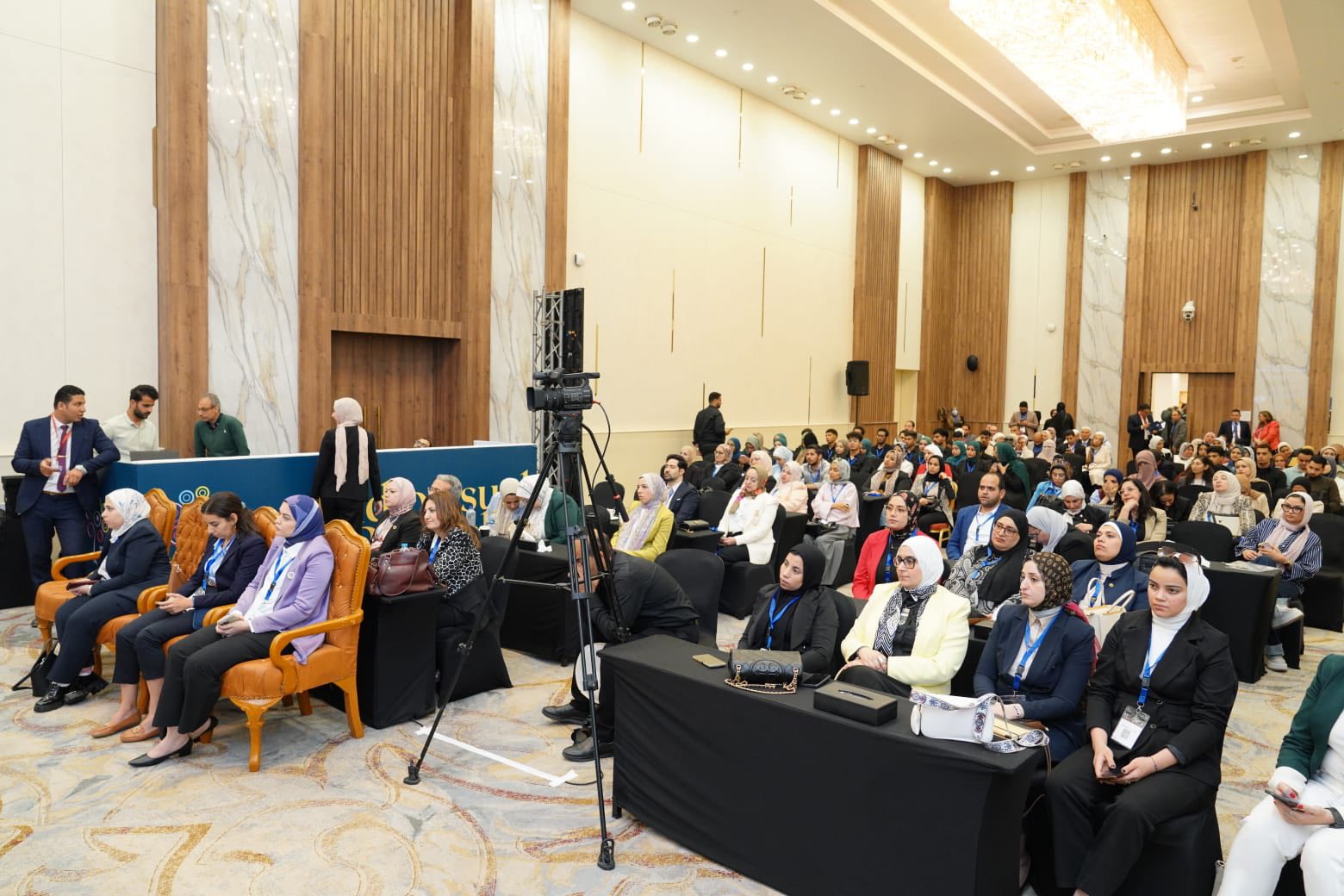
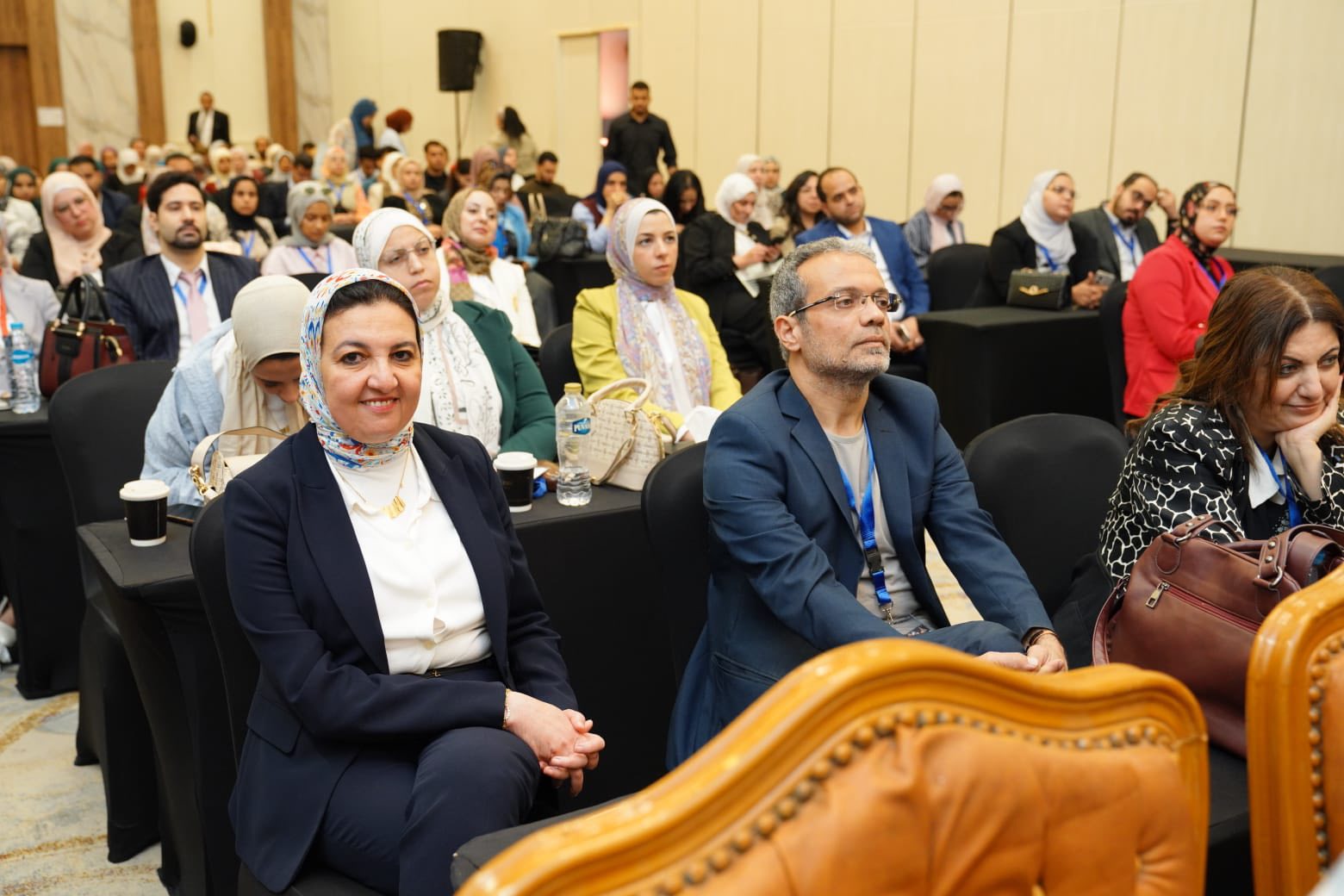
As part of the 14th Ain Shams University International Conference, themed "Universities as Engines of National Development... Towards Innovation and Sustainable Economic Growth," the first day of the event featured a high-level panel discussion titled "Empowering DeepTech Innovation."
 |
 |
 |
||
The conference was held under the auspices of Prof. Abdel Aziz Qansouh, Minister of Higher Education and Scientific Research; Prof. Mohamed Diaa Zain El Abedeen, President of Ain Shams University; and Prof. Amany Osama Kamel, Vice President of the University for Graduate Studies and Research.
This session is part of the conference's vision to align academic efforts with Egypt's Vision 2030. It aimed to explore ways to build an integrated system that positions Egypt as an active contributor to advanced technology globally, rather than merely a consumer.
 |
 |
 |
||
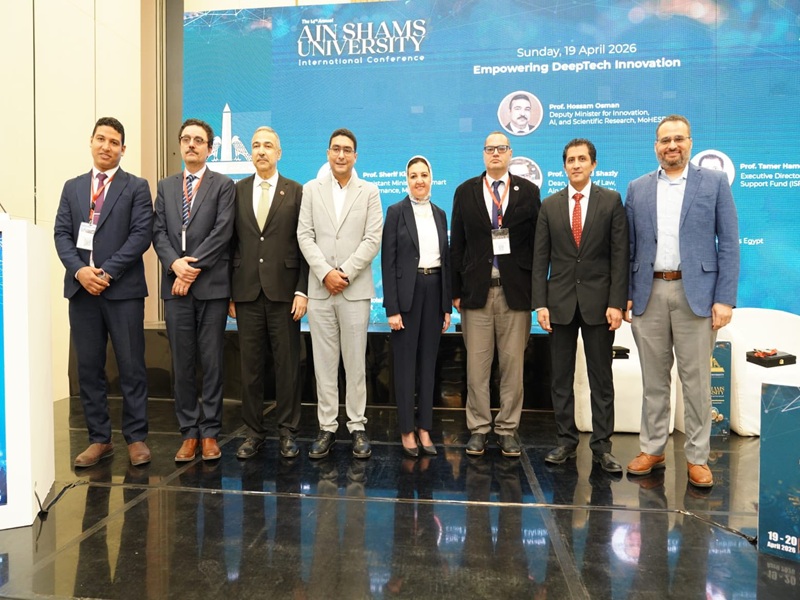
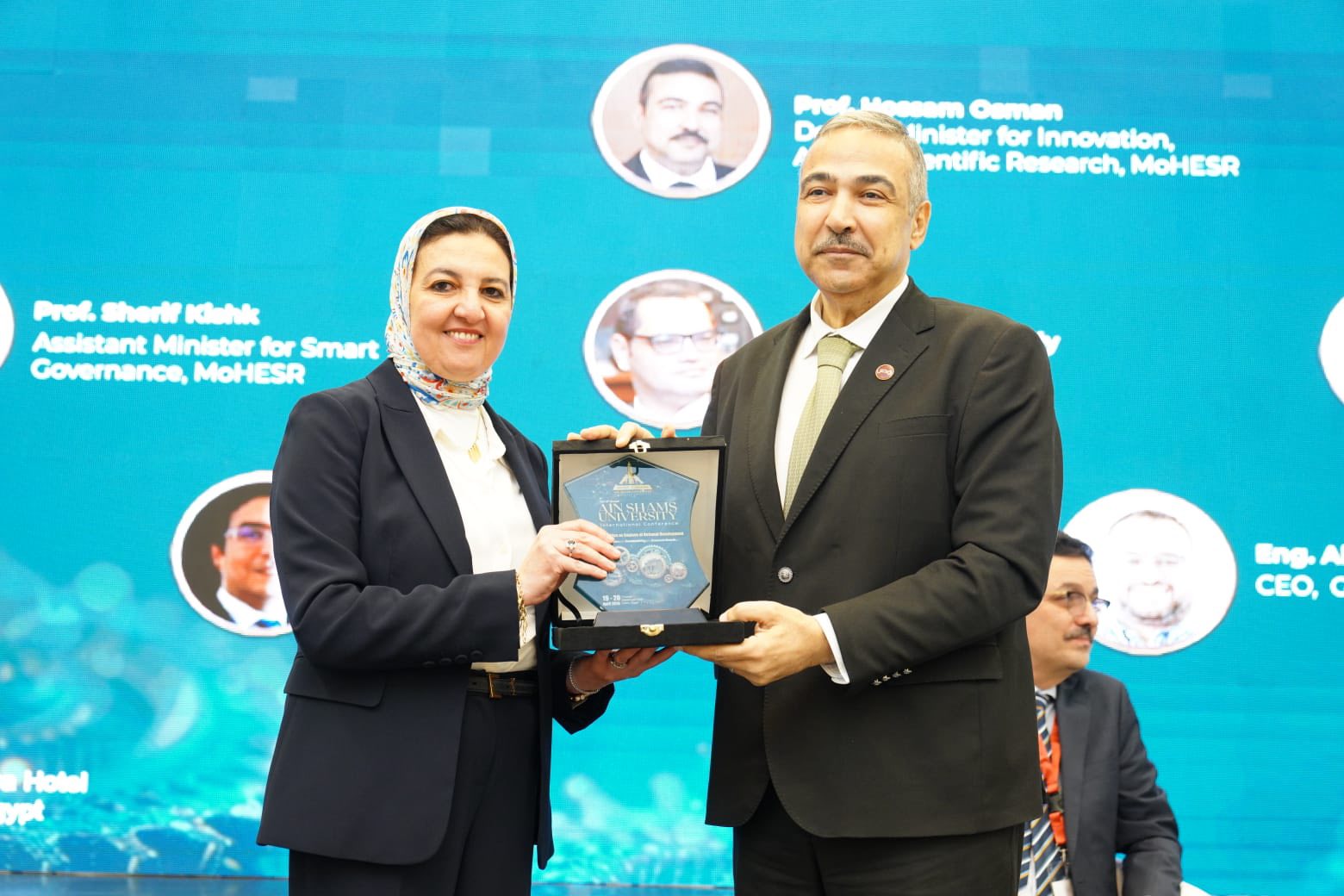
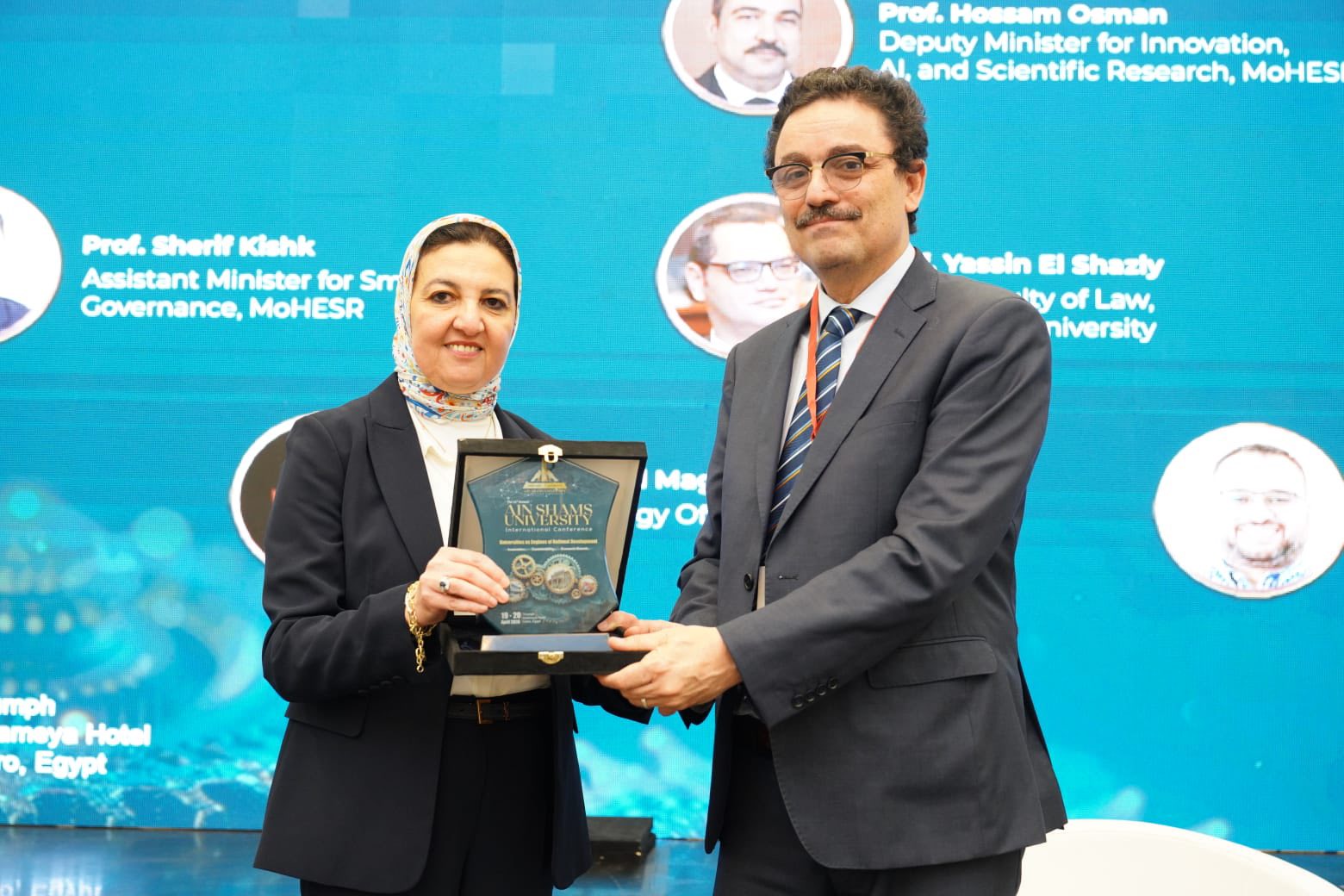
The session brought together a distinguished group of academic leaders, policymakers, and industry pioneers, including Dr. Hossam Osman, Deputy Minister of Higher Education and Scientific research for Innovation, Artificial Intelligence, and Scientific research , who chaired the session.
The session was enriched by a distinguished group of academic and industrial figures, including Prof. Sherif Keshk: Assistant Minister of Higher Education and Scientific research for Smart Governance Affairs, Prof. Yassin El-Shazly: Dean of the Faculty of Law at Ain Shams University, Prof. Tamer Hammouda: Executive Director of the Innovators Support Fund, Engineer Mohamed Magdy El-Araby, Chief Technology Officer of El-Araby Group, and Engineer Ahmed Fakhry: Executive Director of Global Foundries Egypt.
 |
 |
 |
||
Prof. Hossam Osman reviewed the national strategies for promoting scientific research . During his speech, he stressed that linking scientific research with industrial application is a fundamental pillar for achieving knowledge and economic sovereignty. He also pointed out that the choice of the session’s title reflects the state’s vision of stimulating innovation based on transforming the outputs of scientific research into realistic solutions that serve the goals of sustainable development. He praised the qualitative expertise of the participating professors who represent the basic pillars of the deep technology-based innovation system.
Prof. Sherif Keshk, Assistant Minister of Higher Education for Smart Governance, highlighted the Ministry’s tireless efforts in preparing qualified personnel and developing the information infrastructure through the digital transformation of higher education and scientific research institutions, stressing that it is not limited to merely “digitizing” procedures, but extends to include formulating a smart educational and research environment that provides unprecedented capabilities for researchers to access global knowledge sources and employ artificial intelligence and deep technology tools in their projects.
In his address, he explained that university education is currently undergoing a historic turning point that necessitates changing the stereotypical image of the university student. The goal is to shift from the "passive recipient of information" model to the "active and innovative student" who participates in solving societal problems through technology. He also proudly noted that Egypt ranks among the top countries globally in terms of its abundance of young talent and creative human resources, a true treasure that the Ministry seeks to invest in and develop.
He added that "smart governance" is the fundamental guarantee for the sustainability of this transformation. The Ministry is working to build unified, centralized databases that allow both decision-makers and researchers to access information accurately and transparently. He emphasized that the Ministry's strategy aims to make Egyptian universities "open innovation platforms," linking the capabilities of these innovators with the needs of the digital state. He pointed out that Egypt's leadership in the field of talent imposes upon us the responsibility of providing the latest educational systems that ensure the Egyptian innovator remains a strong competitor in the global job market, which recognizes only advanced digital skills.
Prof. Yassin El-Shazly, Dean of the Faculty of Law at Ain Shams University, who focused on legal frameworks and the protection of intellectual property, added that Egypt was among the first countries to establish comprehensive legal frameworks for protecting intellectual property rights. He pointed out that Egyptian legislation has undergone fundamental updates that have successfully integrated the fields of literary and industrial property into a single legislative system.
Dr. El-Shazly also highlighted the important role played by economic courts in Egypt, explaining that they were established as specialized judicial bodies with exclusive jurisdiction to adjudicate intellectual property disputes. This ensures efficient litigation and the swift restoration of rights to their owners within a legal environment that supports innovation and investment.
Prof. Tamer Hammouda, Executive Director of the Innovators Support Fund (ISF), reviewed the mechanisms for financing innovation and supporting entrepreneurship, explaining the Fund’s comprehensive vision in creating an environment that stimulates growth, and the multiple mechanisms that the Fund adopts to finance innovative projects and support entrepreneurship at its various stages. He pointed out that the Fund does not only provide financial support, but also works as a strategic incubator that aims to bridge the gap between the idea and the commercial product, through specialized programs to raise the efficiency of innovators and provide the necessary tools to transform scientific research into economically viable projects that contribute directly to enhancing the competitiveness of national industry.
The discussion was enriched by the perspective of the private and industrial sector, and Engineer Mohamed Magdy El-Araby, Chief Technology Officer of El-Araby Group, spoke with a realistic vision about the role of major industrial strongholds in supporting digital transformation, reviewing the success story of "El-Araby Group" as a pioneering model in localizing technology. Engineer Mohamed Magdy El-Araby explained that the group's new direction towards investing in deep technologies (DeepTech) through the establishment of a company specializing in research and development comes from the belief in the necessity of keeping pace with the technologies of the age, stressing that integrating these advanced technologies into manufacturing processes and final products is the only way to raise added value and enhance Egyptian leadership in regional and international markets, while emphasizing the importance of integration between academic research thinking and applied experience in factories.
The session also featured a valuable contribution from Eng. Ahmed Fakhry, CEO of GlobalFoundries Egypt, a newly established semiconductor manufacturing company in Egypt that is part of a leading global firm in a highly advanced and sophisticated field. He offered a strategic perspective on the intersection of deep technologies with the core of business and industrial operations. He also outlined the key challenges facing Egyptian entrepreneurs in competing with global players, emphasizing the importance of developing ambitious national strategies to foster a culture of entrepreneurship based on deep innovation. This, he stressed, would ensure access to appropriate funding and empower Egyptian talent to lead major technological transformations in the region.
The session addressed several vital topics, including talent development, bridging legislative gaps, policy development, and attracting investment in deep technologies. It also discussed partnerships between universities and industry, activating the role of universities and research centers as industrial accelerators to enhance international competitiveness and technological entrepreneurship, and the challenges facing Egyptian entrepreneurs in competing with global entities, particularly in the semiconductor and telecommunications sectors.
The speakers emphasized that enabling innovation in deep technologies is not merely a technological option, but an economic necessity to support national priorities and empower the knowledge economy, thus serving the Sustainable Development Goals and Egypt's Vision 2030.