.svg)

Investing in Science and Human: Ain Shams University and Midar Strengthen Nanotechnology Research Through a Strategic Partnership to Support Scientific Research
Reflecting a model of integration between a leading national university and the responsible investment sector, Ain Shams University and Midar for Investment and Urban Development have signed a strategic cooperation agreement to support the University’s Nanotechnology Center. Under the agreement, Midar will fund the acquisition of advanced scientific and research equipment, contributing to the advancement of scientific and medical research in Egypt.
 |
 |
 |
||
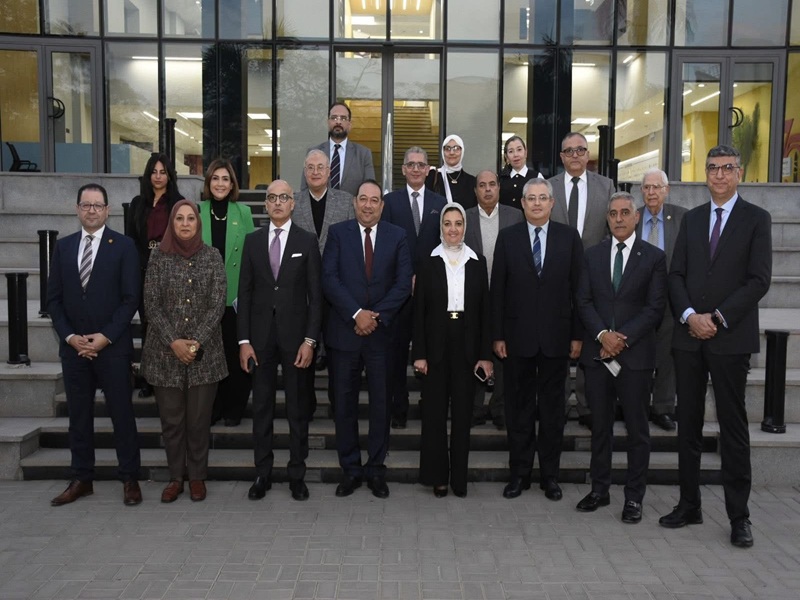
The protocol was signed by Professor Mohamed Diaa Zain El-Abedeen, President of Ain Shams University, and Engineer Ayman El-Kousy, Managing Director and Chief Executive Officer of Midar for Investment and Urban Development, in the presence of Prof. Ghada Farouk, Vice President for Community Service and Environmental Development; Prof. Amany Osama Kamel, Vice President for Graduate Studies and Research; Prof. Rami Maher Ghali, Vice President for Education and Student Affairs; and Prof. Mohamed Salheen, Vice President of Ain Shams National University for Academic Affairs, along with a number of faculty deans, members of the Nanotechnology Center’s Board of Directors, and senior executives from Midar, underscoring the depth of partnership between the two institutions.
The President of Ain Shams University emphasized that the University is steadily developing its research infrastructure through a forward-looking strategic vision aimed at empowering researchers, supporting scientific output, and enhancing international publication, with the goal of achieving tangible scientific and societal impact at both the national and global levels. He noted that the partnership represents a successful national model for linking academic research with real community needs.
 |
 |
 |
||
He also underlined the University’s strong focus on the healthcare sector through its university hospitals, which play a vital role within Egypt’s healthcare system, stressing that investing in specialized research centers is a direct investment in human development and quality of life.
The University President further praised the pioneering vision of former university leaders who laid the foundation for establishing the Nanotechnology Center, which has since evolved into a multidisciplinary research hub serving various faculties and fostering integration across medical, engineering, scientific, and agricultural fields, particularly considering the rising costs of advanced research technologies.
He added that the Nanotechnology Center functions as a unified research platform that supports interdisciplinary studies and produces high impact applied research with clear medical and economic value, in line with global trends in advanced science and smart technologies.
For his part, Engineer Ayman El-Kousy affirmed that Midar’s continued cooperation with Ain Shams University for the third consecutive year reflects the company’s firm commitment to supporting scientific research and the healthcare sector. He stressed that Midar views investment in science and knowledge as a cornerstone of sustainable development, noting that nanotechnology plays a critical role in addressing challenges related to industry, energy, healthcare, and infrastructure.
Meanwhile, Prof. Amany Osama Kamel, Vice President for Graduate Studies and Research, stated that the agreement aims to enhance the Nanotechnology Center’s capabilities and promote knowledge exchange between both sides, opening new research horizons supported by cutting-edge technologies. She added that the Center will house advanced laboratories, clean rooms, and high-precision equipment serving both basic and applied research, expressing the aspiration for the Center to become a regional benchmark in the field.
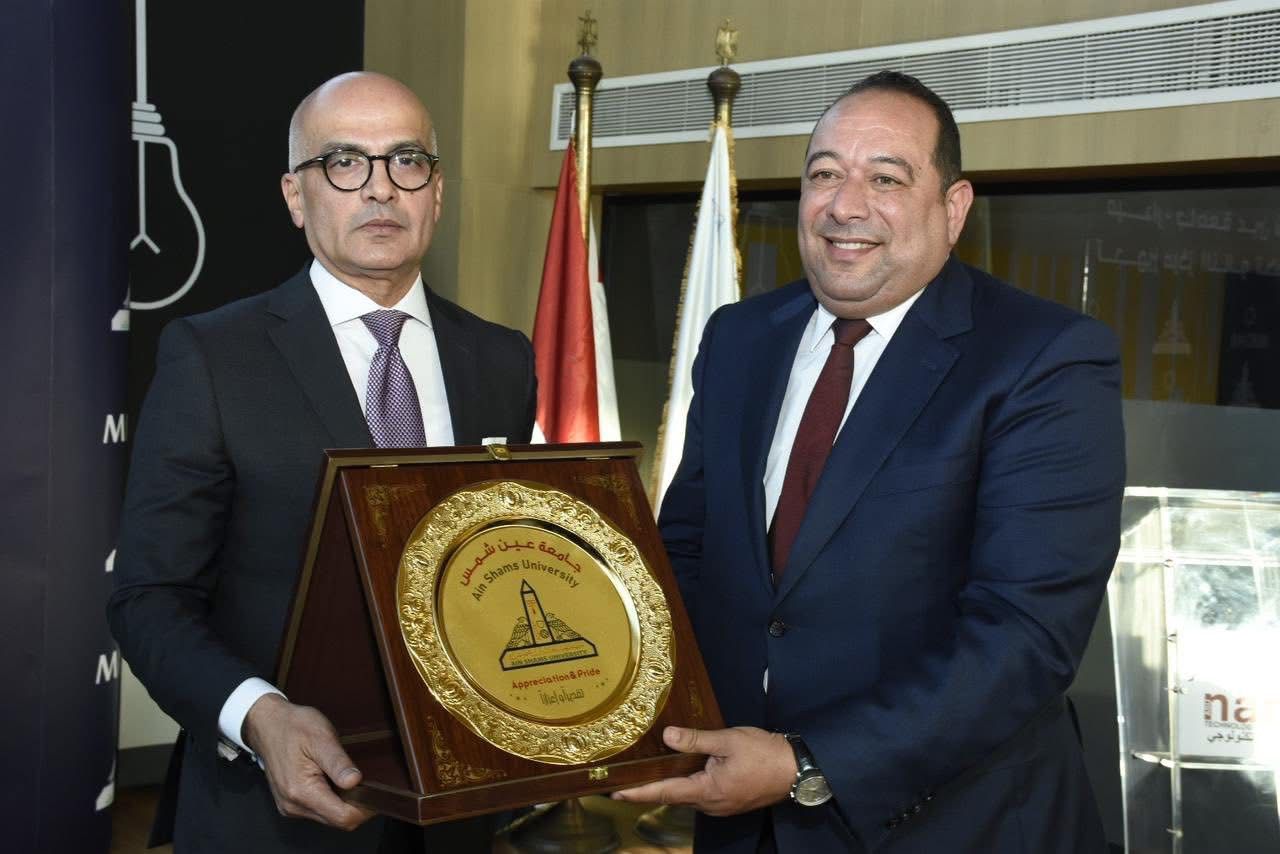
The ceremony concluded with the President of Ain Shams University honoring Engineer Ayman El-Kousy with the University Shield in recognition of Midar’s role in supporting scientific research and strengthening community partnership.
Nanotechnology is widely recognized as one of the key drivers of modern scientific advancement, offering transformative solutions in medical, industrial, and agricultural fields through the manipulation of materials at the atomic and nanoscale levels, thereby fostering innovation and supporting sustainable development goals.