.svg)

At the Closing of the 14th International Conference of Ain Shams University… The University President “Minds Are the True Fuel of Development” … Vice President “Recommendations Serve as a Roadmap to Strengthen Universities’ Role as Engines of Economic Growth”
Ain Shams University concluded the activities of its 14th International Conference, held under the theme “Universities as Engines of National Development… Toward Innovation and Sustainable Economic Growth,” following two days of intensive scientific discussions and strategic insights that outlined the evolving role of universities in supporting comprehensive development.
In his closing remarks, Prof. Mohamed Diaa Zain El-Abedeen, President of Ain Shams University and Conference Chair, expressed his pride in the distinguished scientific momentum witnessed during the conference, highlighting the diversity and integration of contributions, which reflect a genuine awareness of the pivotal role universities play at this stage.
He affirmed that universities are no longer traditional educational entities, but have transformed into national platforms for knowledge production, centers for shaping the future, and active partners in achieving sustainable development. He added that Ain Shams University is steadily advancing toward consolidating its role as a national “house of expertise” that supports decision-makers and transforms knowledge into added value through effective partnerships with various state institutions and productive sectors.
The University President stressed that investing in human capital is the true cornerstone of development, requiring continuous advancement in education and assessment systems to keep pace with modern demands. He emphasized that “if universities are the engines of development, then the minds they shape are the true fuel that drives nations toward the future.”
He also reaffirmed the University administration’s commitment to keeping Ain Shams University at the heart of national development projects, supporting innovation, empowering minds, and fostering ideas that shape the future.
For her part, Prof. Amany Osama Kamel, Vice President for Postgraduate Studies and Research and Executive Director of the Conference, emphasized that the discussions and ideas presented throughout the sessions demonstrated Egypt’s strong base of competencies capable of addressing current challenges. She noted that the conference addressed strategic issues including food security, healthcare, digital transformation, artificial intelligence, localization of industries, human capital development, and linking scientific research to societal needs.
She explained that achieving sustainable development requires genuine integration between science, policy, industry, and society, praising the efforts of all participants, including experts, researchers, and organizing committees, whose contributions ensured the conference was delivered in a manner befitting the stature of Ain Shams University.
She further noted that one of the key outcomes of the conference was the issuance of a set of significant recommendations that serve as a practical roadmap for enhancing the role of universities as key drivers of economic growth and as soft power instruments that reinforce national identity and promote an enlightened societal awareness.
The recommendations covered several vital areas, including strengthening investment in artificial intelligence infrastructure, adopting proactive decision-making models, embracing the concept of the productive university aligned with labor market needs, and updating curricula in line with urban development requirements. They also included launching specialized training initiatives in deep technologies and activating partnerships between scientific research and industry.
Additional recommendations focused on supporting the localization of strategic industries, enhancing food security, developing smart and medical tourism sectors, and adopting a human-centered media approach that prioritizes citizens and promotes societal awareness through effective digital tools.
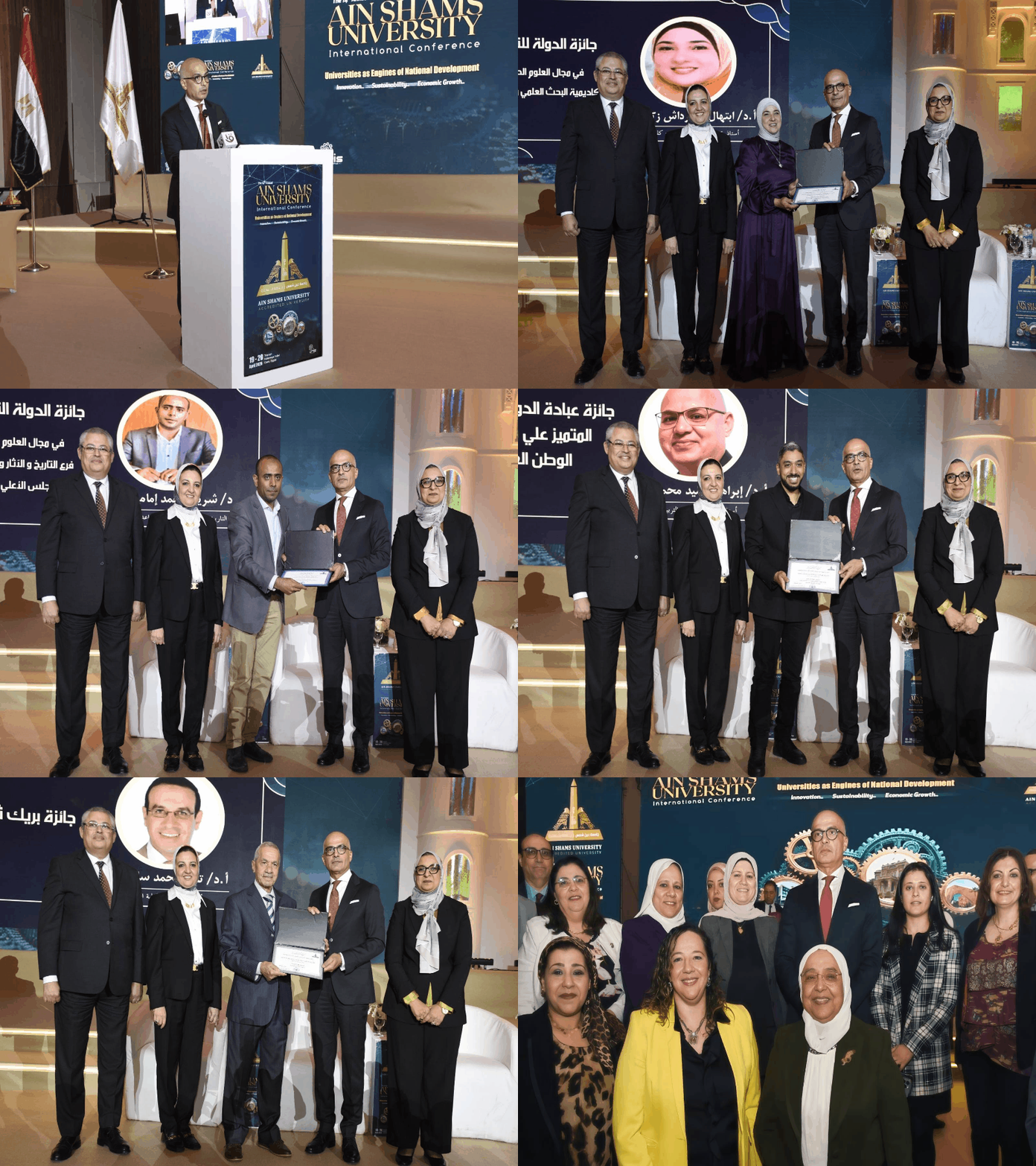
The closing ceremony included the honoring of 22 faculty members who received State Appreciation and Encouragement Awards, as well as special awards, in addition to recognizing the organizing committees. A documentary film showcasing the achievements of the University’s Awards Office was also presented.
The conference concluded with the honoring of Ghada Farouk, Vice President for Community Service and Environmental Affairs, in recognition of her outstanding efforts, amid a celebratory atmosphere that featured musical performances and strong audience engagement.