.svg)

The Vice President for Education and Student Affairs at Ain Shams University inaugurates the activities of the 15th International Scientific Conference of the Faculty of Arts on the application of AI in the humanities
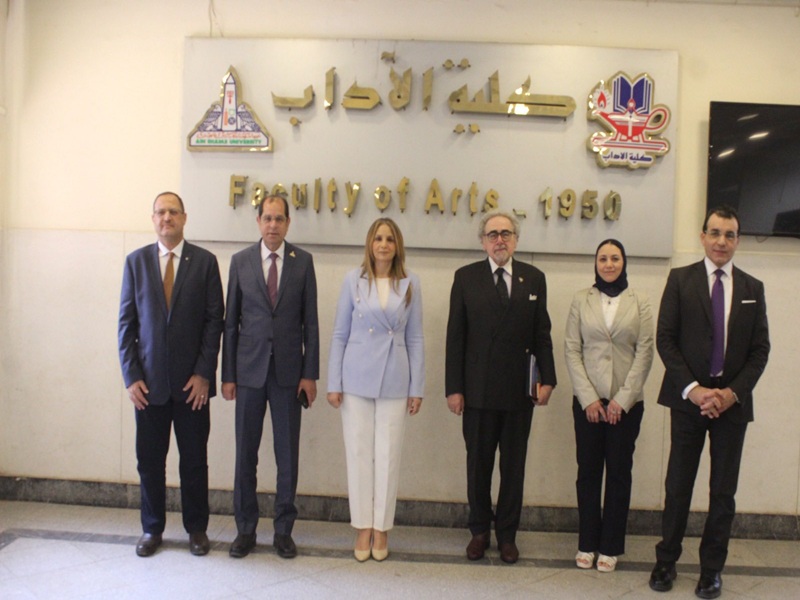
Under the patronage of Prof. Mohamed Diaa Zain El-Abedeen, President of Ain Shams University, Prof. Rami Maher Ghali, Vice President for Education and Student Affairs, inaugurated the 15th International Scientific Conference of the Faculty of Arts at Ain Shams University, held this year under the title: “Employing Artificial Intelligence in the Humanities.”
The event was attended by Prof. Hanan Kamel Metwally, Dean of the Faculty of Arts; Prof. Mohamed Ibrahim Hassan, Vice Dean for Education and Student Affairs; and Prof. Hatem Rabea Hassan, Vice Dean for Graduate Studies and Research, along with a distinguished group of academics, researchers, and specialists.
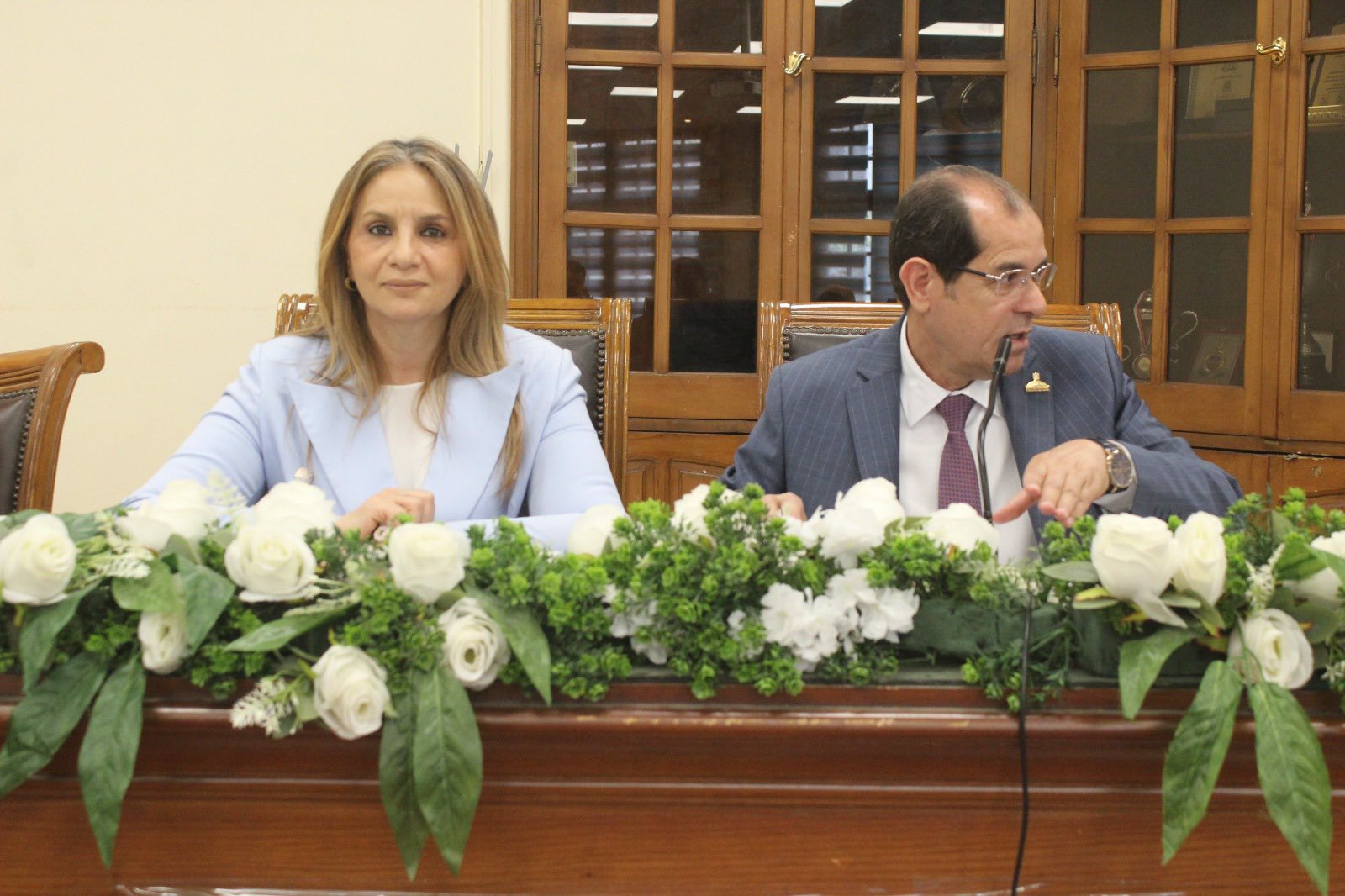
In his opening speech, Prof. Rami Maher expressed his pleasure at being at the Faculty of Arts, emphasizing the importance of the issues addressed by the conference and the growing role of artificial intelligence in advancing both teaching and research processes for faculty members and students alike.
He pointed out the university’s commitment to keeping pace with technological developments through the signing of several protocols and the launch of digital programs and smart applications that support students and enhance their educational experience. He also stressed that the effective use of AI applications requires accurate and reliable input data to ensure high-quality outcomes, making artificial intelligence a powerful tool for reshaping the university learning experience.
 |
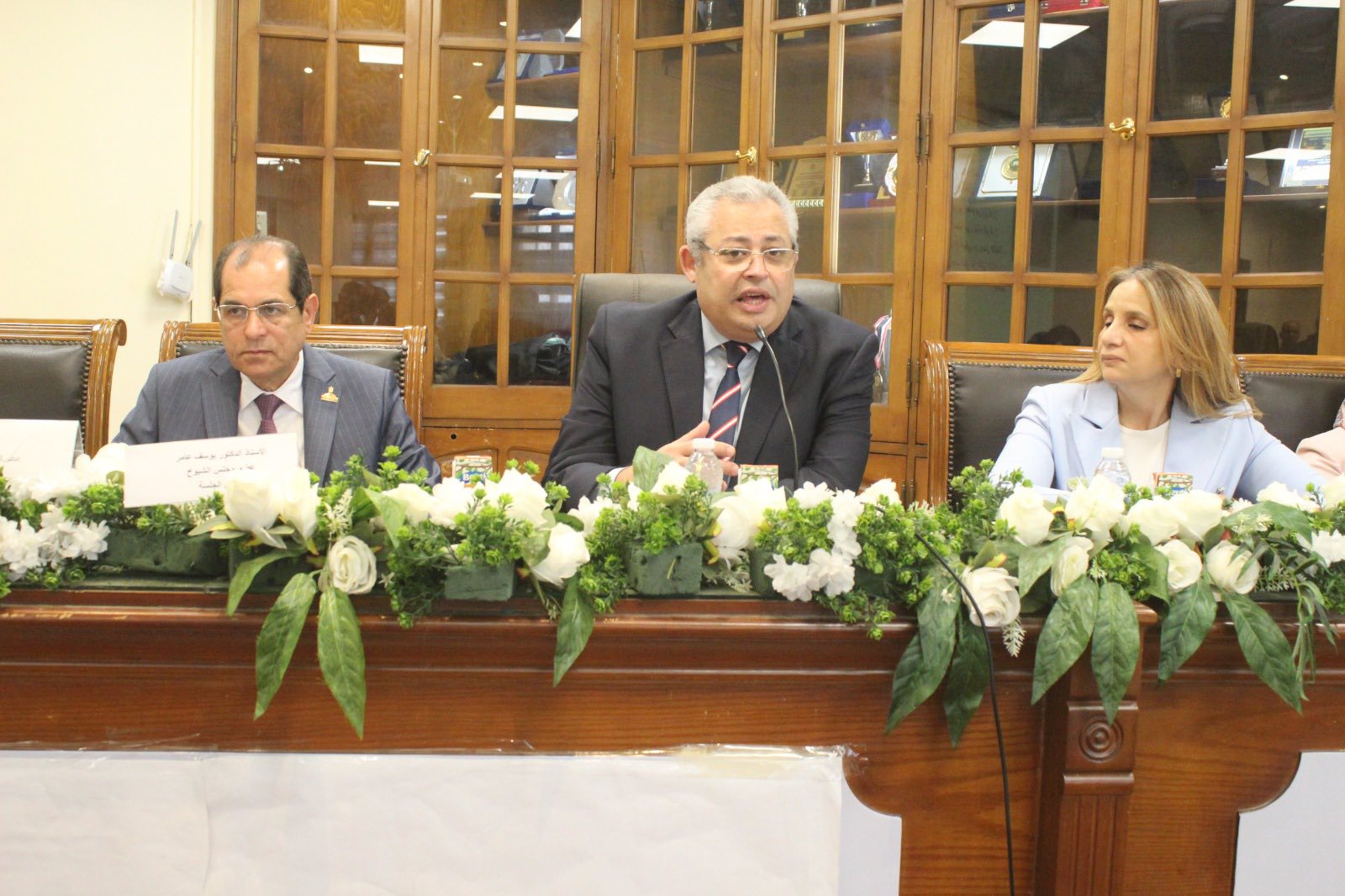 |
For her part, Prof. Hanan Kamel welcomed the conference guests, including Prof. Alaa Abdel Hadi, President of the Egyptian Writers Union, and Dr. Salah El-Manshawi, representative of Dar Al Mandumah. She praised the continued collaboration with Dar Al Mandumah for the second consecutive year in sponsoring and supporting the conference.
She also highlighted the faculty’s cooperation agreements with Dar Al Mandumah in supporting academic journals and publications, noting that artificial intelligence has become strongly present in scientific research fields, which requires academics to actively harness and adapt it in service of research processes. She described the conference as an important platform for exchanging research expertise and a bridge connecting graduates with labor market needs. She also extended her gratitude to the university president and vice presidents for their continuous support of the faculty and their commitment to research development and facilitation.
Prof. Hatem Rabea Hassan affirmed the faculty’s commitment to supporting scientific research and strengthening academic presence in scientific forums. He explained that the conference serves as an important knowledge platform for researchers to explore the latest scientific developments, featuring around 22 research papers across five scientific sessions covering linguistics and translation, history and arts, social and psychological sciences, and humanities and philosophy.
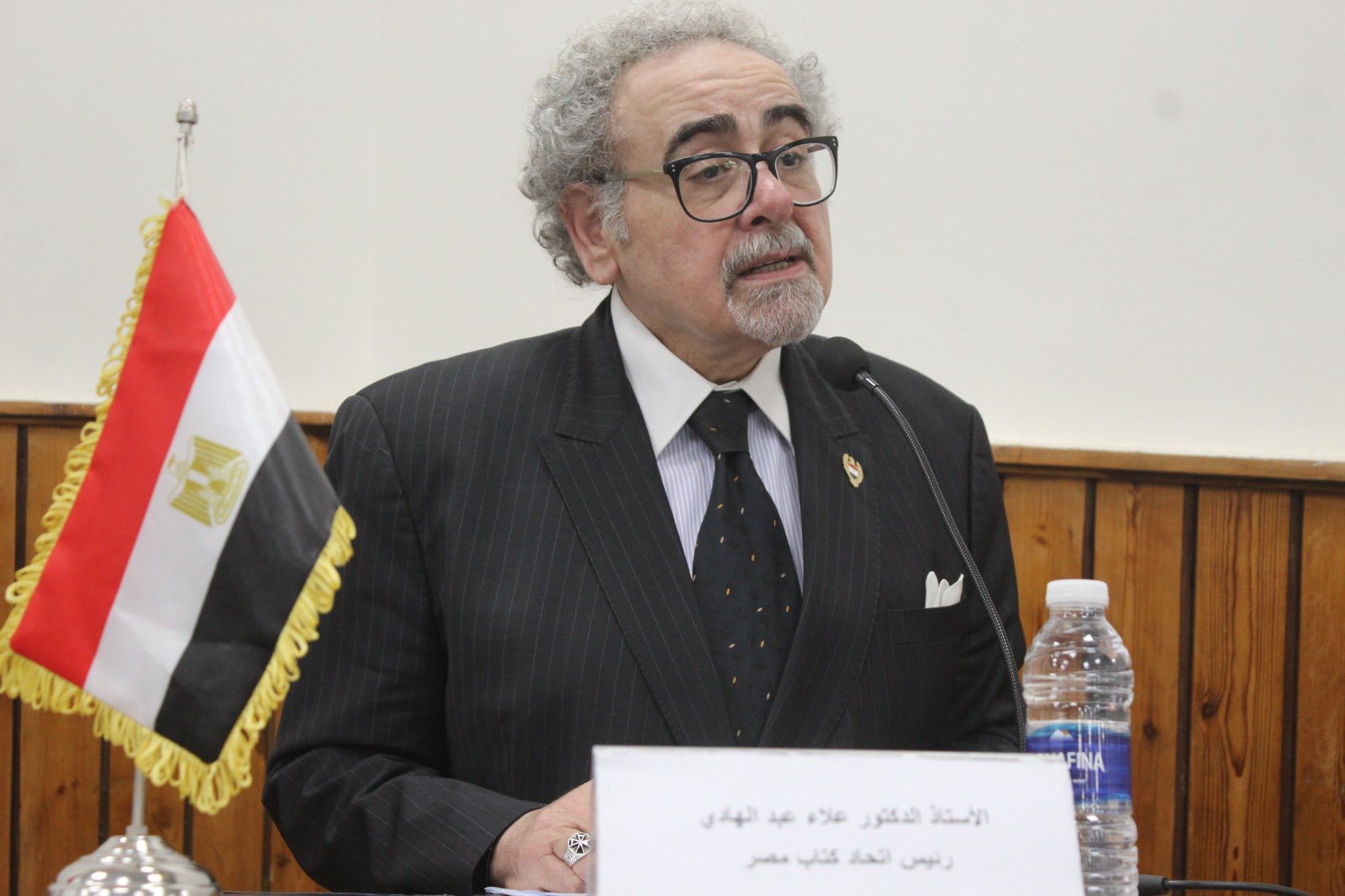
The opening lecture was delivered by Prof. Alaa Abdel Hadi, who emphasized that integrating artificial intelligence within universities is no longer a technological luxury but a strategic and sovereign necessity. He noted that universities are the primary incubators of knowledge production, and that owning and developing AI tools has become essential for strengthening intellectual and cultural independence.
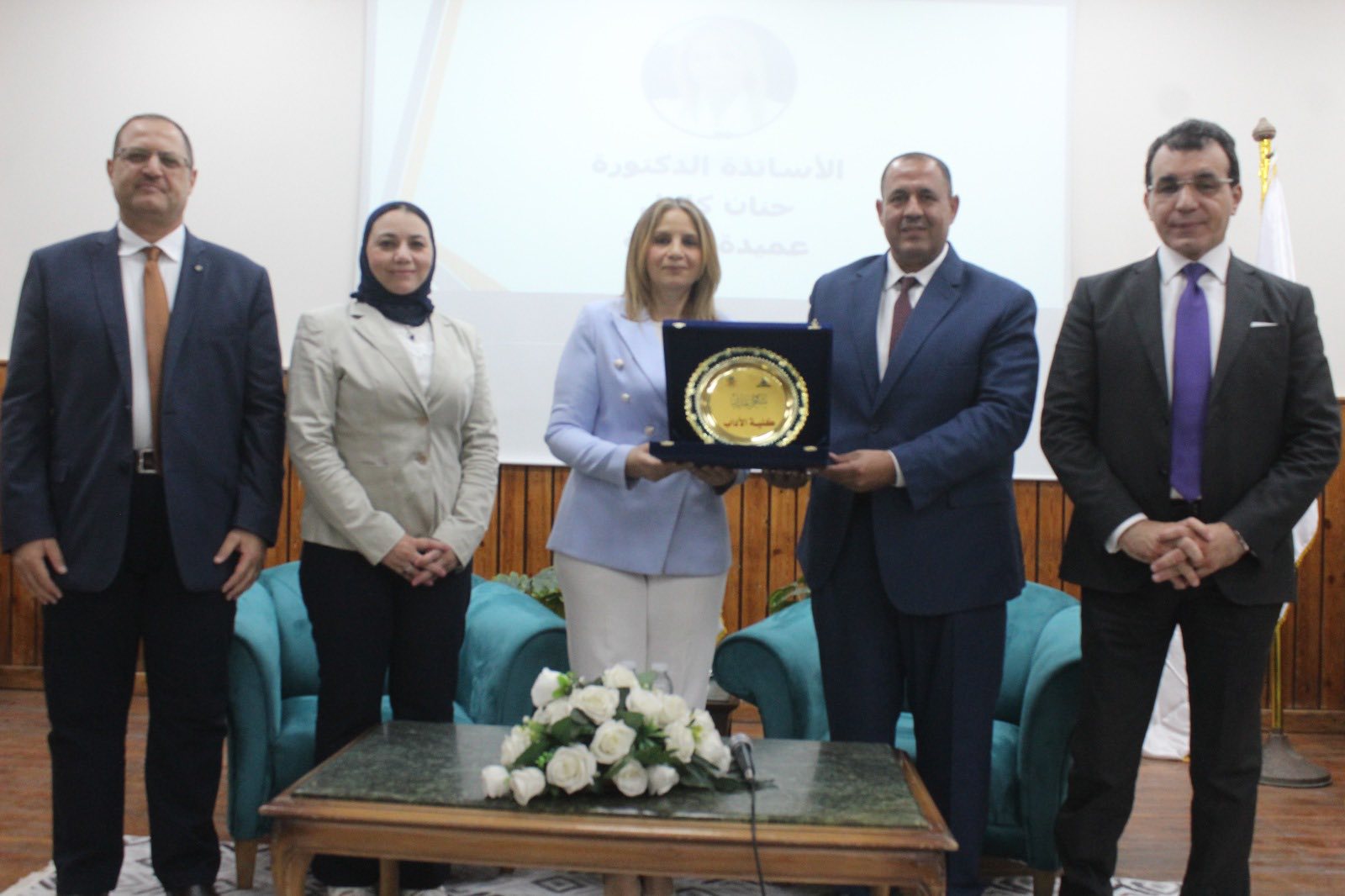
At the conclusion of the event, Prof. Hanan Kamel presented commemorative shields to the Vice President of the University and conference guests in appreciation of their participation and support.
 |
 |