.svg)

The Faculty of Mass Communication Hosts the Seminar “Tales of Art and History”
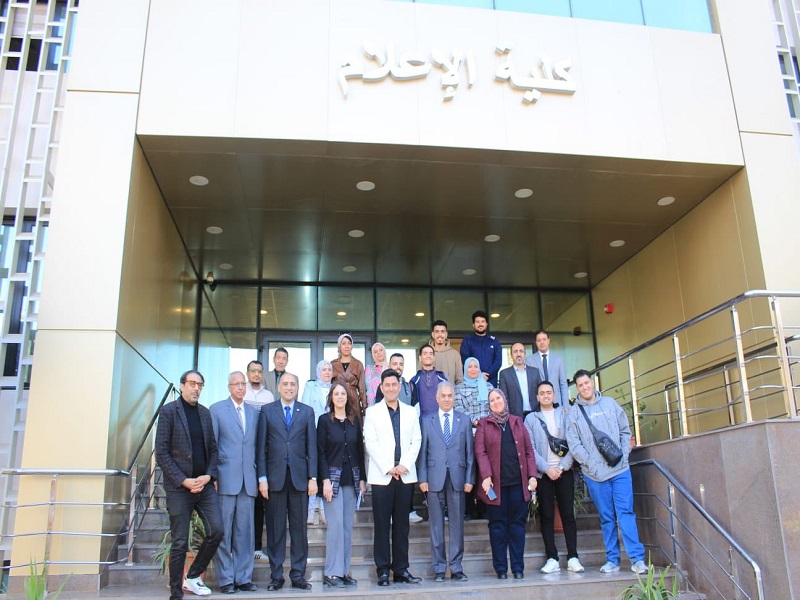
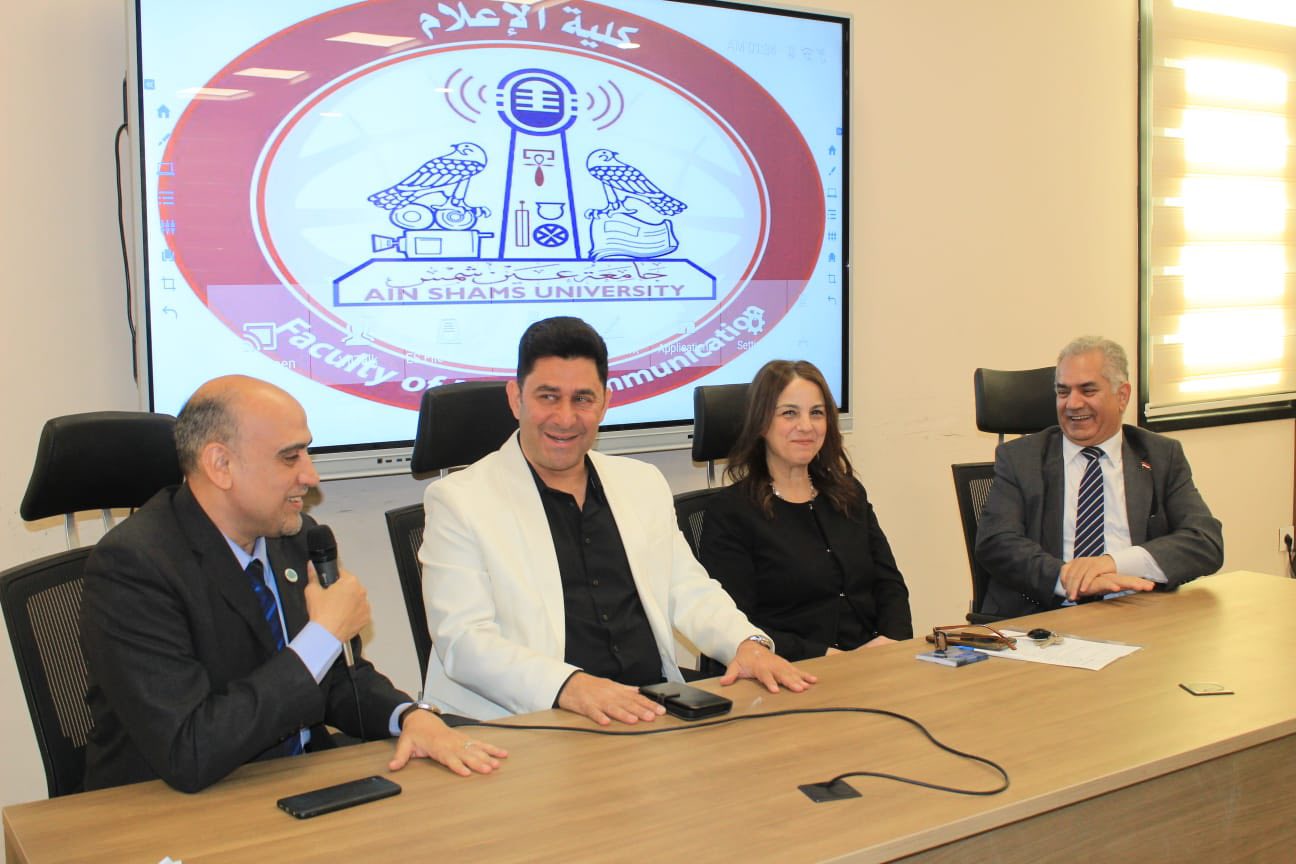
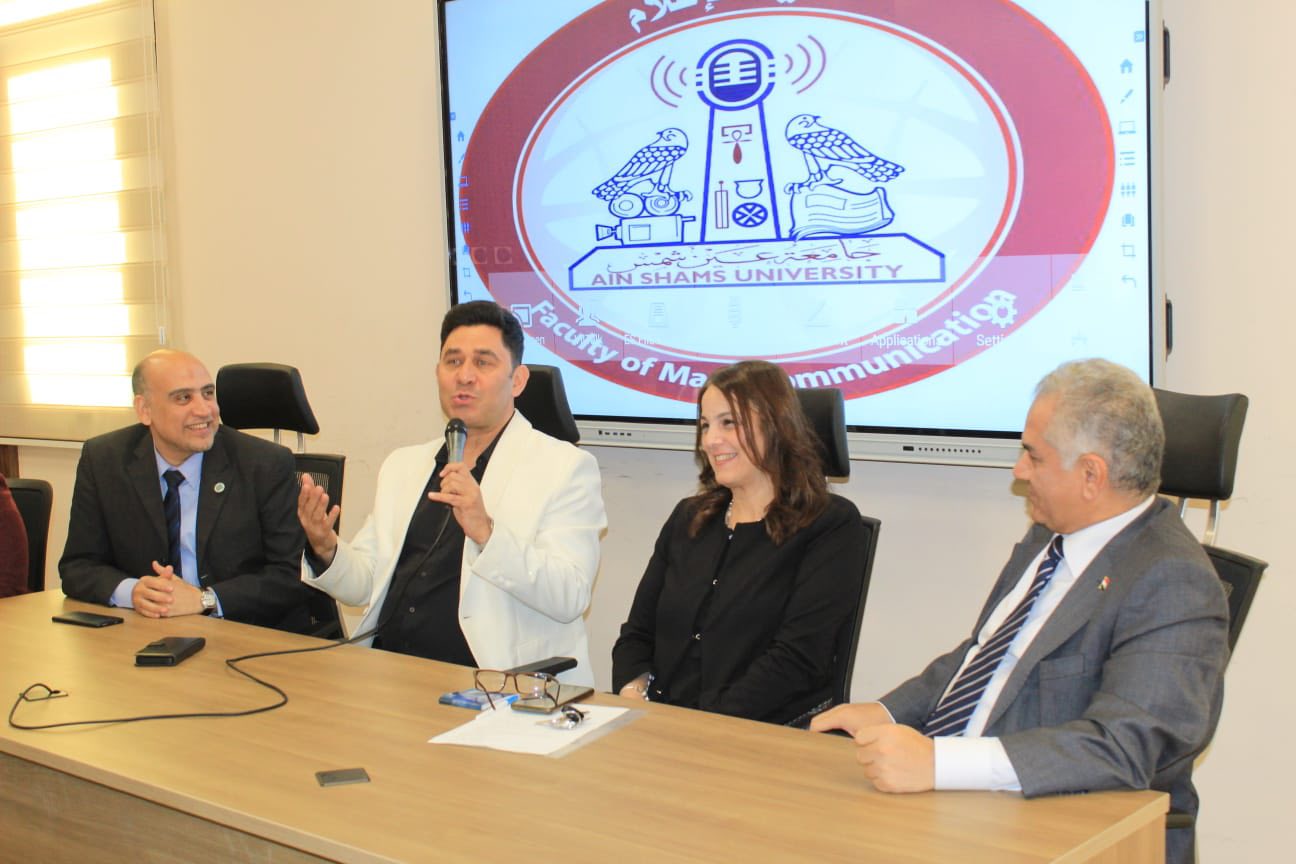
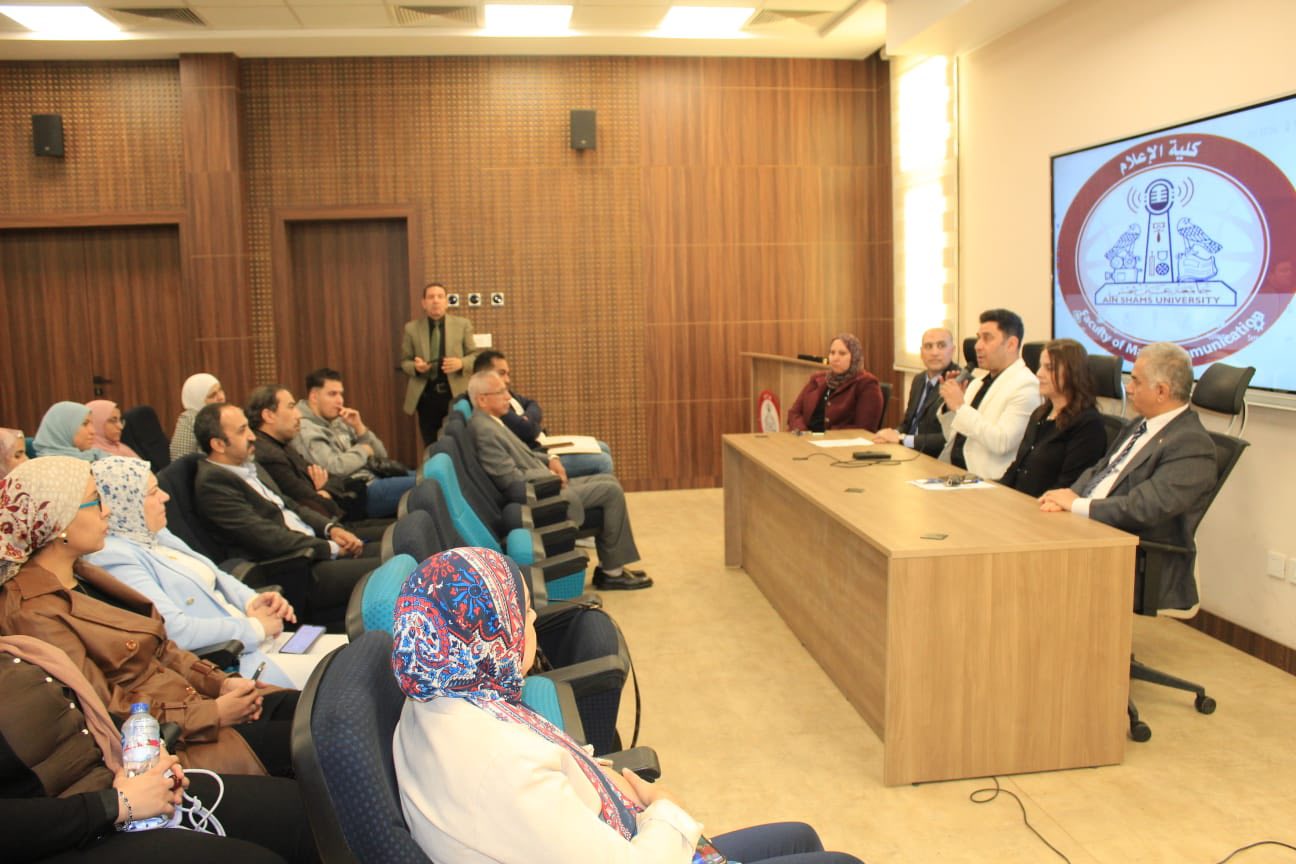
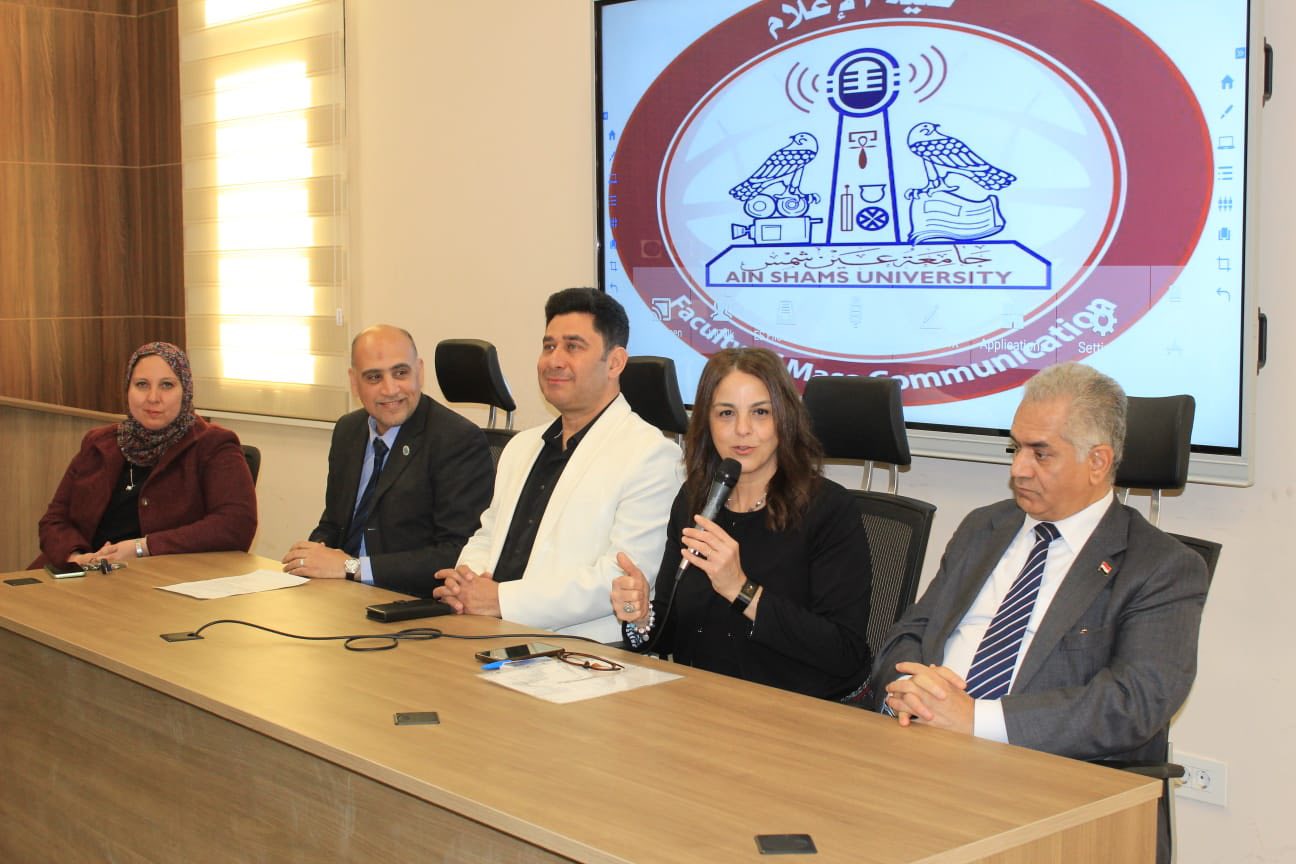
Under the patronage of Prof. Ghada Farouk, Vice President of Ain Shams University for Community Service and Environmental Development, the Faculty of Mass Communication hosted a seminar organized by the Zaafaran Museum entitled “Tales of Art and History,” in the presence of Prof. Mamdouh El-Damaty, former Minister of Antiquities, and artist Ahmed Shaker, former Director of the National Theatre.
The seminar was moderated by Prof. Heba Shahin, Dean of the Faculty of Mass Communication, and Dr. Walaa El-Din Badawi, Director of the Zaafaran Museum.
The seminar addressed the importance of media and art and their impact as forms of soft power on society, particularly historical works, which serve as a tool to counter campaigns casting doubt on Egyptian civilization and attempts to distort Egyptian history in foreign dramatic productions. It also highlighted the importance of responding to such false claims through the production of high-quality historical works that accurately present Egypt’s rich civilization and heritage.
 |
 |
 |
||
Artist Ahmed Shaker emphasized the necessity of thoroughly studying historical characters rather than relying solely on the character’s script. He noted that investing effort in understanding and developing a character enables audiences to perceive authenticity, while avoiding clichéd performances that apply a single stereotypical approach to all historical roles.
Shaker added that this superficial method is ineffective and gradually distances audiences from historical drama. He further explained that mastering a role ultimately benefits the actor, citing his recognition by the late Nobel laureate Dr. Ahmed Zewail for his performance in the television series “A Man of This Time,” which depicted the life of the late Egyptian scientist Dr. Mostafa Mosharafa. He pointed out that the series was broadcast during a politically unstable period, which affected its reach, yet Dr. Zewail’s recognition of the production team served as a culmination of their dedicated efforts in preparing, performing, and producing a distinguished portrayal of a prominent scientific figure.
Prof. Mamdouh El-Damaty affirmed that dramatic productions do not conflict with presenting historical facts, provided that historical accuracy is respected. He praised the series “Salah El-Din” for its precision in historical documentation, written by Dr. Walid Seif in collaboration with director Hatem Ali. He described them as a distinguished dramatic duo who produced some of the most prominent Arab historical dramas, including the Andalusian Quartet (“Saqr Quraysh,” “Spring of Cordoba,” and “Kings of the Taifa”), in addition to “The Palestinian Exile” and “Omar.” Their works were characterized by refined Arabic language, outstanding direction, and meticulous documentation of historical periods.
He also emphasized that an artist’s self-respect is reflected in their commitment to studying the character, respecting the work they present, and respecting the audience’s intellect. He commended Ahmed Shaker for his professionalism and respect for both dramatic work and the public.
 |
 |
 |
||
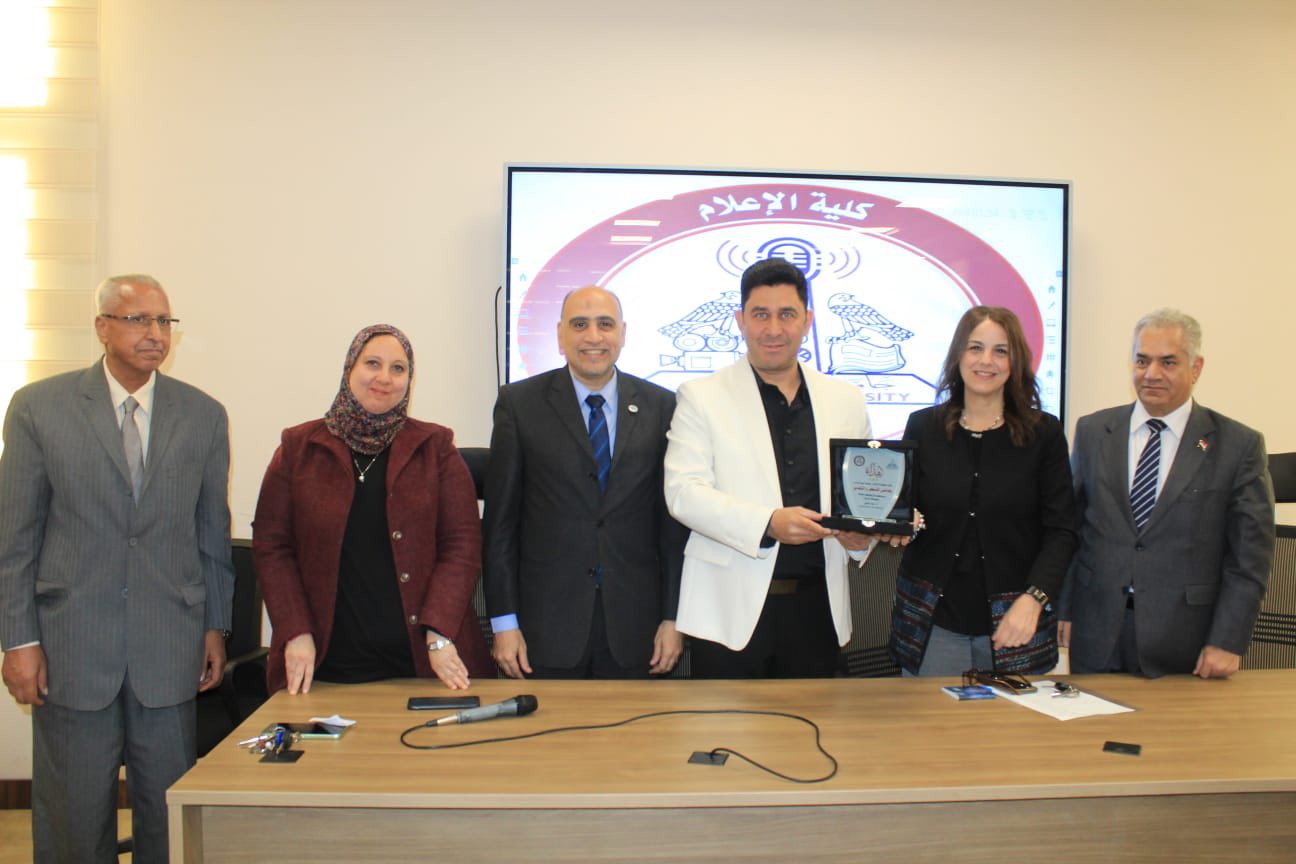
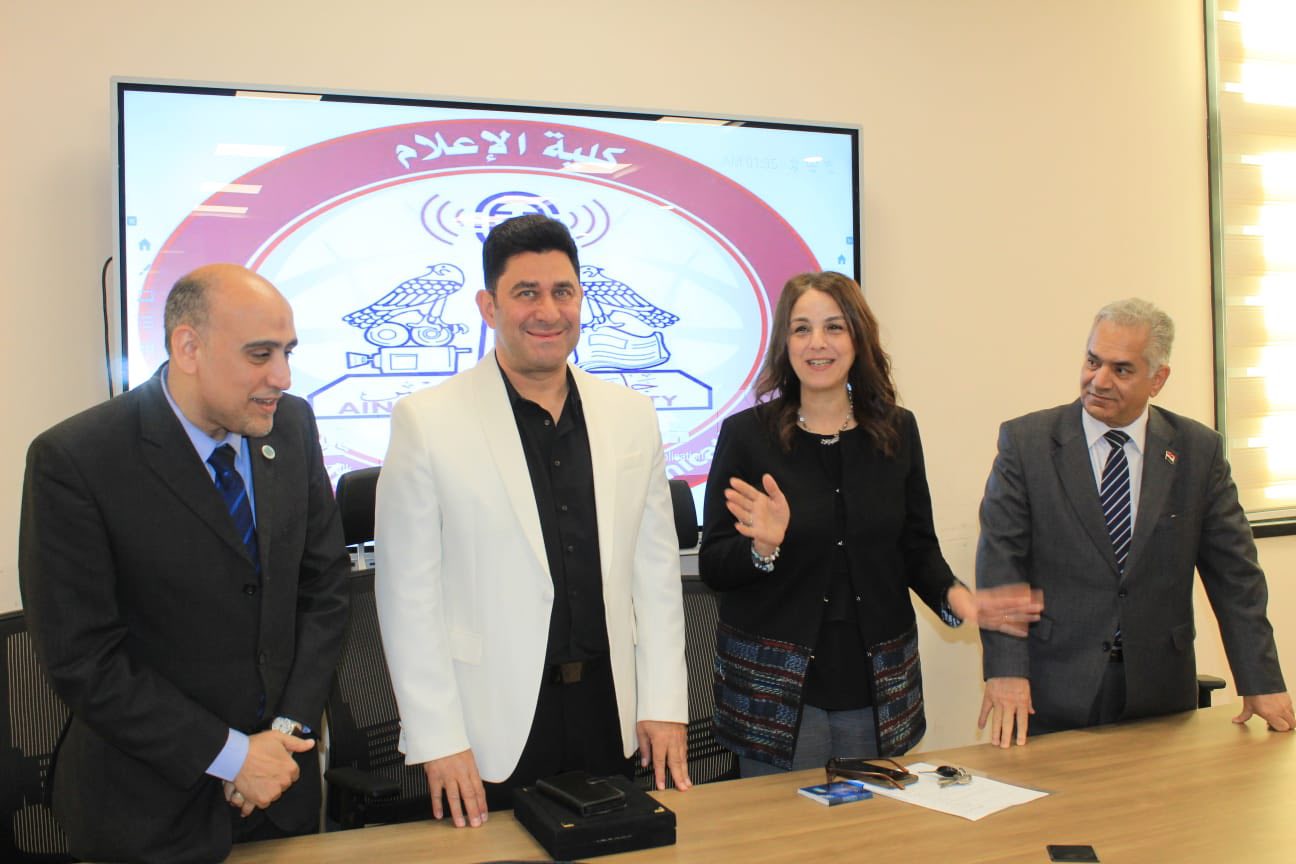
At the conclusion of the seminar, artist Ahmed Shaker was honored in recognition of his distinguished artistic contributions. The event concluded with an educational visit to the Zaafaran Palace Museum, accompanied by the museum director, during which attendees explored the museum’s collections, exhibition methods, and documentation techniques.
The artist praised the professional standard of the museum display and the methodology adopted in constructing the museum narrative and linking it to its historical context, noting that it reflects a scientific vision that enhances heritage awareness. He also commended the efforts of the museum administration, affirming that the museum represents a valuable addition both to the community and to Ain Shams University alike.