
.svg)


The Faculty of Business Concludes Its First International Conference with Key Recommendations to Enhance Innovation and Financial Technology in the Egyptian Economy
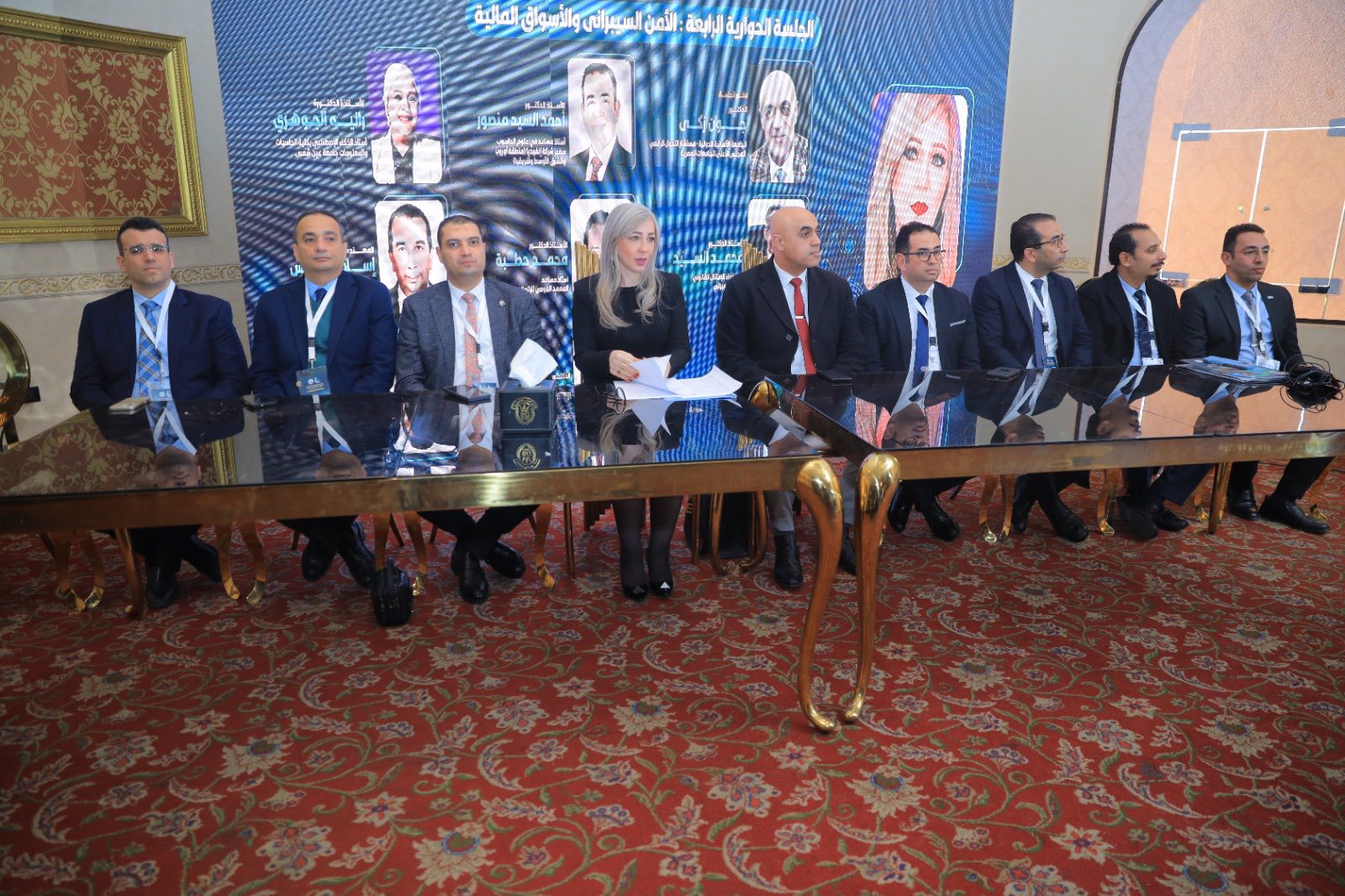
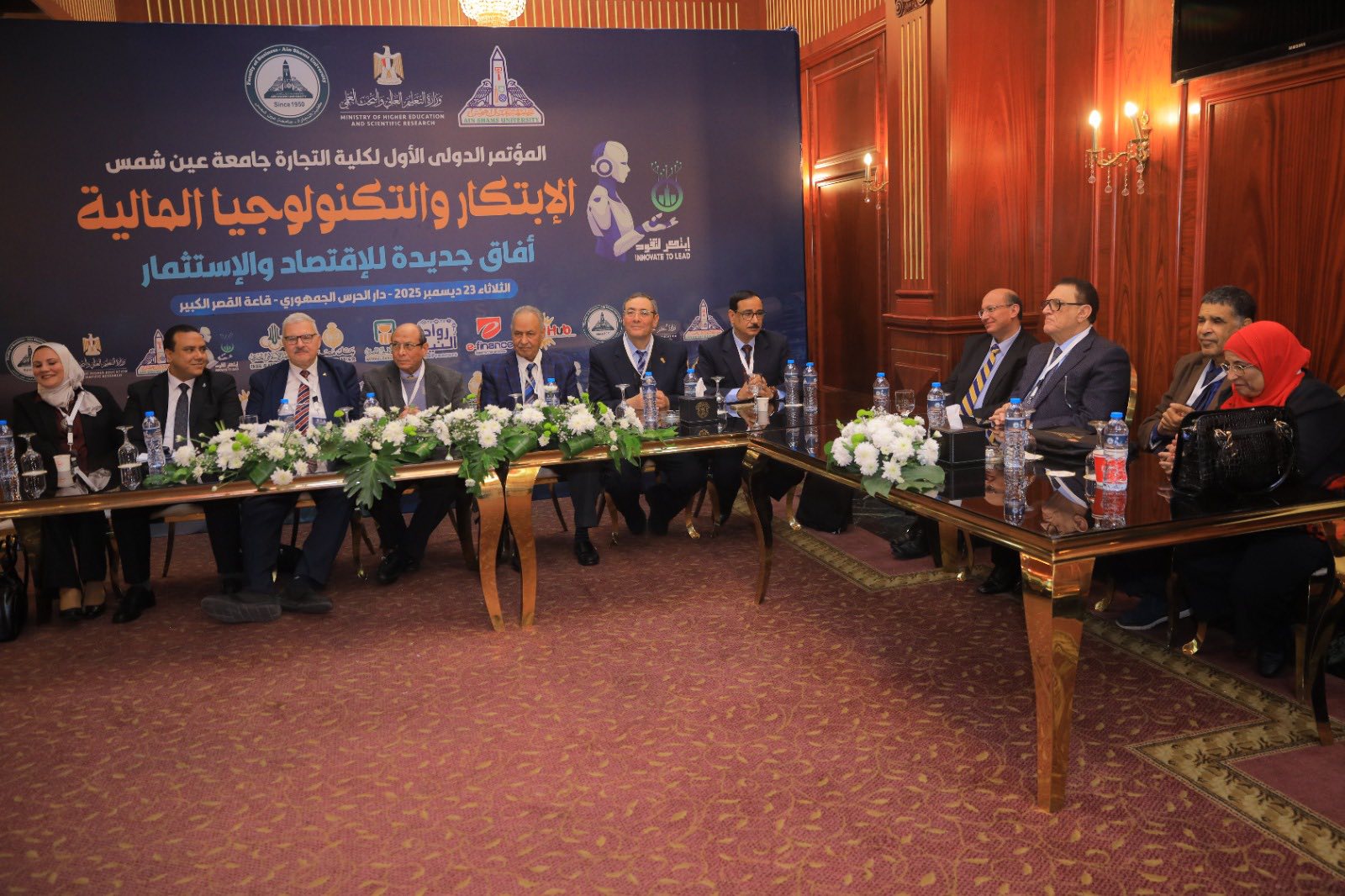
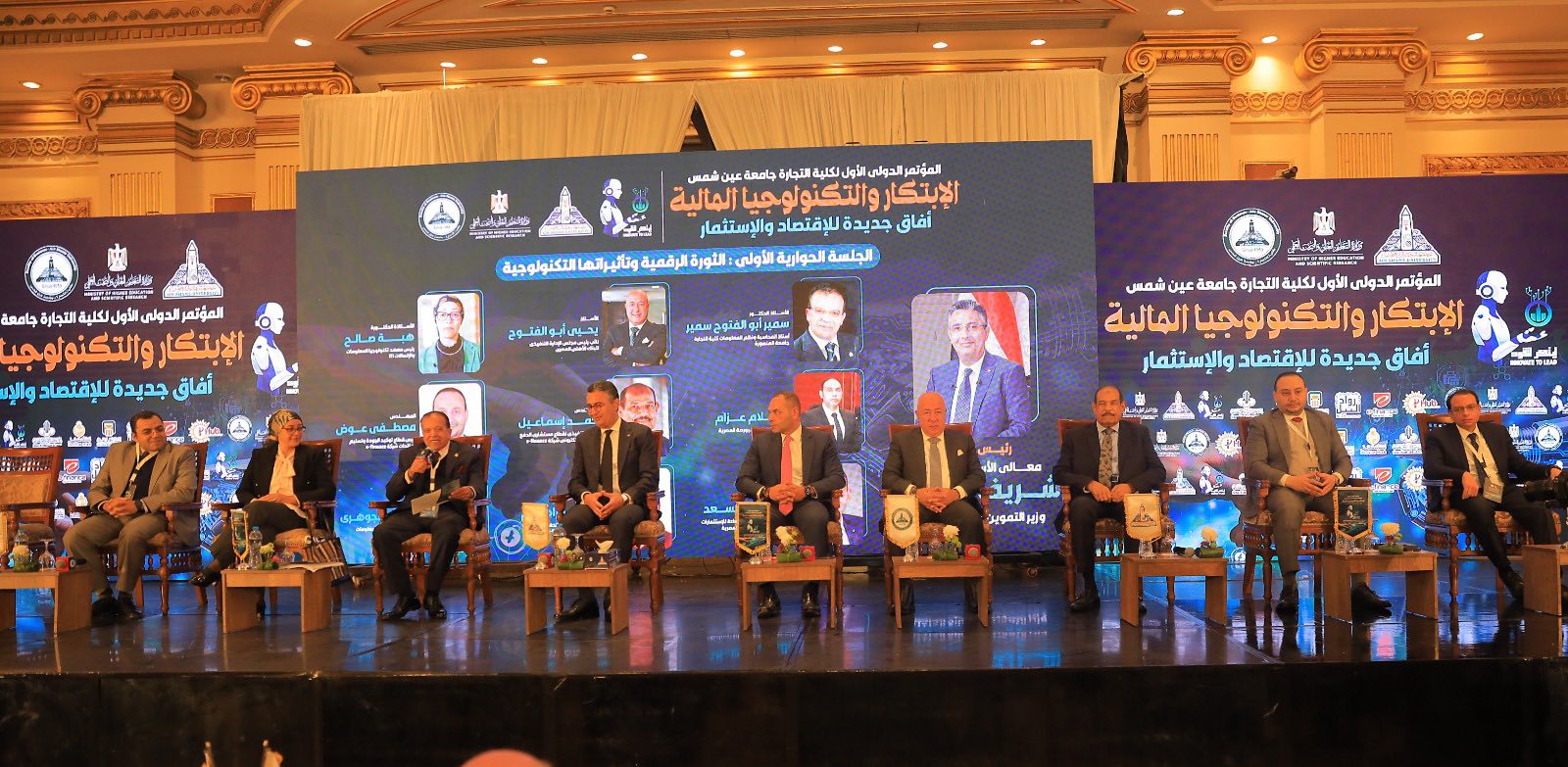
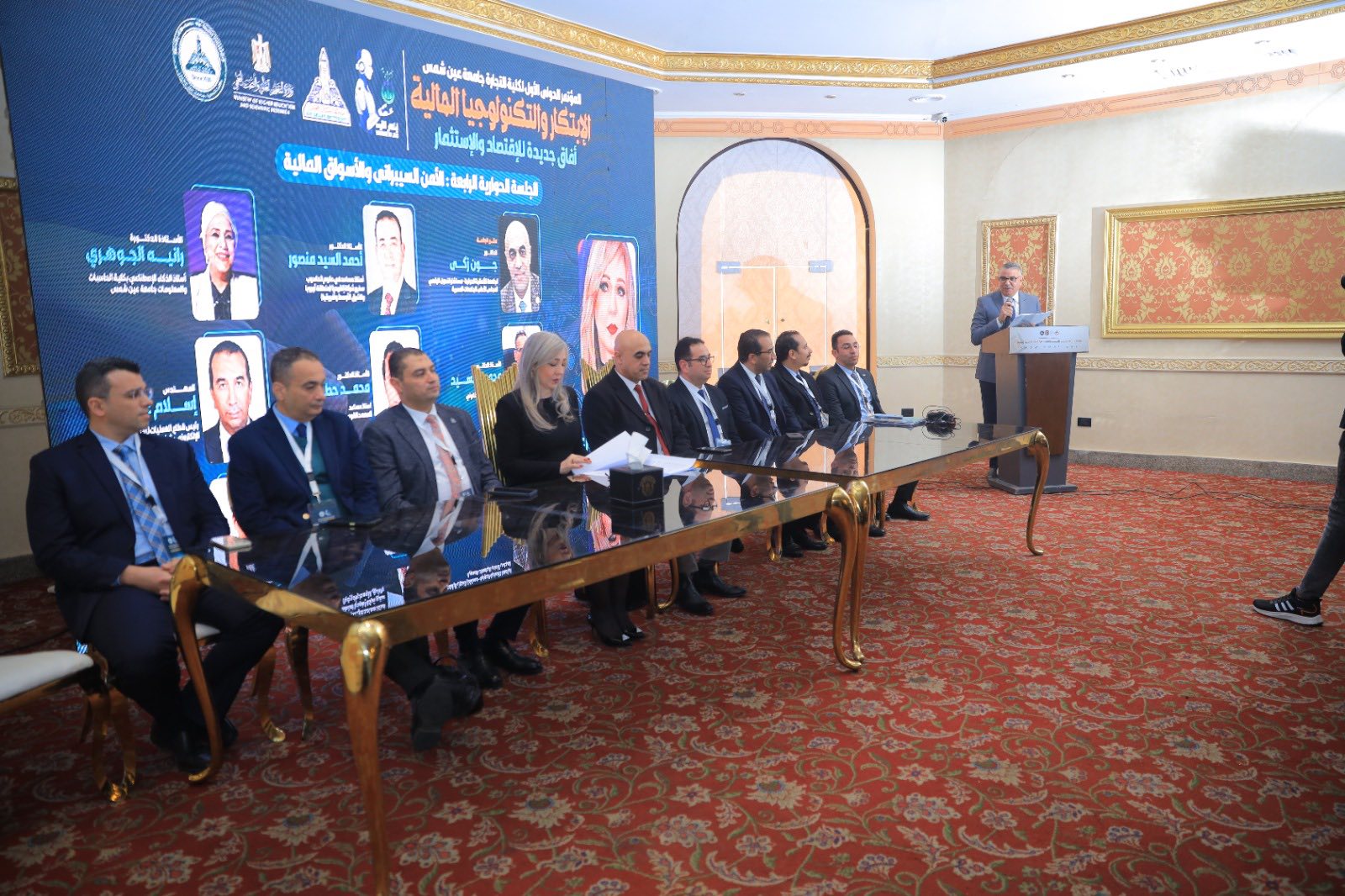
The Faculty of Business at Ain Shams University concluded the activities of its First International Conference, held under the theme “Innovate to Lead”, with a closing session during which the key recommendations were presented and the best research vision was announced.
The conference was held under the patronage of Prof. Mohamed Ayman Ashour, Minister of Higher Education and Scientific Research, and attended by Prof. Sherif Farouk, Minister of Supply and Internal Trade, and Prof. Mohamed Diaa Zain El Abedeen, President of Ain Shams University.
 |
 |
 |
||
The final statement of the conference, titled “Innovation and Financial Technology: New Horizons for the Economy and Investment”, outlined a set of strategic recommendations directed at decision-makers, most notably:
*Stimulating economic growth and investment through an integrated plan linking the development of financial technology with the attraction of digital investments, supported by performance indicators to measure economic impact.
*Launching innovative financing platforms, such as digital asset crowdfunding and decentralized finance, to diversify investment instruments.
*Supporting startups and focusing on “smart finance” solutions for innovation-driven entrepreneurial projects to create new job opportunities.
*Establishing a flexible legislative framework and creating a Regulatory Sandbox to encourage emerging fintech companies while safeguarding investors’ rights.
*Digitizing essential services and accelerating the implementation of a national digital identity and instant payment systems to ensure a seamless and secure business environment.
*Establishing a national observatory to leverage big data and artificial intelligence in producing predictive analytics that support economic decision-making.
*Developing business models and urging financial institutions to adopt blockchain and artificial intelligence technologies to enhance competitive efficiency.
*Modernizing financial professions and reviewing professional standards to prepare specialized cadres in financial data analysis and smart systems auditing.
*Regulating emerging technologies by forming task forces to set standards for auditing and approving digital assets and smart contracts to ensure reliability.
*Prioritizing digital security and adopting a “security by design” approach in financial services, while enhancing institutional readiness to counter cyber threats.
*Strengthening data privacy governance through policies that balance innovation enablement with the protection of personal and corporate data.
*Enhancing smart supervision by equipping regulatory bodies with RegTech tools to keep pace with rapidly evolving markets.
*Preparing young professionals in advanced fintech fields through partnerships between universities and the private sector.
*Integrating innovation into education by embedding technology and innovation concepts across all educational stages, pre-university, undergraduate, and postgraduate.
*Raising financial literacy through national campaigns to educate the public on opportunities and risks associated with digital investment and protection tools.
 |
 |
 |
||
The conference also called for the formation of a high-level council bringing together all relevant stakeholders, including the Central Bank, the Ministry of Finance, and the Ministry of Communications, to translate these recommendations into a national action plan with a clear timeline, aiming to position the Egyptian economy on the global leadership map over the next decade.
The event concluded with a group photo session for all participating delegations, amid wide acclaim for the conference’s organization and scientific content.