.svg)

The Faculty of Al-Alsun organizes an extensive workshop on “Utilizing Artificial Intelligence Tools to Enhance Productivity and Expand Capabilities in the Academic Field”
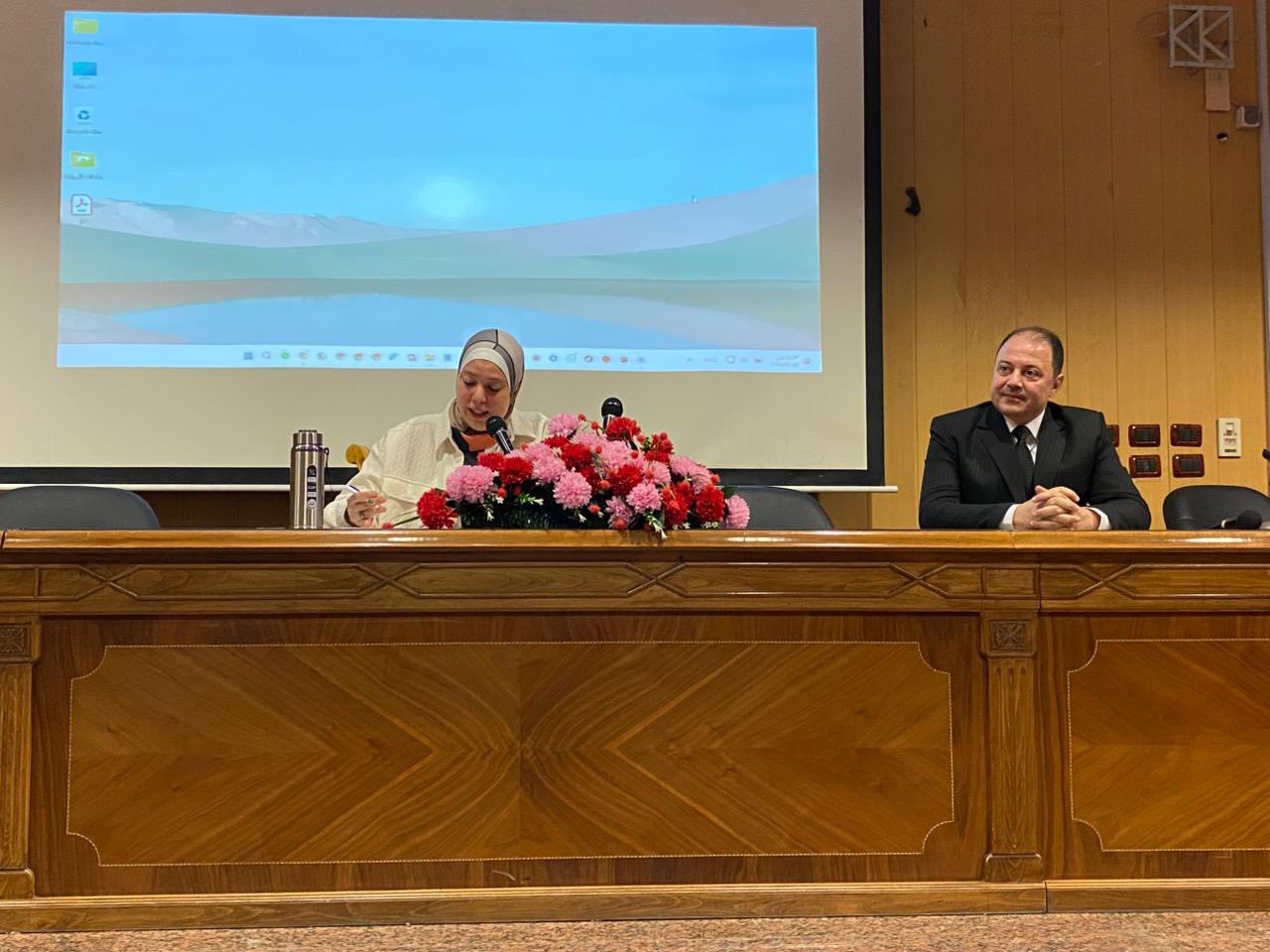
The Cultural Relations Committee of the Postgraduate Studies Sector at the Faculty of Al-Alsun, Ain Shams University, organized an extensive workshop titled “Utilizing Artificial Intelligence Tools to Enhance Productivity and Expand Capabilities in the Academic Field.” The event was held under the patronage of Prof. Mohamed Diaa Zain El-Abedeen, President of the University; Prof. Amany Osama Kamel, Vice President for Postgraduate Studies and Research; and Prof. Yomna Safwat, Acting Dean of the Faculty. The workshop was supervised by Prof. Marwa Mostafa Amin, Rapporteur of the Cultural Relations Committee at the Faculty.
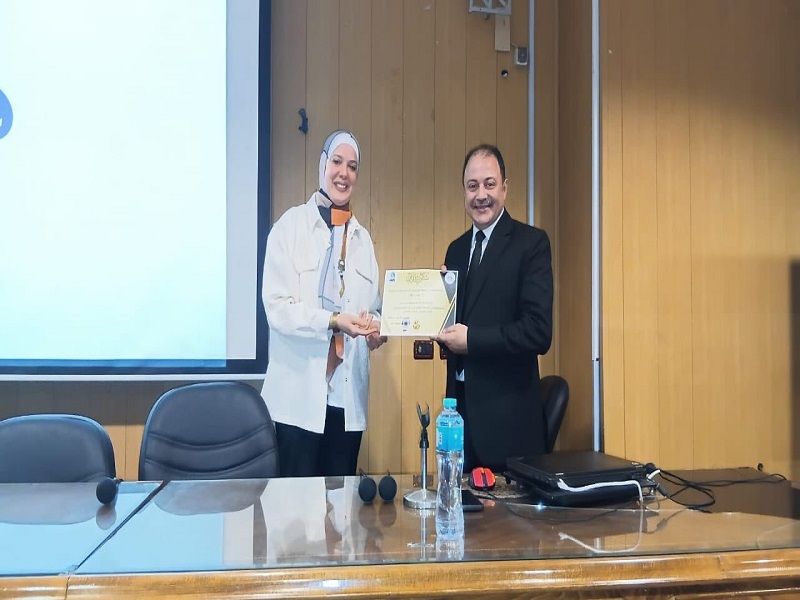
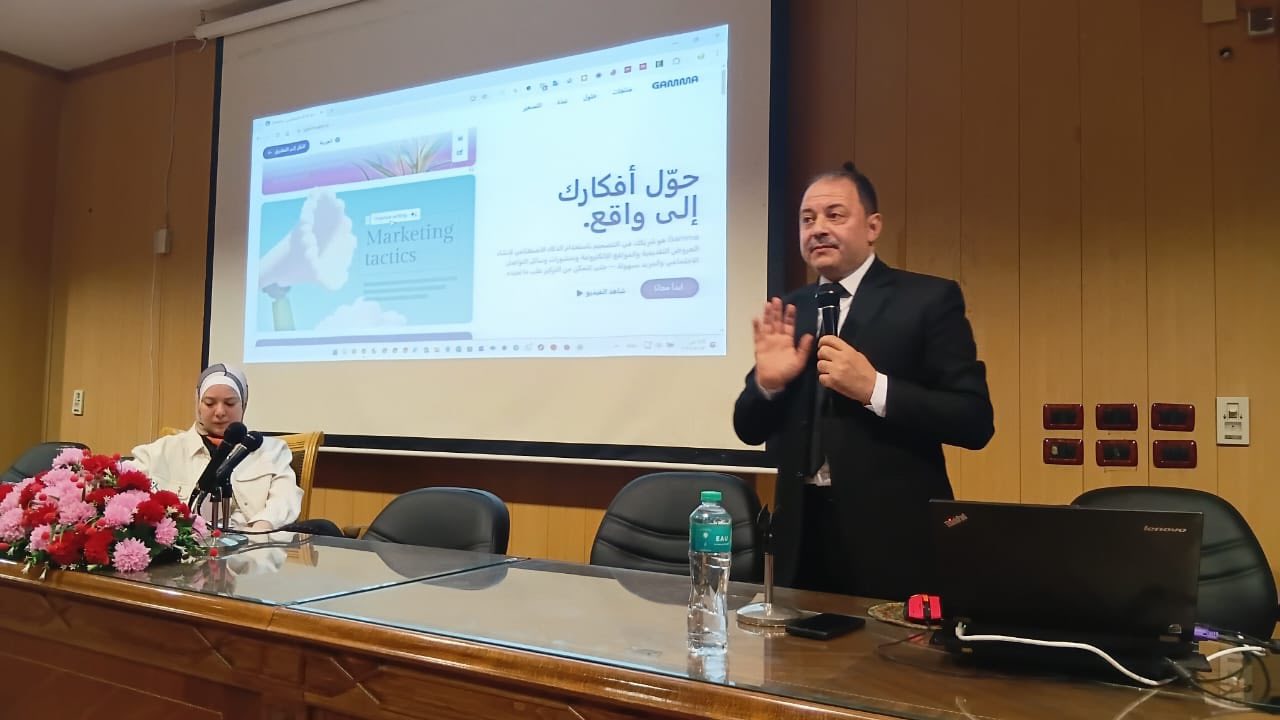
The workshop witnessed a large attendance from faculty staff, teaching assistants, and students. It hosted Dr. Hany Shaker, Director of the Digital Library at Ain Shams University, who delivered an extensive presentation addressing modern uses of artificial intelligence in enhancing the efficiency of the educational process and scientific research.
 |
 |
 |
||
The workshop began with an opening speech by Radwa Kotait, Assistant Professor of Translation at the Department of English, who highlighted the importance of keeping pace with digital transformation and empowering faculty members and students through tools that support more effective learning and research.
In his analytical presentation, Dr. Hany Shaker discussed how AI tools have become an integral part of modern education, noting their role in organizing data, analyzing research information, and producing modern educational content ready for use in lectures and university courses.
He also delivered a comprehensive explanation of how to design professional presentations using AI to generate text, images, and structured ideas. In addition, he demonstrated how to produce an integrated educational podcast, from writing scientific content, enhancing and purifying audio quality, to generating natural human-like voices suitable for explaining lessons and lectures.
Dr. Shaker further elaborated on the AI tools capable of producing educational videos for research and university courses, whether through generating explanatory text or creating visual content that supports comprehension. He also explained how lectures can be converted into organized, easily accessible video segments for students.
He discussed how researchers can benefit from these technologies by reading and organizing references, using intelligent summarization tools to extract main ideas from lengthy studies, as well as leveraging instant translation, refining academic writing style, and utilizing advanced editing tools to correct errors and enhance the quality of academic texts.
He emphasized that these tools grant university instructors greater ability to develop their courses and increase classroom engagement, while enabling students to gain deeper understanding, organize their studies and time more efficiently, and transform complex information into clear, accessible mind maps.
Dr. Hany Shaker concluded the workshop by stressing the importance of the responsible use of AI, noting that integrating these tools into education and scientific research represents a pivotal step toward enhancing the quality of academic outcomes and maximizing benefits for both students and faculty members.