.svg)

Vice President for Student Affairs Inaugurates the International Workshop on Developing Flexible, Inclusive, and Equitable Educational Programs in Collaboration with Germany’s SRH Heidelberg University and the German Academic Exchange Service
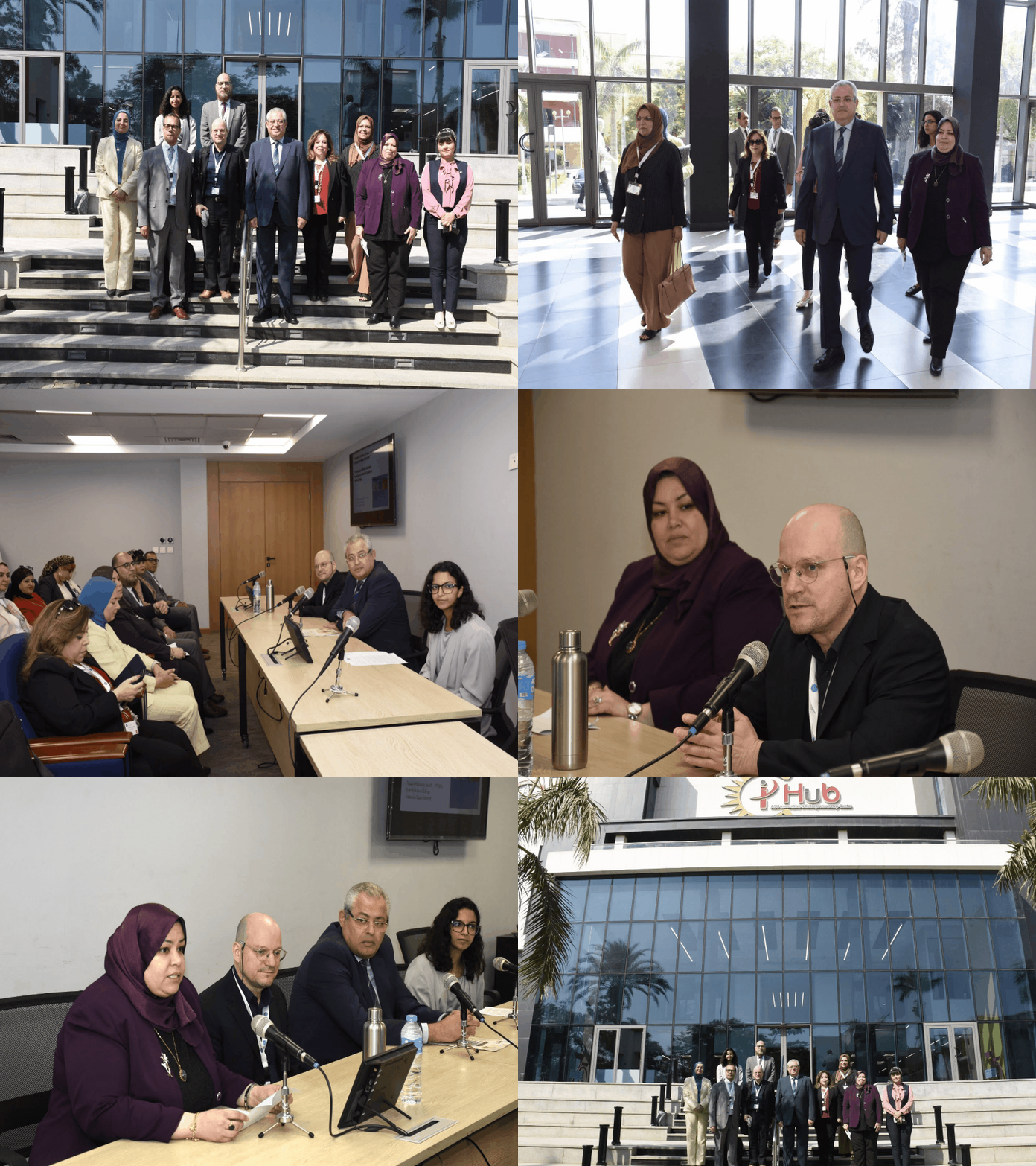
Prof. Rami Maher Ghali, Vice President of Ain Shams University for Education and Student Affairs, inaugurated the International Workshop organized by the University in cooperation with SRH Heidelberg University, Germany, and supported by the DAAD-COSIMENA program, under the title: “Towards Flexible, Inclusive, and Equitable Educational Programs in Higher Education.”
The opening session was attended by Professor Peter Dillinger and Dr. Mohamed El Alimy from SRH Heidelberg University, Germany; Ms. Fatma Soliman, Deputy Director of the Regional Office of the German Academic Exchange Service (DAAD); and from Ain Shams University: Prof. Rasha Ismail, Dean of the Faculty of Computers and Information Sciences; Prof. Sherweit El Ahmady, Executive Director of the International Relations and Academic Collaboration Sector; Prof. Shereen Radi, Vice Dean of the Faculty of Computer and Information Sciences; Prof. Miriam Ayad, Director of the Quality Assurance and Accreditation Center; and Dr. Samar Ragab, Director of the Center for Services for Students with Disabilities, in addition to a distinguished group of experts, researchers, and representatives of academic institutions.
The workshop reflects Ain Shams University’s commitment to strengthening international cooperation and exchanging expertise with leading global academic institutions to develop more flexible, inclusive, and equitable educational programs that meet the evolving requirements of modern higher education while ensuring a supportive learning environment for all students.
In his opening remarks, Prof. Rami Maher Ghali welcomed the participants and emphasized that the workshop represents an important opportunity to discuss one of the most pressing challenges facing higher education worldwide: how to maintain academic excellence while ensuring equitable and inclusive educational opportunities for all students, regardless of their circumstances or diverse abilities.
He noted that traditional educational systems have long relied on a standardized model of teaching, learning, and assessment, which may not adequately reflect the diversity of experiences, abilities, and learning styles within university communities. He stressed that equity does not mean treating all students in the same way but rather ensuring that every student has a genuine opportunity to achieve the intended learning outcomes.
He further explained that the project bringing together the international partners in this workshop introduces an innovative vision through the concept of “Branching and Multitone Learning,” which enables students to achieve the same academic standards and learning outcomes through diverse and equitable pathways. He emphasized that this approach is not intended to lower academic standards but rather to strengthen them and rethink how excellence is achieved and learning is assessed in line with the demands of the twenty-first century.
Prof. Ghali affirmed that Ain Shams University believes that inclusion and academic excellence are not conflicting goals but complementary pillars. He stressed that a distinguished university is one that views diversity as a source of strength, works to remove barriers to learning, and provides an environment that enables all students to realize their full potential.
He added that this vision aligns with the University’s commitment to innovation, quality, social responsibility, and sustainable development. He highlighted the University’s ongoing efforts in student support, academic advising, disability services, and educational development, all of which contribute to building a more accessible, equitable, and future-ready university.
He also pointed out that the workshop is not merely a platform for academic discussion but an opportunity to develop new frameworks for curriculum design, student support, quality assurance, and institutional governance. It also serves to strengthen international collaboration among universities, researchers, policymakers, and academic leaders committed to advancing higher education for future generations.
The Vice President expressed confidence that the discussions would generate innovative insights and sustainable partnerships that support the advancement of inclusive higher education in Egypt, Germany, and internationally. He extended his gratitude to SRH Heidelberg University, the DAAD-COSIMENA Program, the German Embassy, and all speakers, experts, and participants whose contributions have enriched this important initiative.
He concluded by emphasizing that participants have a genuine opportunity not only to discuss the future of higher education but also to contribute to shaping and building it. He wished the workshop every success and expressed hope that it would produce fruitful outcomes supporting the development of university education and the promotion of inclusive and sustainable education principles.
It is worth noting that the first workshop, held on 16–17 June, focuses on “Rethinking Inclusion: From Ideas to Research Questions and Redesign.” It brings together experts, researchers, and representatives of academic institutions from Egypt, Germany, and several other countries. The workshop presents a practical vision for developing academic programs that preserve learning outcomes while offering more flexible and equitable pathways for achieving them, particularly for students whose permanent or temporary circumstances may limit their full participation in traditional single-path educational models.
The workshop includes participants from 35 academic and research institutions, including Ain Shams University, Cairo University, Zagazig University, the Egypt-Japan University of Science and Technology (E-JUST), Galala University, and Al-Azhar University (Tanta Branch), among others. A total of 44 participants from diverse academic disciplines are taking part, reflecting the workshop’s interdisciplinary nature and its focus on developing more flexible, inclusive, and equitable models for higher education.
A second follow-up workshop is scheduled to be held online on 22–23 September 2026 under the title: “Branching and Practical Implementation: Pilot Projects, Reflections, and Future Steps.”