
.svg)

A Statement Issued by the Information and Decision Support Center… Cabinet Information Center Signs Cooperation Protocol with Ain Shams University to Enhance Research and Academic Collaboration
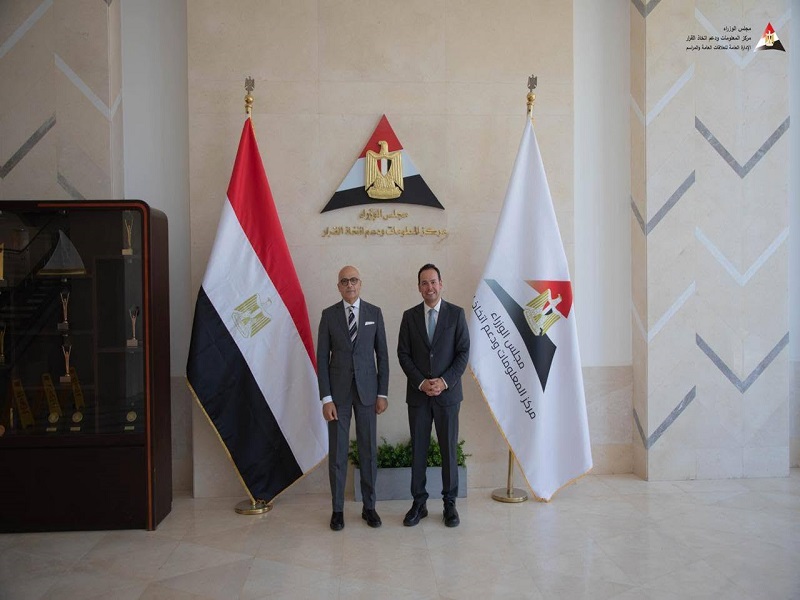
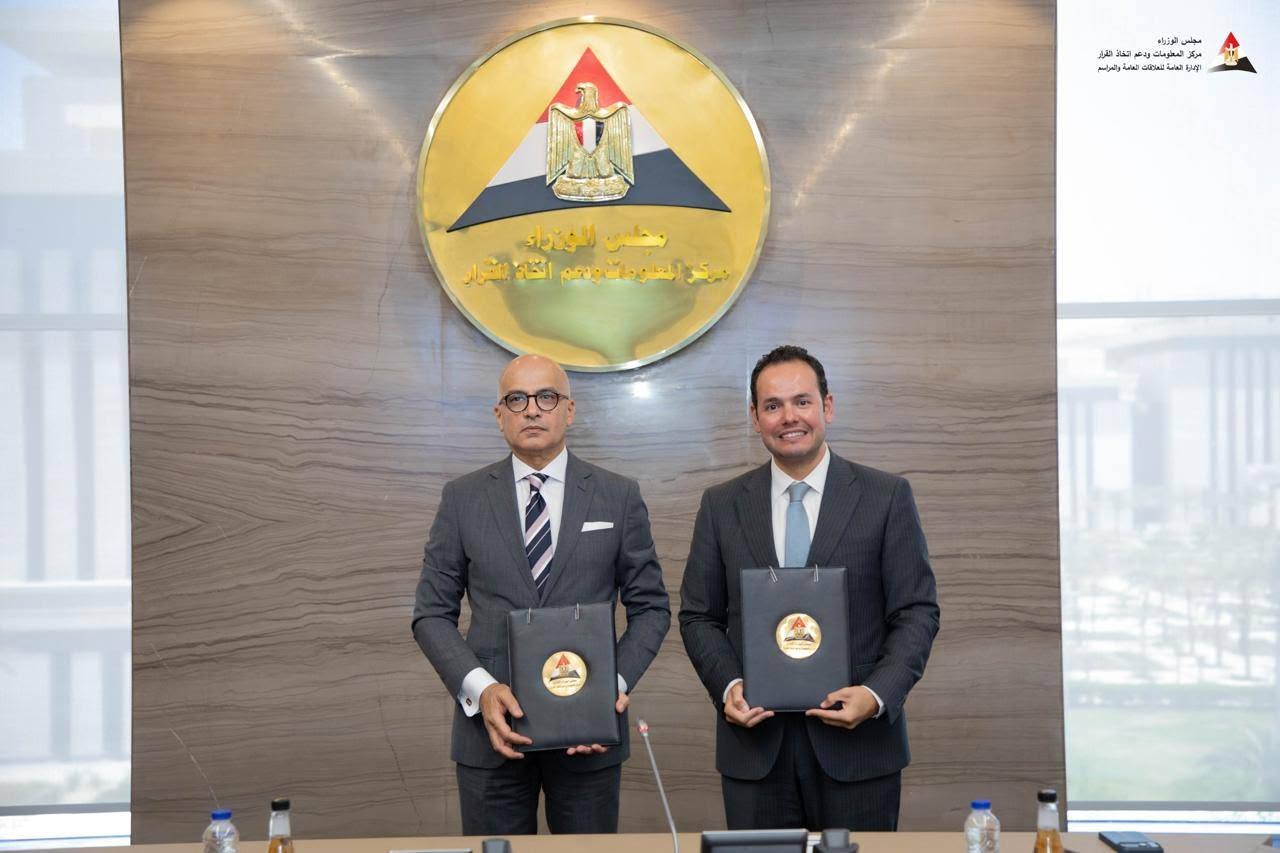
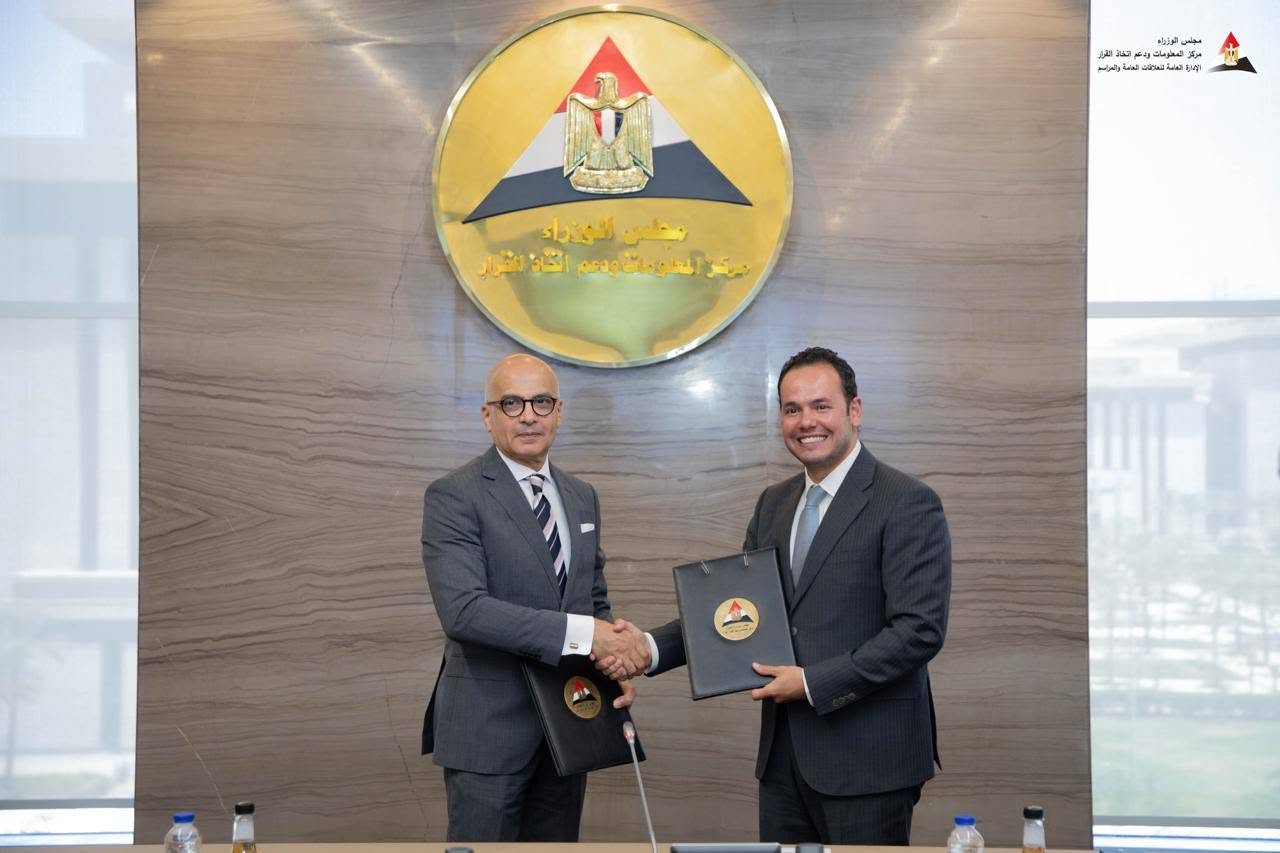
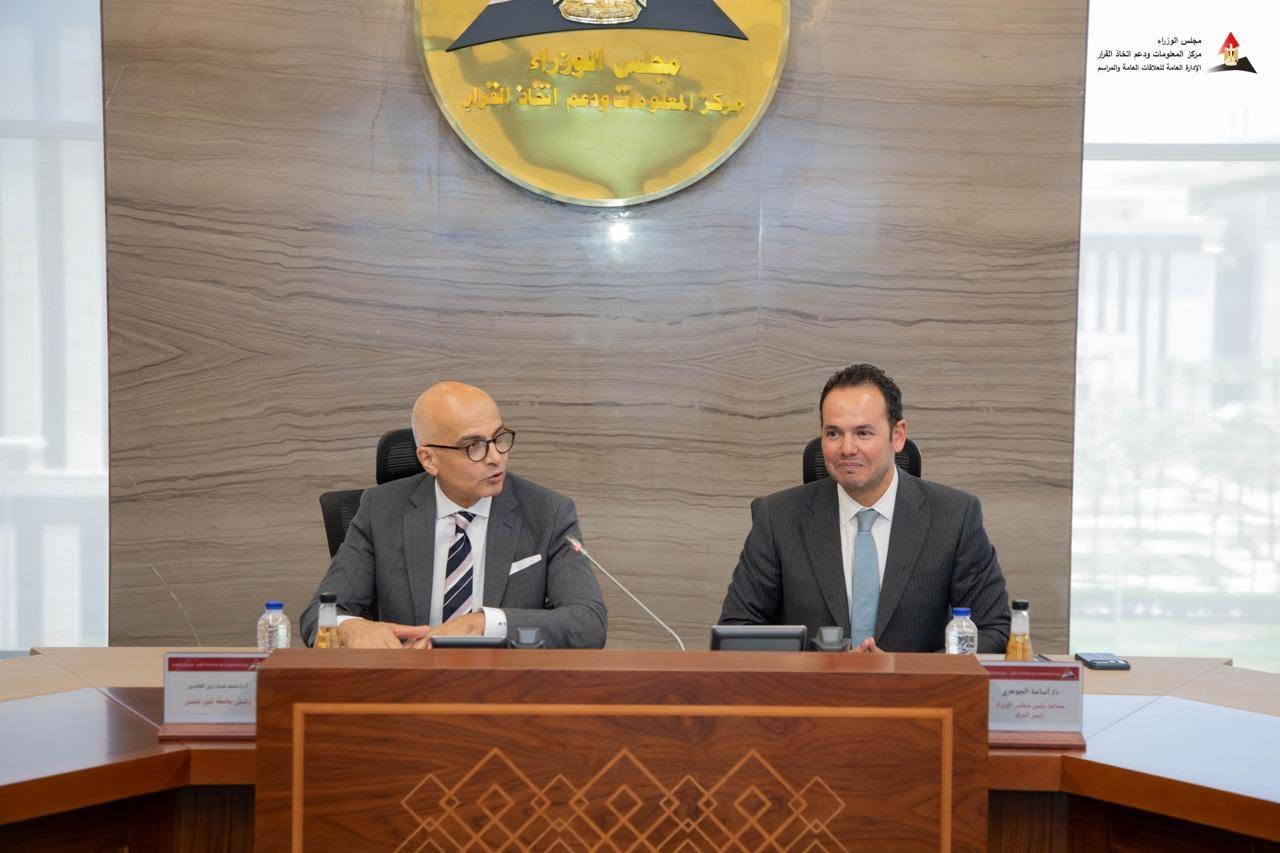
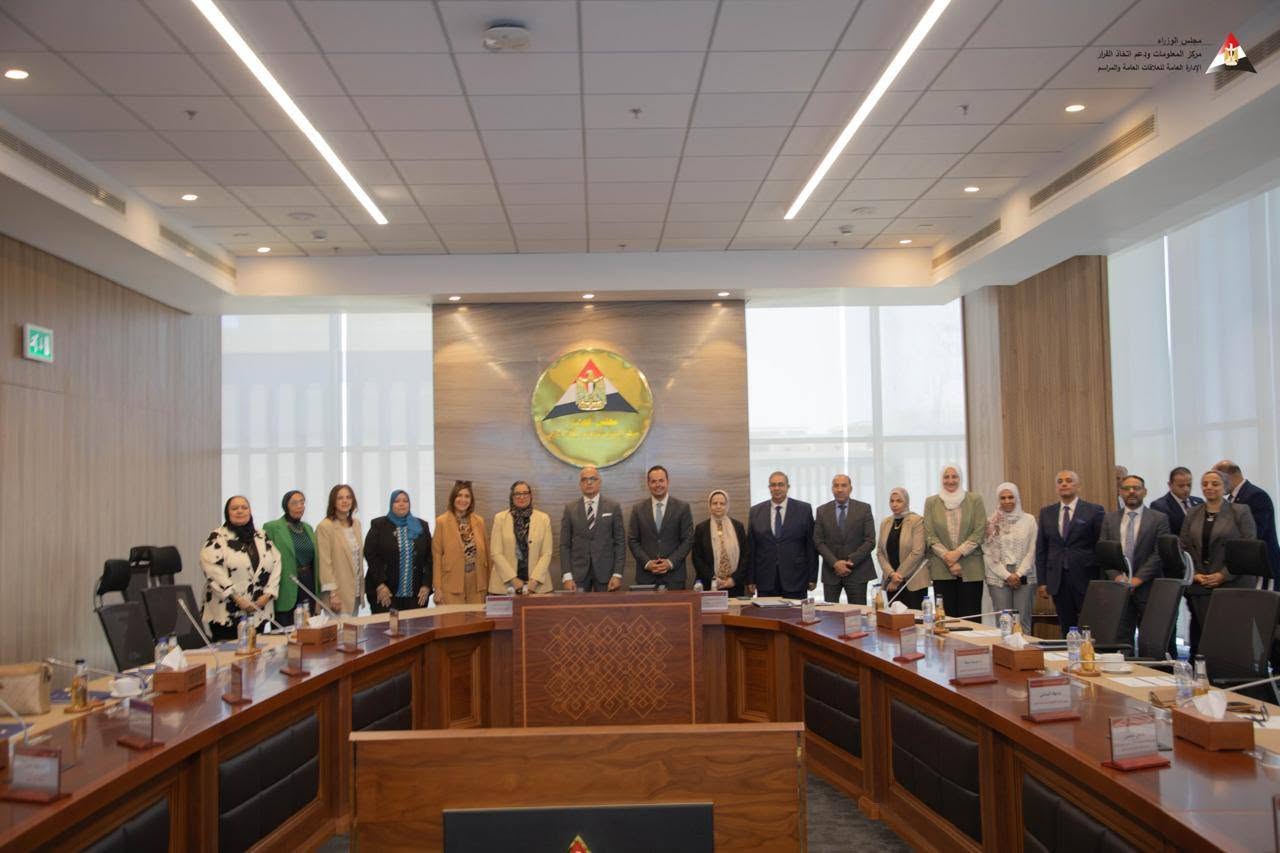
The Information and Decision Support Center (IDSC) of the Egyptian Cabinet signed a cooperation protocol with Ain Shams University on Monday, June 8, in a new step toward establishing an effective partnership aimed at enhancing cooperation and exchanging expertise in support of development goals, knowledge building, and creating added value for both parties and the Egyptian state. The signing ceremony took place at the Center’s headquarters in the New Administrative Capital and was attended by a high-level delegation from Ain Shams University headed by Prof. Mohamed Diaa Zain El-Abedeen, President of Ain Shams University, Prof. Ghada Farouk, Vice President for Community Service and Environmental Development, along with several deans and faculty staff
 |
 |
 |
||
In his speech, Prof. Mohamed Diaa Zain El-Abedeen, President of Ain Shams University, affirmed that the signing of the cooperation agreement between Ain Shams University and the Center represents an important step toward strengthening partnership between national academic institutions and think tanks as well as policymaking centers. He emphasized that Ain Shams University believes scientific knowledge and rigorous research are no longer merely tools for education and learning but have become a fundamental pillar for supporting decision-makers and formulating evidence-based public policies grounded in accurate data and in-depth scientific analysis.
Prof. Zain El-Abedeen added that the agreement reflects a shared vision between Ain Shams University and the Information and Decision Support Center, based on utilizing academic and research expertise to serve the priorities of the Egyptian state and contribute to studying societal, economic, and developmental issues, analyzing public opinion trends, and anticipating the future. This, he noted, will help build more effective policies capable of responding to citizens’ needs and development challenges.
The University President also pointed out that the New Republic, established under the leadership of President Abdel Fattah El-Sisi, is built on science, knowledge, and innovation, and believes in the importance of integration among all state institutions. Therefore, this agreement represents a successful national model for cooperation between the university and the Information Center, supporting the achievement of sustainable development goals and Egypt’s future vision.
 |
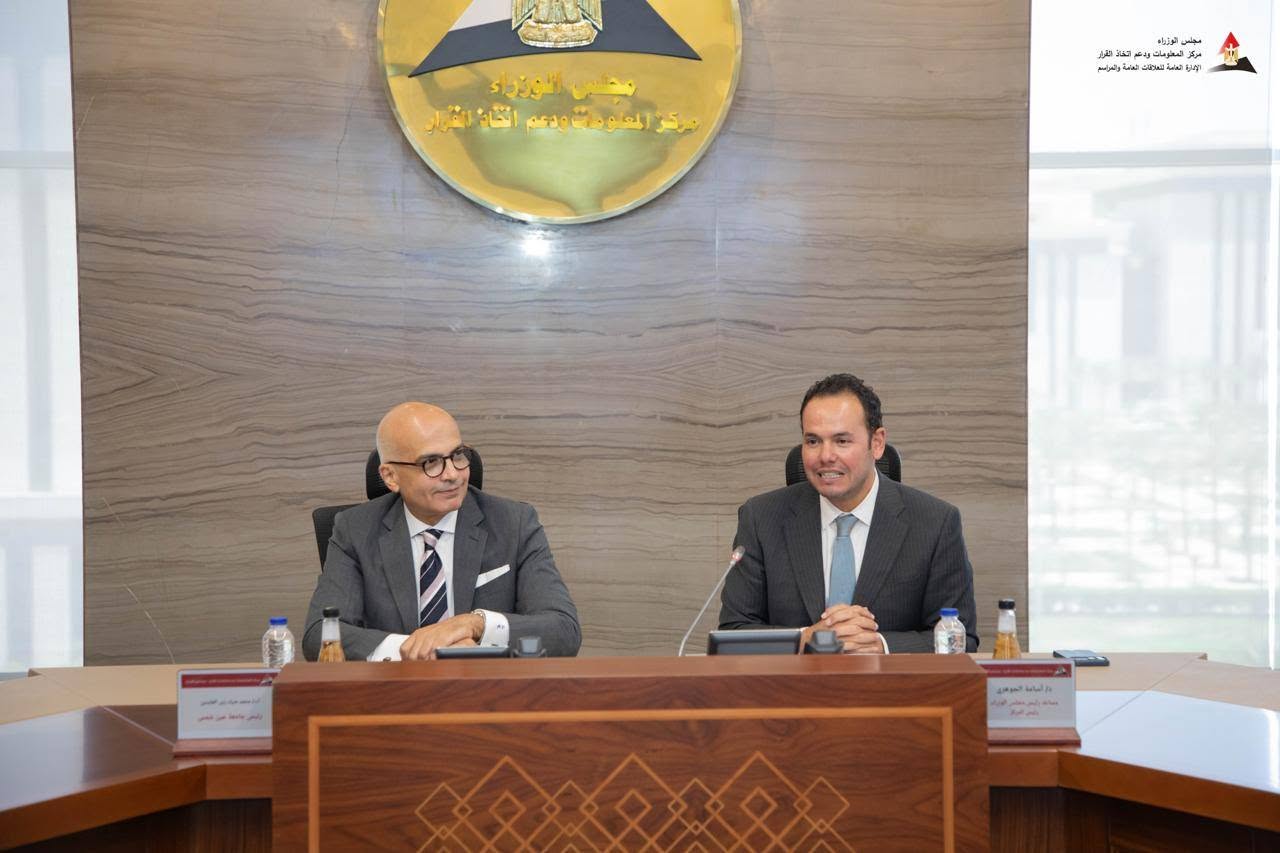 |
For his part, Dr. Osama El-Gohary, Assistant to the Prime Minister and Chairman of the Information and Decision Support Center, welcomed the signing of the cooperation protocol with Ain Shams University, one of the oldest academic institutions in Egypt and the Arab world. He explained that the challenges facing countries today require not only producing more knowledge, but also the ability to utilize this knowledge and transform it into policies, programs, and initiatives that create tangible impact on the ground. Therefore, the integration between universities and think tanks becomes highly important, as universities represent the natural incubator for knowledge production, scientific research, and idea development, while think tanks play a pivotal role in analyzing this knowledge and translating it into policy alternatives and practical recommendations that support decision-makers.
Dr. El-Gohary stressed that the first area of cooperation between the two sides focuses on strengthening applied scientific research and conducting joint studies on issues of national priority. The second area involves benefiting from experts and consultants from both sides and exchanging scientific and practical expertise. The third area relates to developing monitoring, analysis, and future foresight systems, while the fourth focuses on capacity building and competency development by providing training and research opportunities for university students and researchers, in addition to offering postgraduate programs for the Center’s employees. This partnership, therefore, contributes to preparing a new generation of researchers and professionals capable of linking academic knowledge with practical realities and public policymaking requirements.
The Assistant to the Prime Minister further added that the protocol opens the door for implementing joint projects and initiatives, organizing conferences, seminars, workshops, and scientific events that support sustainable development goals. He affirmed that this partnership aims not only at exchanging knowledge and expertise, but also at building an institutional model capable of transforming ideas into initiatives, research into applications, and data into insights and policies that support decision-making processes, representing a practical step toward strengthening the Egyptian state’s ability to anticipate the future and formulate more efficient and responsive policies to challenges and changes.