
.svg)

The Faculty of Arts Implements the “Mawadda” Course for Family Preparation and Awareness for Those About to Marry
Within the framework of the presidential “Bedaya” initiative, in implementation of the directives of His Excellency President Abdel Fattah El-Sisi to prioritize human development and capacity building, and pursuant to the cooperation protocol between the Ministries of Higher Education and Scientific Research and Social Solidarity, the Faculty of Arts at Ain Shams University implemented the training program of the national initiative aimed at preserving the cohesion of the Egyptian family, “Mawadda.”
The program was held under the patronage of Prof. Mohamed Ayman Ashour, Minister of Higher Education and Scientific Research; Dr. Maya Morsy, Minister of Social Solidarity; Prof. Mohamed Diaa Zain El-Abedeen, President of Ain Shams University; and Prof. Rami Maher Ghali, Vice President of the University for Education and Student Affairs. It was supervised by Prof. Hanan Kamel, Dean of the Faculty, with administrative coordination and supervision by Mr. Ibrahim Saeed Hamza, Assistant Secretary-General of the University for the Education and Student Affairs Sector, in coordination with Ms. Soha El-Sabaa, Director of Youth Welfare, and Abdel Maksoud Atef, Head of the Faculty Student Union.
 |
 |
Prof. Hanan Kamel Metwally, Dean of the Faculty, emphasized the importance of such educational and awareness-raising initiatives, noting that the faculty supports all programs that build youth awareness and empower them to face the challenges of family life with responsibility and confidence. She stressed the faculty’s commitment to serving as a genuine space for preparing a generation capable of building stable and happy families, and consequently a strong society.
Meanwhile, Prof. Mohamed Ibrahim, Vice Dean for Education and Student Affairs, commended the faculty’s role in enhancing family awareness among students, stating: “These awareness programs provide young people with the knowledge and skills necessary to establish a successful marital life, with a balanced approach that integrates psychological, social, religious, and health aspects. This forms an integral part of our ongoing mission to support youth toward a better future.”
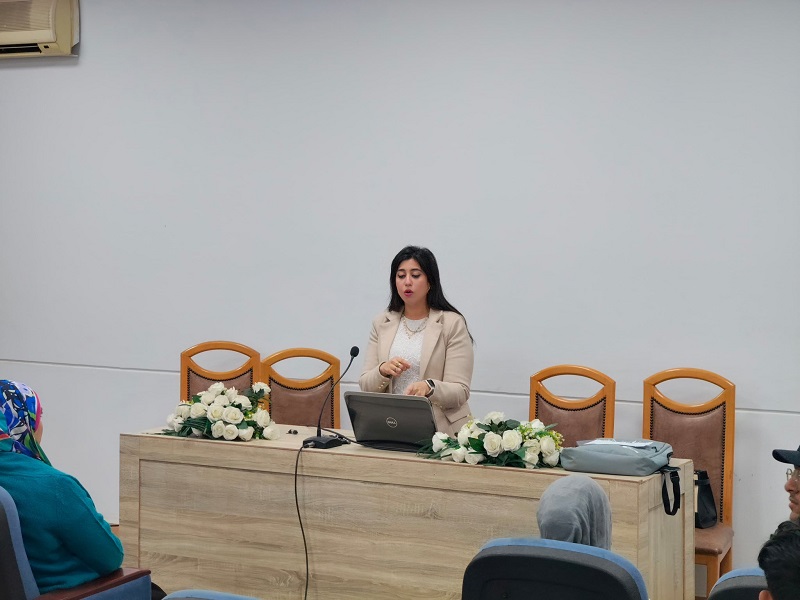
The course was delivered by Dr. Israa Mohamed Fahim, Director of the Faculty’s Innovation and Projects Unit, who began by outlining the main objective of the program, empowering young people who are about to marry practical knowledge and comprehensive awareness of the requirements of marital life, enabling them to make sound decisions toward building a stable and well-balanced family.
Dr. Fahim addressed an integrated set of practical themes that link psychological, social, religious, and health sciences, providing a comprehensive framework to help young people successfully navigate the challenges of family life.
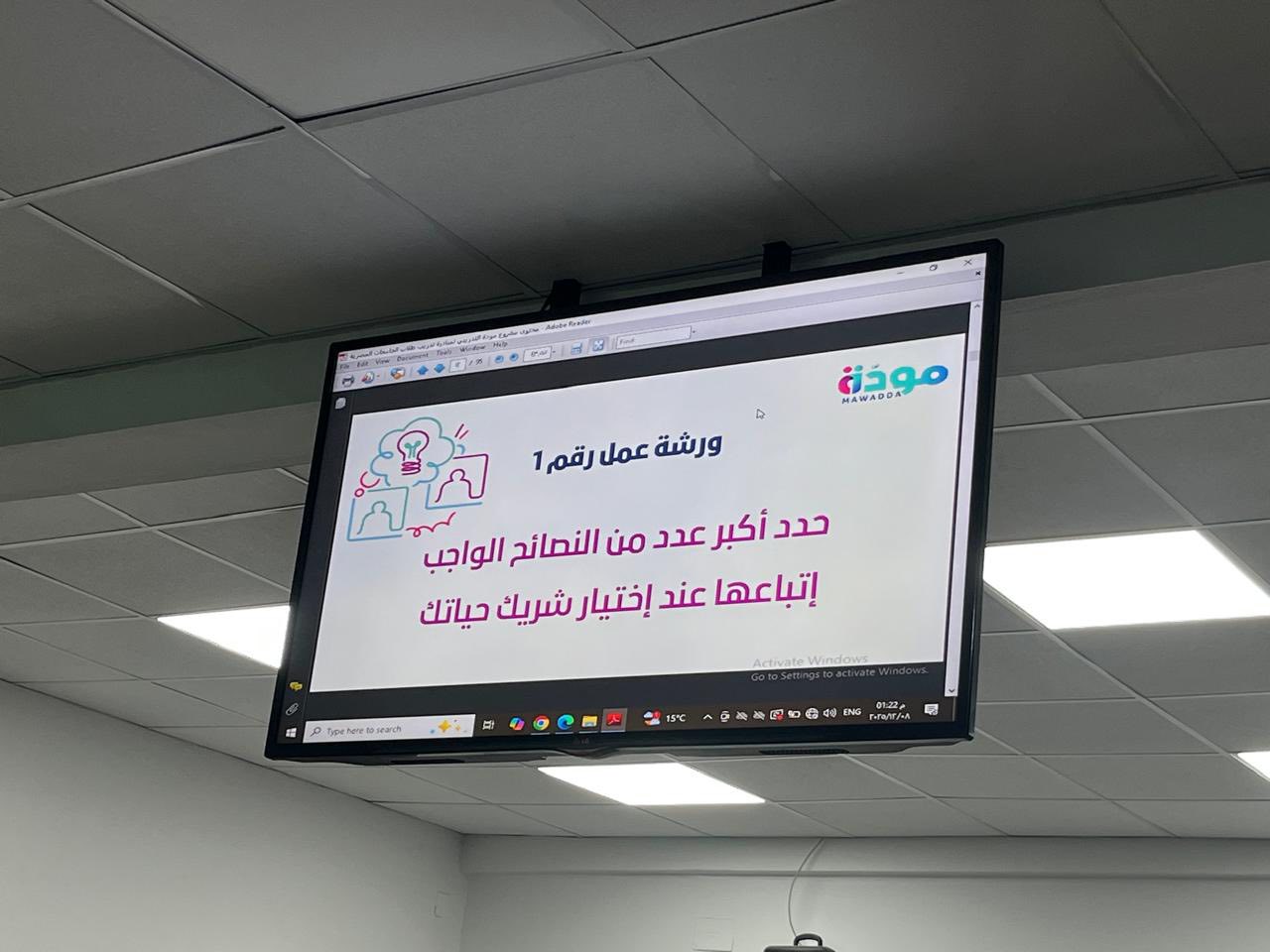
She also presented the key topics of the course, which included criteria for choosing a life partner, the importance of understanding shared values and goals between partners, and achieving psychological, social, and religious compatibility.
During the seminar, she discussed how to assess the personal traits of a potential partner, offering practical advice to help students evaluate compatibility for their future lives, as well as the key factors for a successful family life. She also provided real-life examples on coping with financial and social pressures without compromising family stability.
In addition, Dr. Fahim highlighted success stories of couples who managed to achieve a balance between professional and family life, serving as an inspiring model for participating students.
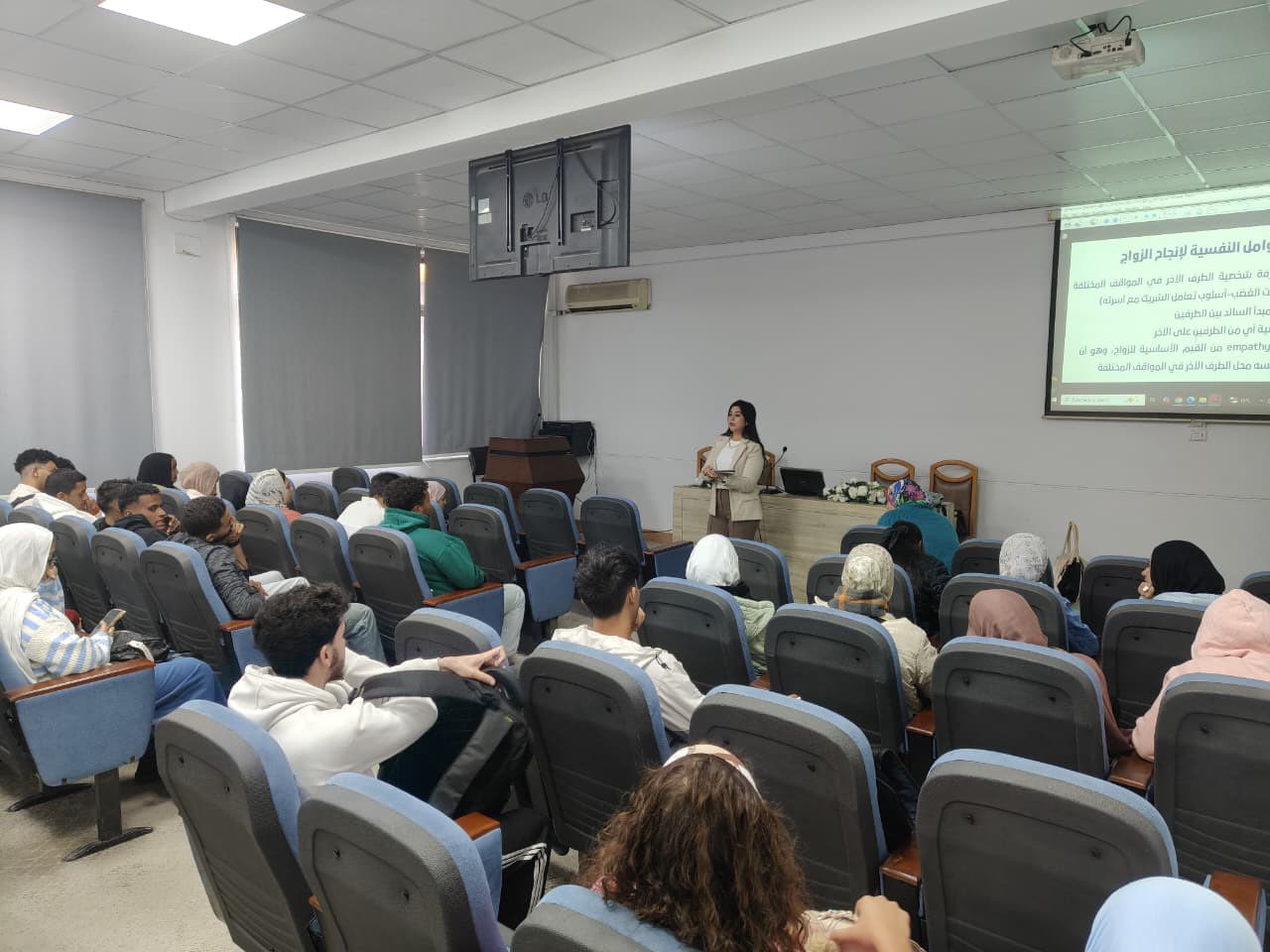
The course concluded with an interactive open discussion session, allowing students to express their questions and share their ideas, making the experience more dynamic and realistic, and enabling participants to leave with a comprehensive understanding of what it takes to successfully embark on married life.
The course witnessed strong student attendance and contributed to enhancing participants’ readiness for their future family and social lives.