.svg)

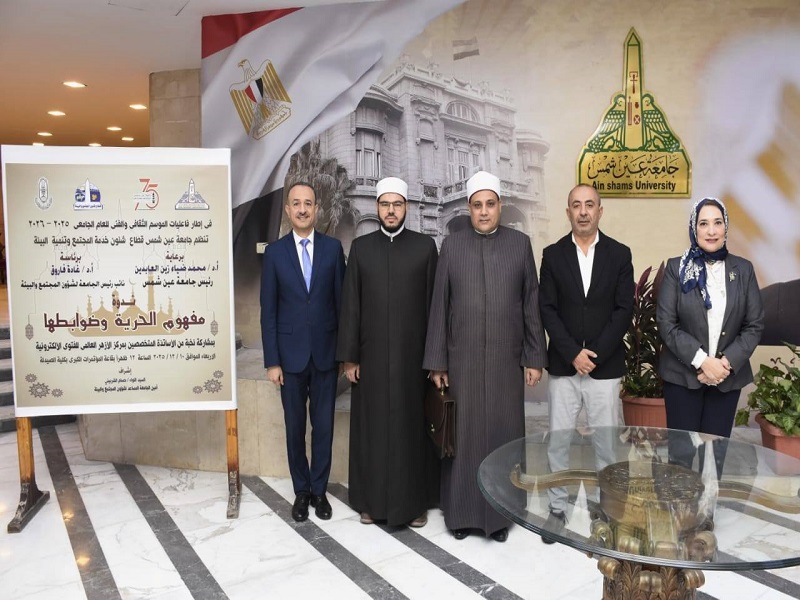
Ain Shams University's Cultural Season discusses "The Concept of Freedom and Its Limits" with a selection of Al-Azhar Scholars
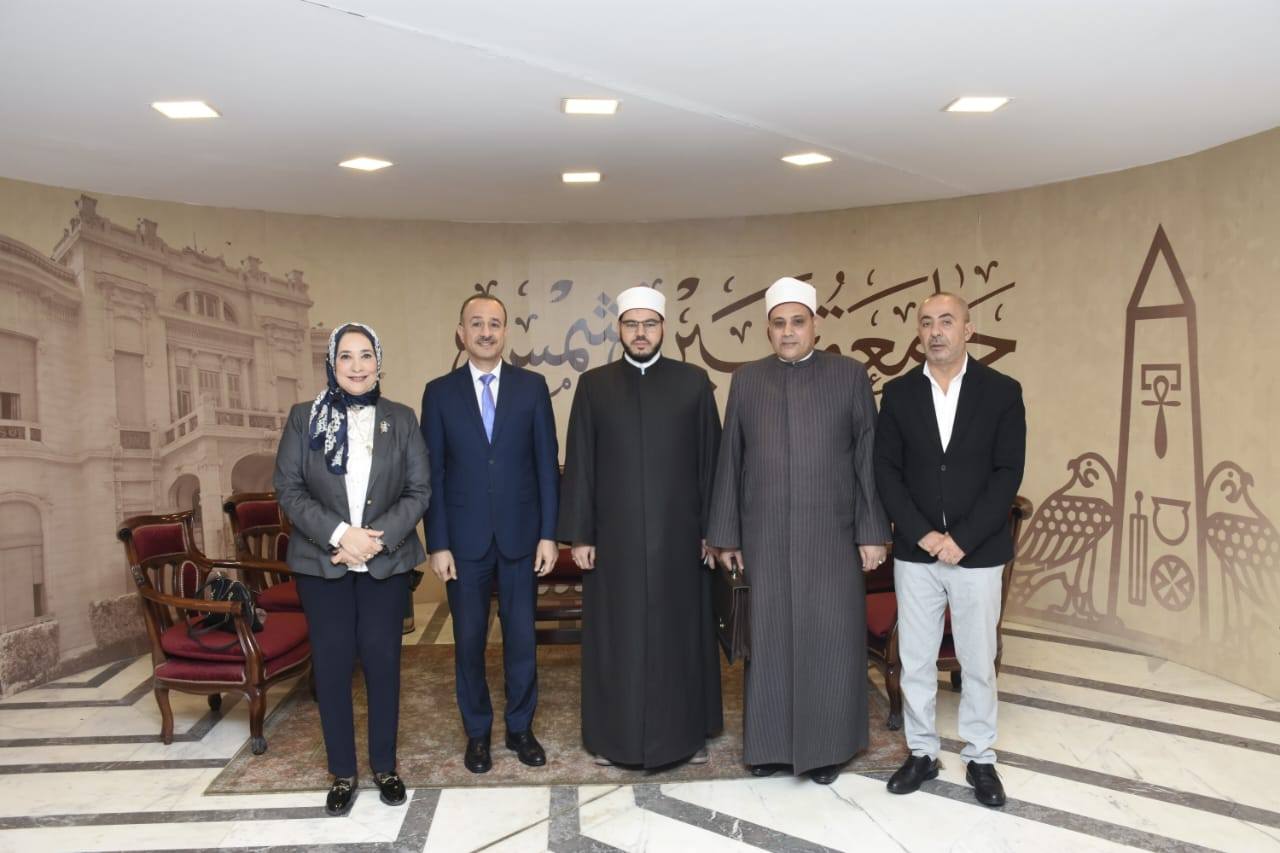
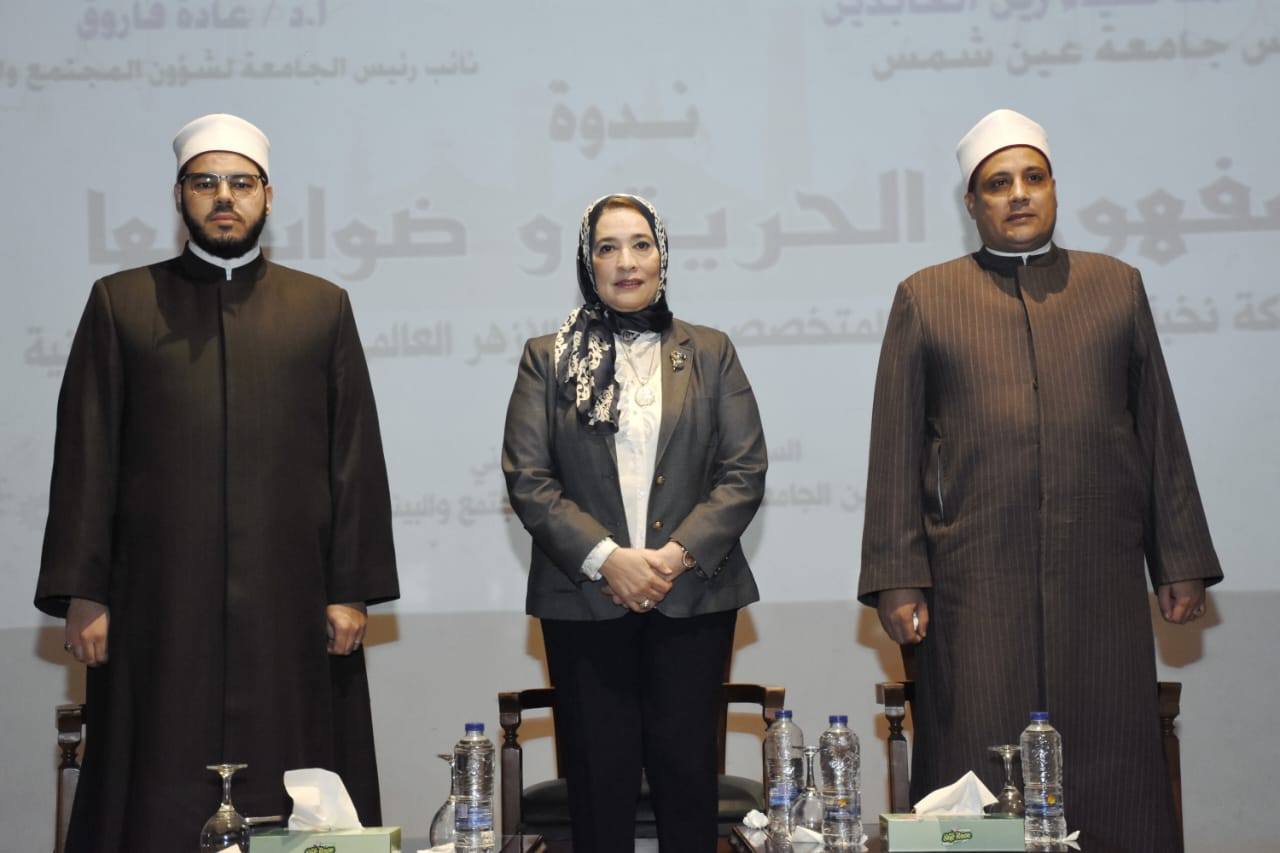
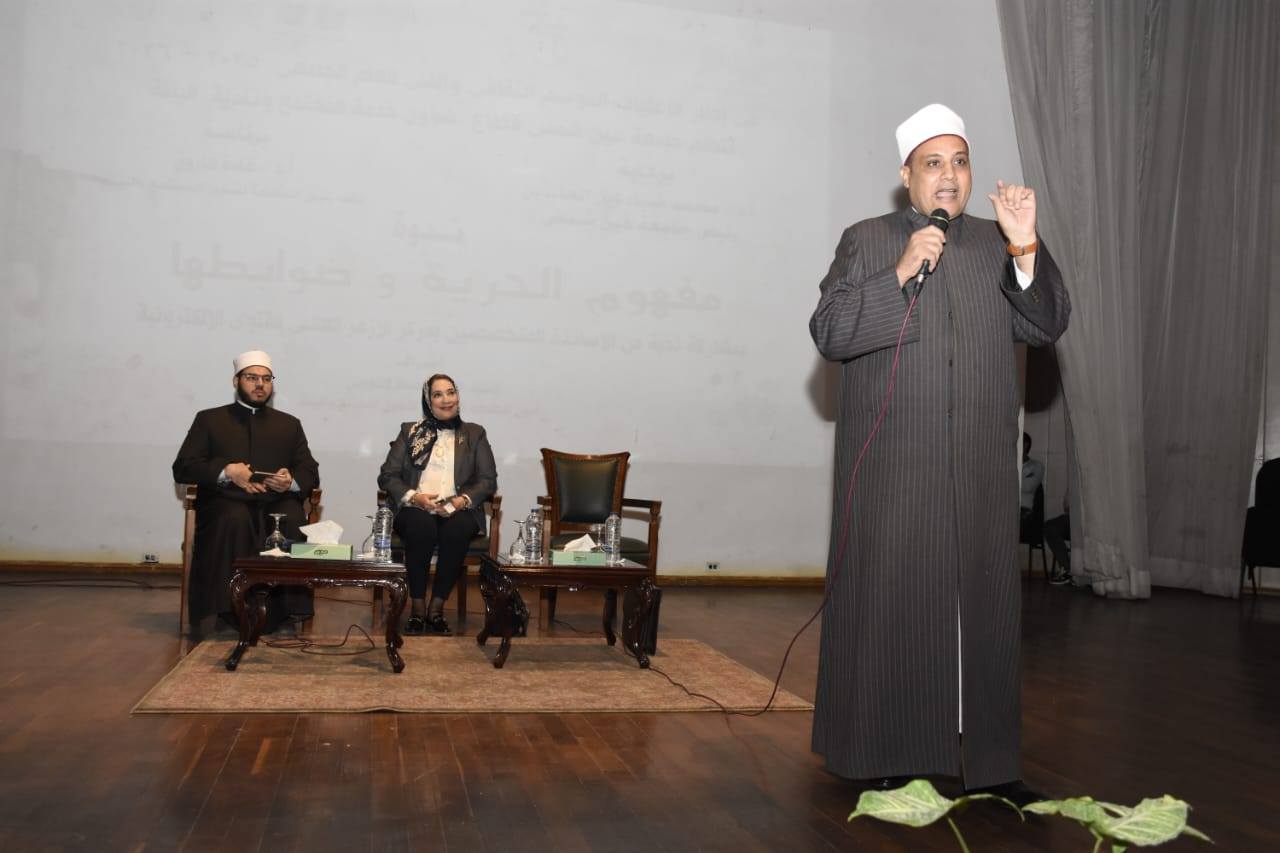
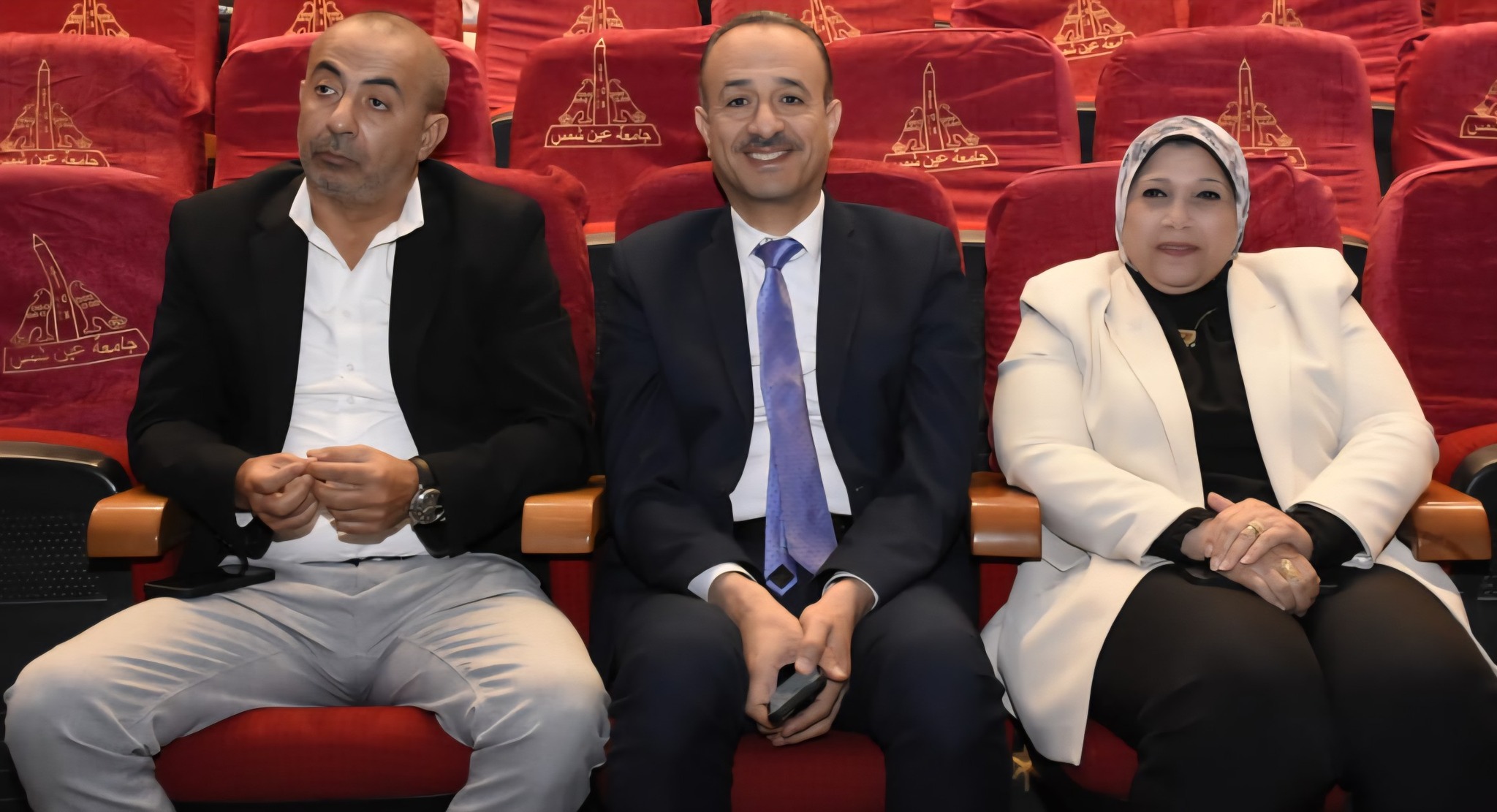
As part of Ain Shams University's cultural and artistic season for the 2025-2026 academic year, the Community Service and Environmental Development Sector, under the auspices of Prof. Mohamed Diaa Zain El-Abedeen, University President, and chaired by Prof. Ghada Farouk, Vice President for Community Service and Environmental Development, organized an educational seminar entitled "The Concept of Freedom and its Limits." The seminar featured a select group of professors specializing in the field from Al-Azhar Global Center for Electronic Fatwas, and was held under the supervision of Major General Hossam El Sherbiny, Assistant Secretary of the University for Community and Environmental Affairs.
 |
 |
 |
||
In this context, Prof. Ghada Farouk emphasized the Community Service and Environmental Development Sector's ongoing commitment to raising awareness, promoting culture, and instilling human values among students. She stressed the importance of cultivating an enlightened student consciousness capable of exercising freedom responsibly and within the framework of values and laws governing relationships within society. This aims to empower young people to distinguish between true freedom and actions that may disrupt social order or infringe upon the rights of others, recognizing that youth are the pillars of the nation and the foundation for building its future.
The seminar was opened by Prof. Houda El-Gebaly, who emphasized the importance of discussing the seminar's topic, "The Concept of Freedom and its Limits," at this time. She explained that freedom is not merely a right exercised by an individual in isolation from others, but rather a noble human value that is only fully realized when exercised within a framework of responsibility and respect for the law.
During the seminar, Dr. Sami Haggag, supervisor of the Unit for Countering Atheism and Religious Extremism, discussed the meaning of freedom in light of the legal guidelines that ensure its true meaning and the fundamental objectives that Islamic law seeks to achieve through its legislation. These objectives are essential for human life and the well-being of society, namely the preservation of life, intellect, honor (reputation and dignity), property, and religion.
 |
 |
 |
||
It also includes the preservation of life, which protects individuals from destruction. This encompasses the prohibition of unlawful killing, the permissibility of seeking medical treatment, the obligation to provide the necessities of life such as food, drink, and shelter, and the prohibition of murder and suicide.
It also includes the preservation of the intellect, which protects the mind from all that corrupts it, such as the prohibition of drinking alcohol and using drugs, and the obligation for Muslims to use reason in all aspects of their lives.
It includes the preservation of honor, dignity, and reputation, which is why adultery and all that resembles it are prohibited, as are speaking ill of others, spying, or spreading false news and rumors.
It includes the preservation of wealth, which protects money from misappropriation. This includes the prescribed punishment for theft to safeguard wealth, as well as prohibiting extravagance in spending.
The discussion concluded by clarifying the importance of preserving religion, which pertains to preserving Islamic beliefs and rituals, as well as respecting all religions and guaranteeing freedom of religious practice without infringing upon the freedom of others.
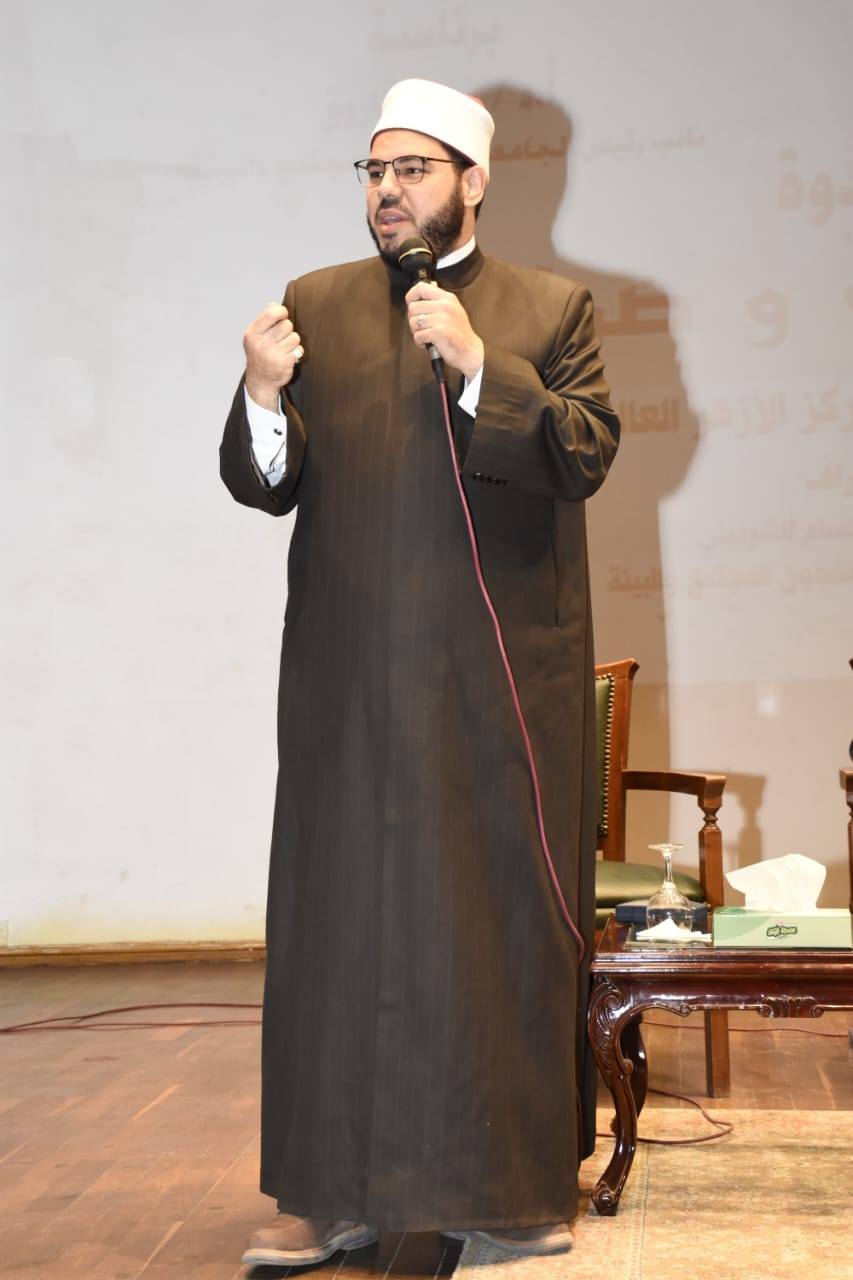
Dr. Muhammad Imad Abu al-Huda, Head of the Fatwa Bank at Al-Azhar Global Center for Electronic Fatwas, addressed the question of whether humans have free will or are predestined, as mentioned in the Holy Quran in Surah Al-Ahzab, where God Almighty says: “Indeed, We offered the Trust to the heavens and the earth and the mountains, and they declined to bear it and feared it; but man [undertook to] bear it. Indeed, he was unjust and ignorant.” (72)
This means that God offered the “Trust,” which is the religious obligations of commands and prohibitions, and the choice between good and evil, to the heavens, the earth, and the mountains. They refused to bear it for fear of being unable to fulfill it, while man, in his weakness, undertook it, thus being unjust to himself and ignorant of the consequences of his actions.
Human beings are free to choose; they are given free will, not predetermined. He explained that a person's freedom to make decisions is an integral part of their dignity. However, this freedom comes with the responsibility of bearing the consequences of their choices. Individuals possess free will but are always required to be aware of the ethical and social implications of their decisions.
He also emphasized that people are free to think and express themselves, but within certain limits. He affirmed that freedom of opinion and thought is one of the most important pillars of societal development, but it is not absolute. Rather, it must be exercised within a framework of mutual respect, upholding principles and values, and refraining from harming the rights of others, inciting discord, or violating the law.
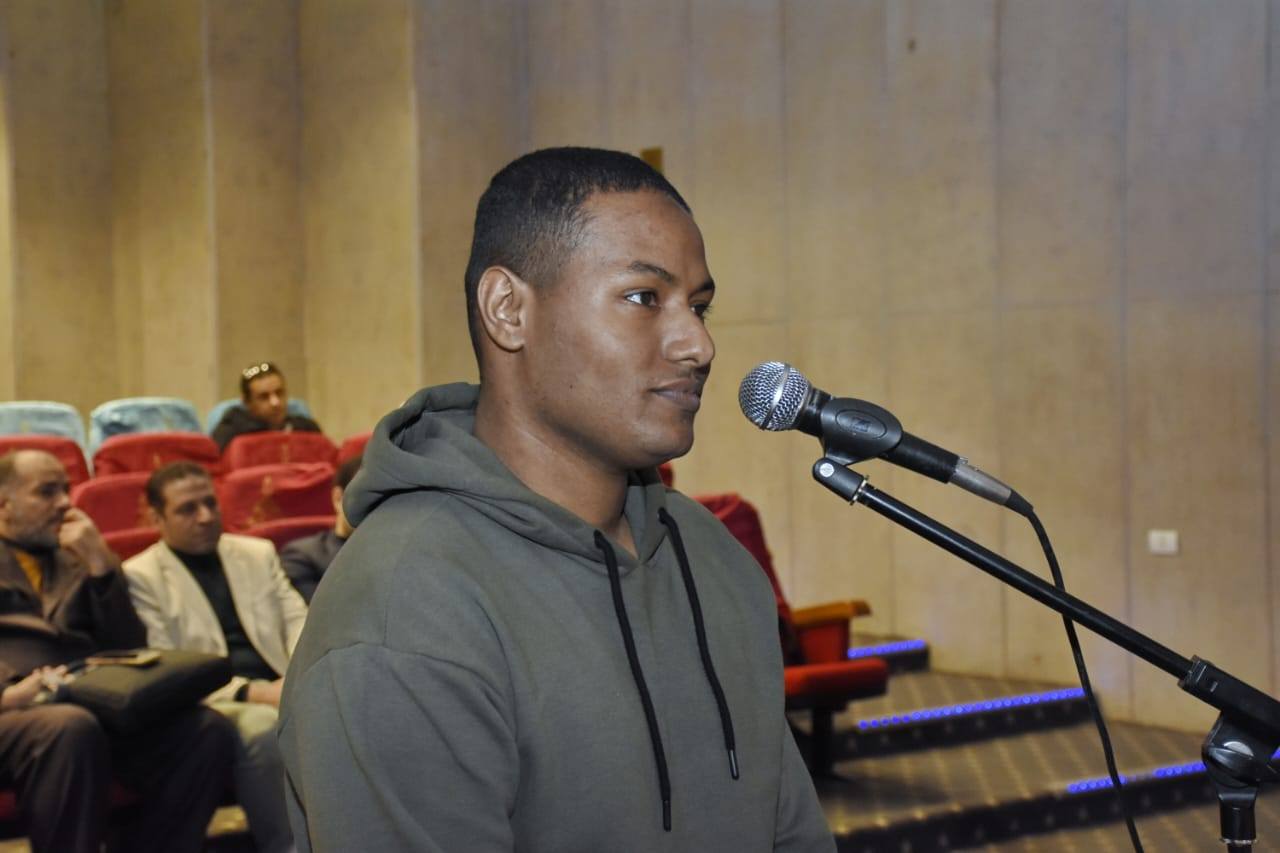
The seminar also witnessed a lively discussion between students and scholars from Al-Azhar University on various matters affecting students' academic lives and future careers, focusing on the pursuit of permissible actions and avoiding prohibited ones.