

The President of Ain Shams University Holds an Expanded Meeting with Deans, Vice Deans, and Faculty Members to Discuss the Strategic Roadmap for Transitioning to Tier 1
In line with the vision of the Ministry of Higher Education and Scientific Research to consolidate Egypt’s position as a regional and international hub for higher education, scientific research, and innovation, Ain Shams University continues its efforts to develop its academic, research, and institutional ecosystem by preparing a strategic plan to adopt the Tier 1 model, which encompasses world-leading universities distinguished by educational quality, scientific research, innovation, and international competitiveness.
In this context, Prof. Mohamed Diaa Zain El-Abedeen, President of Ain Shams University, held a meeting to discuss the “Strategic Roadmap Towards Tier 1,” review the targeted performance indicators and the requirements for achieving them, and discuss the estimated budget required to implement the plan over a three-year period from 2027 to 2029.
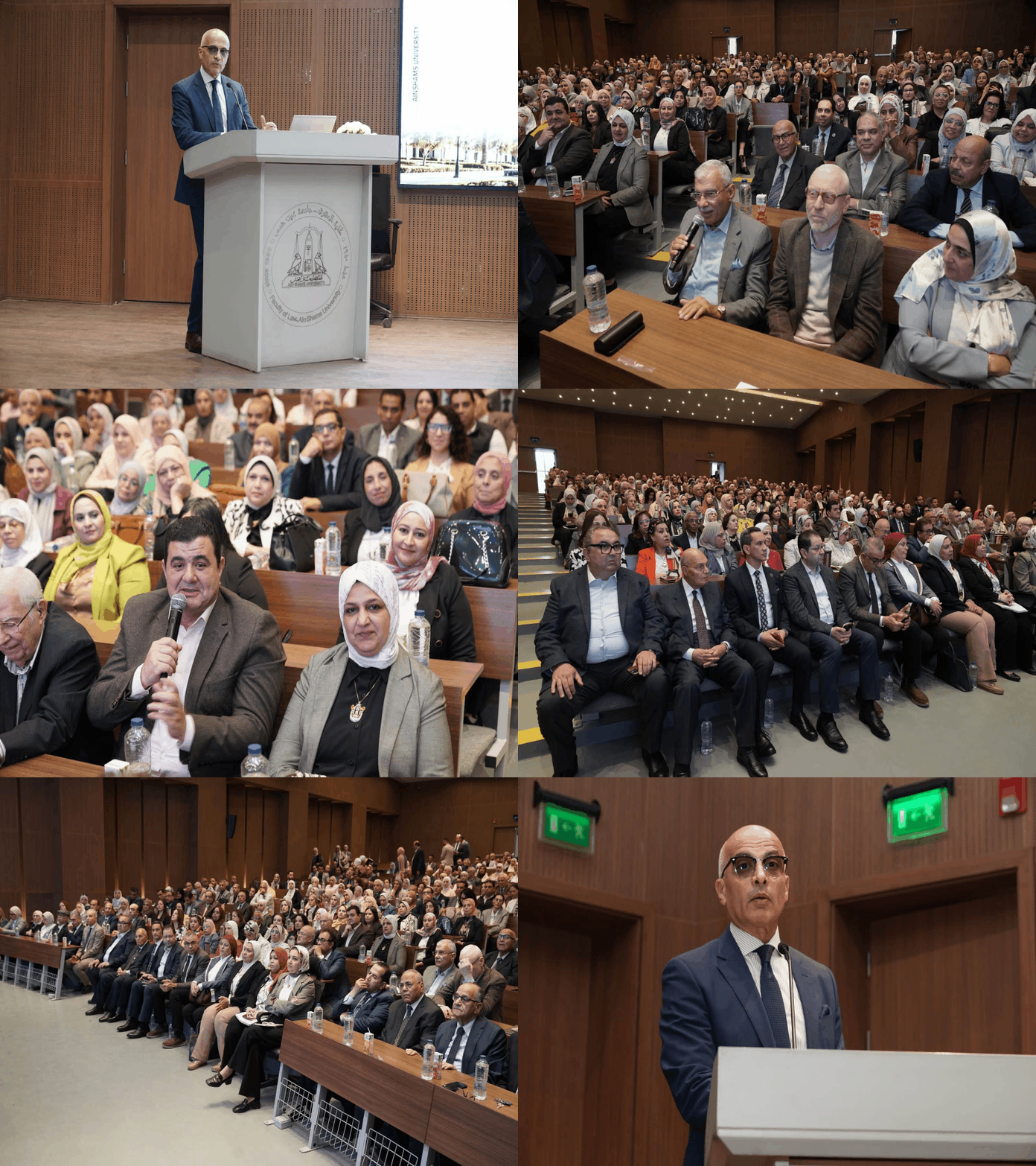
The meeting was attended by Prof. Amany Osama Kamel, Vice President for Postgraduate Studies and Research; Prof. Rami Maher Ghali, Vice President for Education and Student Affairs; deans and vice deans of faculties; a number of faculty members and directors of university units and centers; Major General Ahmed Lashin, Secretary-General of the University; Mr. Mohamed El-Gamal, Head of the Central Administration of the University President’s Sector; and Mr. Ibrahim Saeed Hamza, Assistant Secretary-General for Education and Student Affairs.
Prof. Mohamed Diaa Zain El-Abedeen opened the meeting by welcoming the attendees, emphasizing the University’s commitment to broadening participation in developing its future strategy by engaging deans, vice deans, and representatives of various disciplines and sectors, as well as forming integrated working teams comprising representatives from the engineering and information technology (IT) sectors, among others. These efforts aim to translate visions and proposals into specific projects and implementation plans based on clearly defined priorities, thereby enhancing the University’s competitiveness and improving educational outcomes.
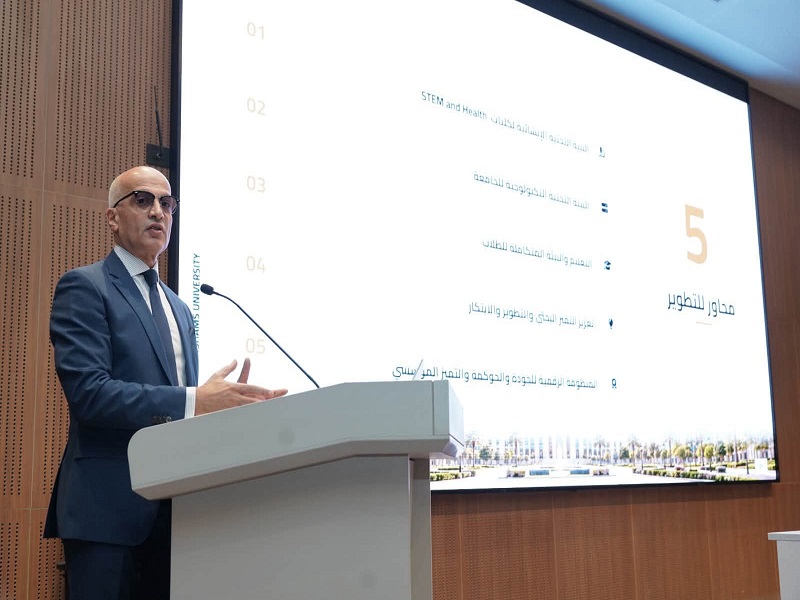
The University President reviewed the strategic pillars of development towards Tier 1, which include educational efficiency and an integrated student environment; research excellence, innovation, and societal and transformative impact; governance and institutional excellence; financial sustainability and resource efficiency; and digital transformation and smart campuses, within a comprehensive framework comprising 12 criteria for enhancing institutional performance.
The meeting addressed five main pillars constituting the implementation framework of the strategic roadmap. The first focuses on developing the University’s physical infrastructure by upgrading buildings and interior spaces, laboratories, lecture halls, classrooms, administrative offices, facilities, entrances, and corridors, thereby providing an educational and research environment aligned with the targeted standards.
The second pillar focuses on developing technological infrastructure and advancing digital transformation by modernizing digital equipment, digitizing academic and administrative services and processes, and equipping specialized laboratories across various faculties, thereby supporting the quality of education and practical training while enhancing institutional performance.
The third pillar focuses on enhancing education and creating an integrated student environment by strengthening academic advising and support, improving graduates’ career readiness, aligning academic programs with labor market requirements, and utilizing digital platforms that support the educational process. These include the ASU PRISM platform for academic program evaluation and the Edusofx platform for course analysis and student learning support, which is integrated with the ASU2LEARN platform.
The fourth pillar addresses the promotion of research excellence, development, and innovation by advancing the scientific research ecosystem, improving international publication indicators, and supporting applied research with societal and economic impact. It also includes reviewing several targeted projects, such as developing the Egyptian Center of Excellence for Solid Waste Management and the Center for Preclinical and Translational Research, producing green hydrogen, and removing persistent organic pollutants from wastewater.
The fifth pillar focuses on developing an integrated digital system for quality assurance, governance, and institutional excellence through the establishment of a comprehensive digital archiving and quality management system, real-time monitoring of plans and performance indicators, the development of smart surveys and beneficiary satisfaction measurement tools, and the use of predictive analytics to support decision-making. It also includes automating digital self-assessment processes across faculties and launching a professional development platform for the electronic management of training and qualification programs.
The meeting also reviewed the preliminary estimated budget required to implement the targeted development projects, in accordance with the requirements of the various strategic pillars and the proposed three-year implementation timeline.
At the conclusion of the meeting, an open discussion was held to gather the views and proposals of deans, vice deans, and faculty members regarding implementation priorities, the development of proposed projects and their implementation mechanisms, and the strengthening of cooperation and integration across the University’s various sectors. These efforts aim to translate the strategic roadmap into concrete implementation steps, achieve the University’s objectives towards Tier 1, and strengthen its regional and international competitiveness.