

President of Ain Shams University Inaugurates Breast Cancer Awareness and Early Detection Campaign in Cooperation with the National Committee for Women's Health Support and the Decent Life Foundation (Hayah Karima)
As part of Ain Shams University's commitment to supporting health and community initiatives and strengthening national efforts to improve women's health, Prof. Mohamed Diaa Zain El-Abedeen, President of Ain Shams University, inaugurated the free Breast Cancer Awareness and Early Detection Campaign on Wednesday. The campaign was organized by Prof. Hala Suweed, Vice Dean of the Faculty of Medicine for Community Service and Environmental Development, in cooperation with the National Committee of the Presidential Initiative for Women's Health Support, headed by Prof. Hesham El-Ghazaly, Professor of Oncology at the Faculty of Medicine, Ain Shams University, under the supervision of Mr. Mohamed El-Gammal, Head of the Central Administration of the University President's Sector.
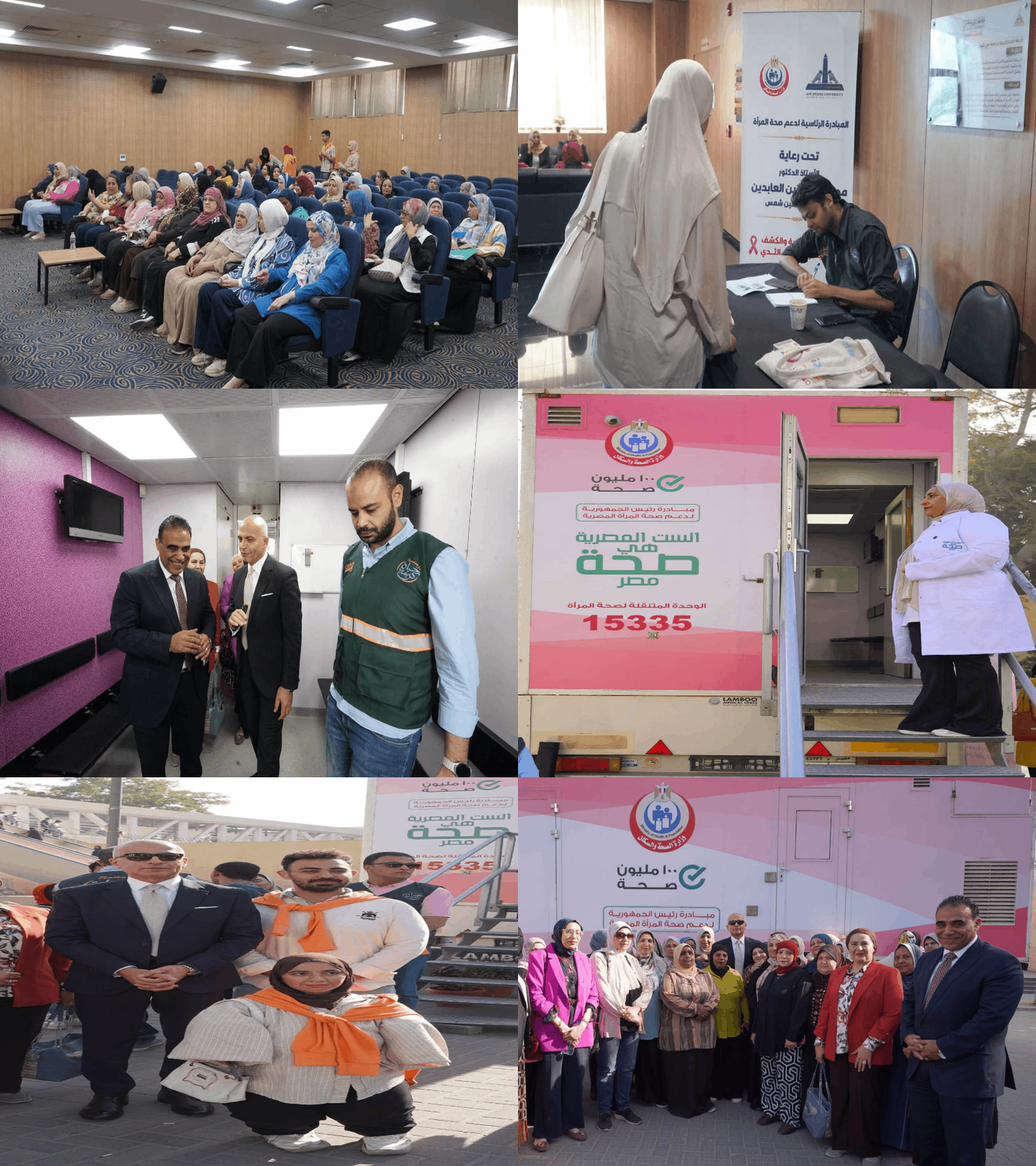
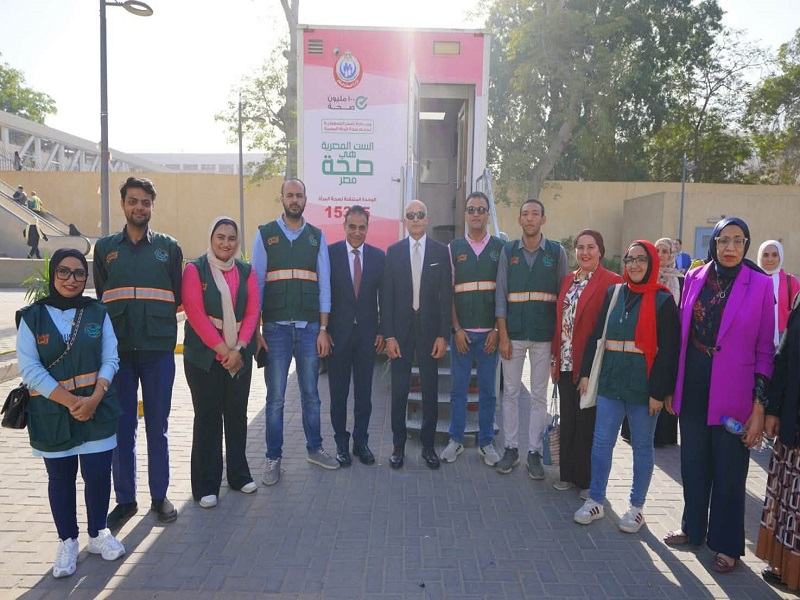
The inauguration was attended by Mr. Ibrahim Said Hamza, Assistant Secretary-General of the University for Education and Student Affairs, along with several university officials and staff members. During the event, the University President toured the mobile medical unit designated to provide the campaign's services, inspecting its medical facilities, advanced equipment, and capabilities for conducting the necessary medical examinations. He praised the quality of the facilities and technologies employed, emphasizing the importance of making early detection and health awareness services accessible to women on campus.
During his tour, the University President directed that an accurate survey be conducted to determine the number of female university employees over the age of 40. This would help assess the size of the target group, evaluate the current campaign's capacity to meet their needs, and determine whether additional, more extensive campaigns should be organized. He also stressed the importance of strengthening cooperation with relevant authorities to ensure that early detection services reach as many women as possible.
Prof. Mohamed Diaa Zain El-Abedeen also took commemorative photographs with the women benefiting from the campaign and other attendees, in an atmosphere reflecting the University's commitment to women's health and its support for initiatives aimed at improving quality of life and promoting public health.
It is worth noting that the participation of the Decent Life Foundation (Hayah Karima) in the campaign forms part of its organizational role in supporting the initiative's activities and reflects the continued fruitful cooperation between the Foundation and Ain Shams University. This is not their first collaboration, as both parties maintain an ongoing partnership through the periodic "Enta El-Hayah" (You Are Life) outreach convoys, organized in cooperation with the University's faculties of medicine.
The day's activities included an awareness seminar delivered by Prof. Nesreen Mosallam, Professor of Medical Oncology at the Faculty of Medicine, Ain Shams University, in the presence of Prof. Hala Suweed. The seminar highlighted the importance of early detection of breast tumors, which plays a crucial role in improving recovery rates, ensuring timely and appropriate treatment, and increasing the possibility of breast-conserving surgery instead of the complete mastectomy that was more commonly performed in the past.
The seminar also addressed various methods of early detection, including breast self-examination starting at the age of 20, clinical breast examinations conducted by specialized physicians, and diagnostic imaging techniques such as ultrasound and mammography.
Regarding prevention, Prof. Nesreen emphasized the importance of maintaining a healthy diet, avoiding processed foods, engaging in regular physical activity, and preventing obesity, noting that excess body fat is a significant risk factor for developing such tumors.
She also addressed and corrected several misconceptions associated with breast cancer, including misunderstandings about undergoing mammography before a clinical examination, the supposed connection between uterine and breast tumors, the potential for benign tumors to become malignant, and the belief that hereditary factors are the primary cause of breast cancer. She explained that most breast cancer cases in Egypt are sporadic rather than hereditary.
She further stressed that breast cancer is not contagious and dispelled the widespread misconception that taking a biopsy causes cancer to spread. She explained that biopsy results are essential for establishing appropriate and effective treatment plans.
Prof. Nesreen also discussed the psychological aspects of the disease, emphasizing the importance of psychological well-being in initiating and continuing treatment. She addressed misconceptions surrounding the adverse effects of cancer therapies, explaining that scientific advances have significantly improved the management and reduction of many treatment-related side effects.
At the conclusion of the seminar, she thanked the women in attendance and encouraged them to undergo screening, thereby promoting health awareness and motivating women to prioritize their well-being.
Following the seminar, medical examinations commenced for the women participating in the campaign through the mobile medical unit, which was equipped with advanced diagnostic technologies. Clinical breast examinations were conducted to identify cases requiring further investigation, with eligible participants referred to for mammography and ultrasound examinations within the mobile unit, according to each woman's age and individual health risk factors.
The services also included blood pressure and blood glucose measurements, weight and height assessments, and body mass index (BMI) calculations, in addition to health awareness, education, and medical examination services.