.svg)

The Prime Minister Reviews the Executive Status of Ain Shams University’s Medical City Project
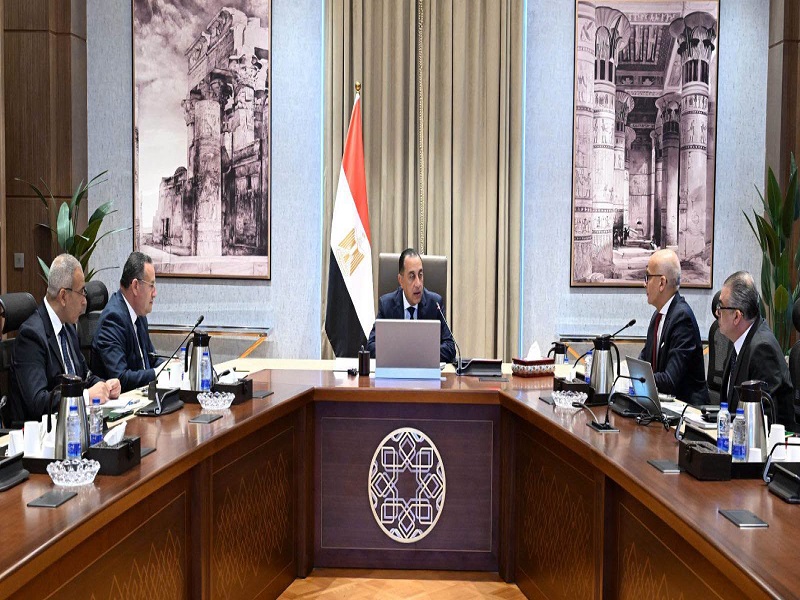
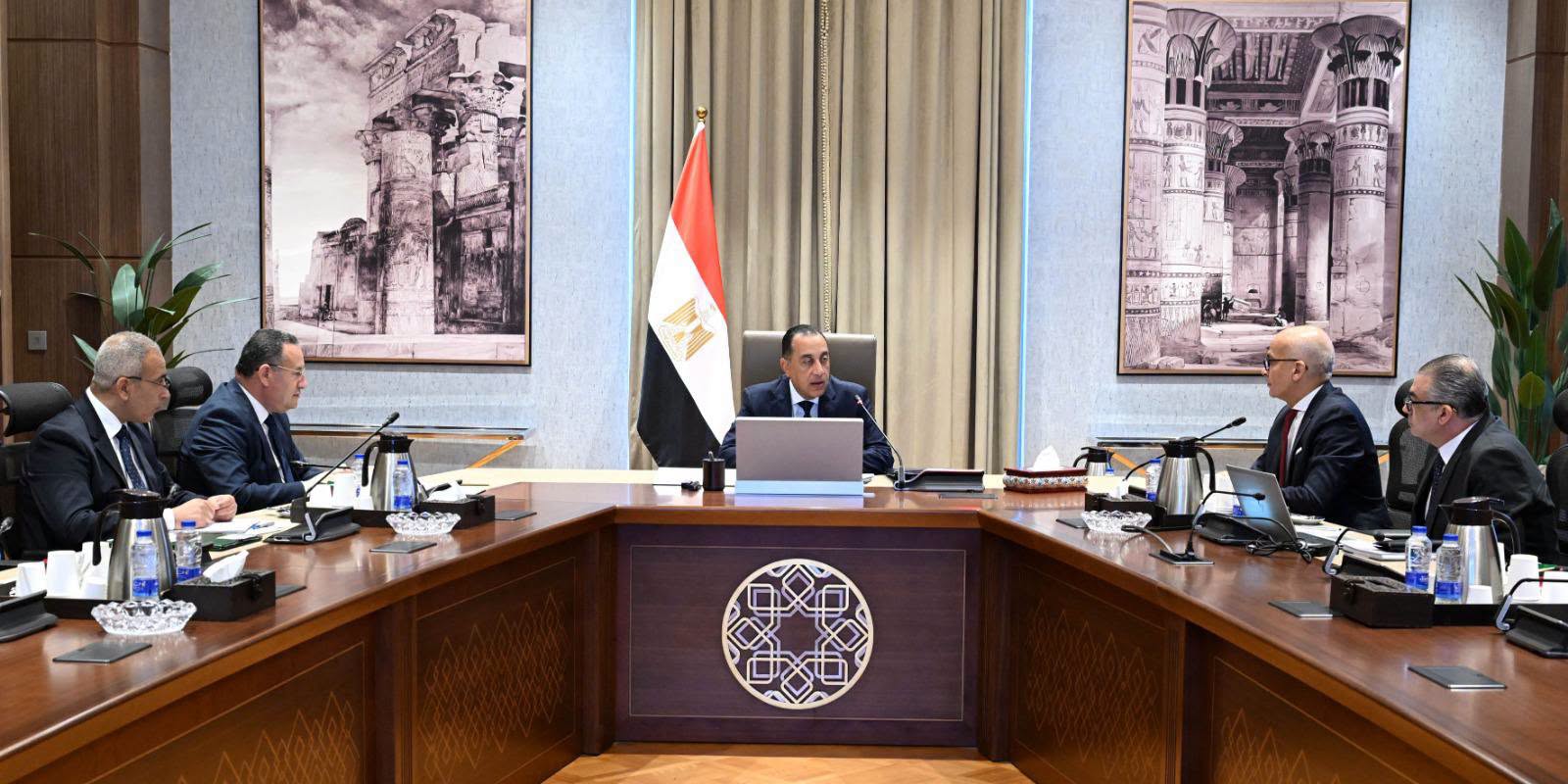
Dr. Mostafa Madbouly, Prime Minister, met with Dr. Abdelaziz Konsowa, Minister of Higher Education and Scientific Research, to review the executive status of Ain Shams University Medical City Project and the measures taken to implement several presidential directives. The meeting was attended by Dr. Mohamed Diaa Zain El-Abedeen, President of Ain Shams University, and Dr. Ali El-Anwar, Dean of the Faculty of Medicine at Ain Shams University and Chairman of the University Hospitals Board.
Completion of the Medical City Project
At the outset of the meeting, the Prime Minister stressed the importance of expediting the completion of Ain Shams University Medical City Project in implementation of the directives of H.E. President Abdel Fattah El-Sisi to develop the Ain Shams University Hospitals district and strengthen its medical role in providing integrated healthcare services to thousands of patients in accordance with the latest international best practices in this vital field.
In this context, the Minister of Higher Education and Scientific Research reviewed the executive status of the project, including components that have achieved advanced completion rates. These include the development and upgrading of the Blood Bank building; the renovation and enhancement of the façades of the Women and Maternity Hospital, the Poison Control Center, and the Nursing Institute; the development and upgrading of El-Waili and Arab Al-Mohamadi Gardens; and the construction of the Medical City’s perimeter walls and external gates. He also reviewed ongoing works, including the Outpatient Clinics Project, the expansion project of the Specialized Pediatric Surgery Hospital, the Endoscopic Surgery Building, and the Model Reception and Emergency Building.
Components of the Medical City Project
For his part, the President of Ain Shams University presented a detailed overview of the progress and objectives of the project’s key components. He explained that the Blood Bank Development and Upgrading Project include two blood donation laboratories, 12 blood analysis laboratories, four cooling rooms and refrigerators for blood bag storage, a patient waiting area, three lecture halls, three physicians’ offices, and two meeting rooms.
He added that the Demerdash Outpatient Clinics Development and Upgrading Project involves the restoration and structural reinforcement of three repeated floors in the existing building and their conversion into clinics, bringing the total to 47 specialized clinics, in addition to the construction of a connected four-story building to support the outpatient facilities.
The project also includes the construction of the Specialized Pediatric Surgery Hospital within the Medical City. The hospital consists of a nine-story building with a capacity of 225 beds and includes pediatric operating rooms, outpatient clinics, physiotherapy rooms, sample collection rooms, a pharmacy, neonatal intensive care units, and offices and halls for faculty members.
In the same context, Dr. Ali El-Anwar reviewed the executive status of additional project components, including the construction of the Model Reception and Emergency Building, which comprises operating rooms, intensive care rooms, inpatient wards, laboratories, and a toxicology department. He also highlighted the Demerdash Endoscopic Surgery Building Development Project, which includes endoscopy rooms, recovery rooms, and sterilization facilities, in addition to the development and upgrading of Arab Al-Mohamadi Garden covering 47,000 square meters and El-Waili Garden covering 15,000 square meters.
Models of Leading Egyptian Universities
In another context, Dr. Abdelaziz Konsowa reviewed the measures taken regarding several presidential directives, including the development of models for leading Egyptian universities, directives concerning Alexandria University in New Borg El Arab City, and the presidential directive to expand the presence of Egyptian universities abroad. He noted that branches of Cairo University and Alexandria University are currently being prepared for launch in a number of countries.
The Minister also discussed actions taken regarding the presidential directive related to the Future Skills Academy, as well as the Global Oncology Center 500500 initiative, which aims to attract a leading international investor to manage the hospital and provide healthcare services, transforming it into a global medical center.
The Minister of Higher Education and Scientific Research further presented the framework for transforming Egyptian universities into globally leading Tier 1 institutions in accordance with presidential directives. He emphasized that the model is based on two key pillars: governance and monitoring systems, and financial sustainability.
He explained that the model is built upon several foundations, namely: laboratories and infrastructure; academic programs; student enrollment; faculty members; international partnerships and dual-degree programs; international students; student housing and services; scientific research and innovation; academic accreditation and quality assurance; international rankings; digital transformation and smart systems; and employability and labor market readiness.
The Minister noted that each of these pillars encompasses strategic initiatives, targets, performance indicators, implementation procedures, and partner entities responsible for execution.
Dr. Konsowa added that the Leading Egyptian Universities Model aims to establish regionally and internationally competitive universities that produce highly qualified graduates and attract international students. Achieving this objective depends on graduating labor-market-ready students, increasing the number of international students, enhancing institutional efficiency, improving income levels, developing promotion pathways for faculty and administrative staff, aligning programs with labor market needs, expanding dual and joint degree programs, comprehensively upgrading the educational environment, linking scientific research to industry and the knowledge economy, and implementing digital systems that support development.
The Minister concluded by noting that the targeted outcomes include modern and sustainable infrastructure, scientific research that serves industry and innovation, internationally competitive universities, highly qualified graduates equipped with advanced skills and ready for the labor market, and increased numbers of international students. Through these efforts, Egypt will become a regional and global hub for higher education, scientific research, and innovation, attracting knowledge-economy investments, researchers, and students from around the world.