

The Education and Students Sector Organizes an Awareness Seminar at the Faculty of Al-Alsun on the Dangers of Drug Abuse in Cooperation with the Fund for Drug Control and Treatment of Addiction
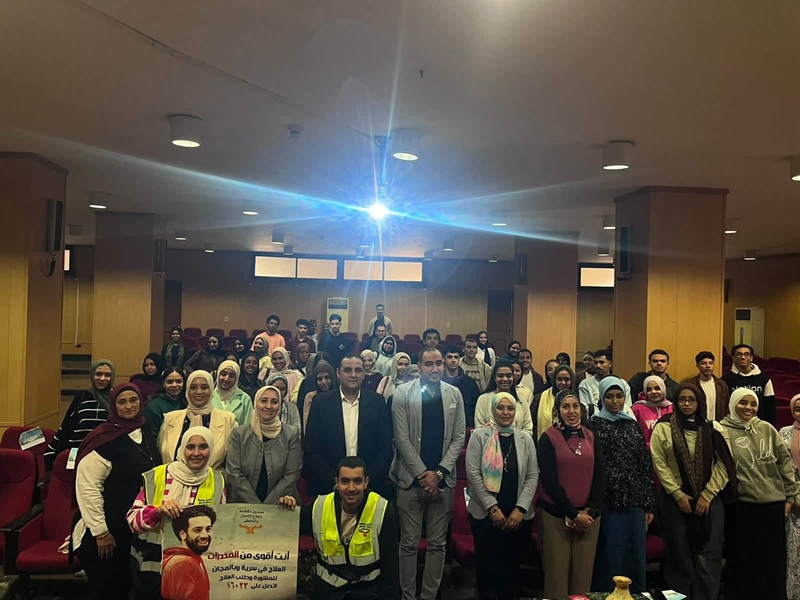
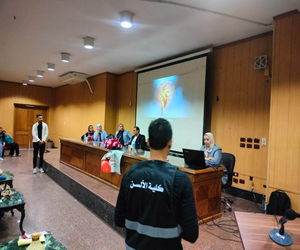
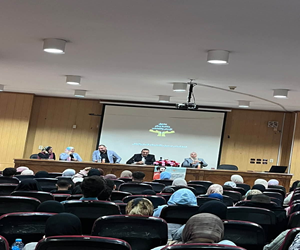
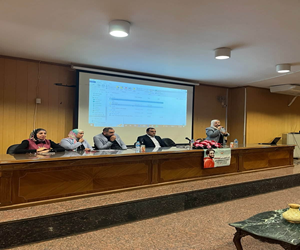
As part of the ongoing series of awareness seminar organized by the Education and Students Sector at Ain Shams University through the General Administration of Youth Welfare, in cooperation with the Fund for Drug Control and Treatment of Addiction, affiliated with the Cabinet, the Faculty of Al-Alsun hosted a seminar entitled “Before the Cycle of Drug Abuse…Social and Legal Dimensions.” The seminar aimed to raise awareness of the dangers of drug abuse and addiction, highlight preventive measures, and address their health, social, and legal consequences.
 |
 |
 |
||
The seminar was held under the auspices of Prof. Mohamed Diaa Zain El-Abedeen, President of Ain Shams University; Prof. Rami Maher Ghali, Vice President for Education and Students Affairs; and Prof. Yomna Safwat, Dean of the Faculty of Al-Alsun.
The seminar featured Dr. Rasha Mohamed Rashad, Researcher at the Fund for Drug Control and Treatment of Addiction and Ain Shams University Coordinator, and Dr. Badr Abdel Aziz Badr, Director General of Legal Affairs at the Fund.
Dr. Rasha Mohamed Rashad reviewed the factors leading to addiction and its various stages, explaining that the danger of initial drug experimentation lies in its potential to develop into psychological and physical dependence, particularly amid limited awareness, inadequate family communication, and a lack of positive parental supervision.
She also addressed modern synthetic drugs, such as crystal methamphetamine, commonly known as Shabo, as well as cannabis.
Furthermore, she highlighted the dangers of misusing certain medications, particularly cough medicines, sleeping pills, and sedatives, emphasizing that the indiscriminate or excessive use of some medications may lead to dependence and addiction. She also noted that certain pharmaceutical preparations may produce positive drug test results, underscoring the importance of following medical instructions and consulting healthcare professionals before taking medications.
She emphasized that the family represents the first line of defense against addiction through continuous communication with children and monitoring behavioral and psychological changes, particularly during vulnerable stages of development. She also warned against online content promoting smoking and drug abuse through social media platforms and attempting to associate these practices with misleading notions of courage, freedom, and independence, urging students to develop critical thinking skills and resist such deceptive portrayals.
She also reviewed the efforts of the Fund for Drug Control and Treatment of Addiction in providing free and confidential treatment and rehabilitation services through its 24-hour hotline, 16023, which receives treatment requests and inquiries. These efforts also include rehabilitation and social reintegration programs for recovering individuals through training, employment opportunities, and support for affected families.
She stressed that addiction is a treatable disease from which individuals can recover through appropriate treatment, support, and assistance, rather than a social stigma. She also emphasized the importance of engaging young people in promoting a culture of prevention and correcting misconceptions, enabling them to serve as awareness ambassadors both within and beyond the university.
Short films produced by the Fund addressing smoking, crystal methamphetamine, and cannabis were also screened.
In a related context, Dr. Badr Abdel Aziz Badr addressed the legal dimensions of combating drug-related crimes in Egypt, reviewing the key provisions of Anti-Narcotics Law No. 182 of 1960 and its amendments, as well as the penalties prescribed for drug trafficking, distribution, facilitation, and abuse. He explained that Egyptian legislation adopts an approach that combines legal deterrence with therapeutic and humanitarian considerations in addressing addiction.
He explained that the law distinguishes between drug users, individuals suffering from addiction, and drug traffickers, allowing individuals suffering from addiction to voluntarily seek treatment through authorized institutions and specialized centers without facing criminal prosecution in cases specified by law. He emphasized that the state's approach extends beyond punishment to encompass treatment, rehabilitation, and the social reintegration of recovering individuals.
He also discussed the legal penalties prescribed for operating or preparing premises for drug consumption and being present on such premises, in addition to certain legal issues associated with incidental possession. He explained that the legal characterization of an incident depends on its circumstances, surrounding facts, and the nature of criminal intent, with such determinations governed by applicable legal rules and judicial rulings.
He noted that legislation allows courts, subject to established legal requirements, to adopt therapeutic and rehabilitative measures in certain cases of drug abuse rather than relying solely on custodial sentences. This reflects the state's approach to protecting society, curbing the spread of drug abuse, and providing genuine opportunities for recovery.
He emphasized that legal awareness is one of the most important tools for preventing drug-related risks, warning that handling narcotic substances, participating in their distribution, or facilitating their consumption may result in legal liability, even in certain situations that individuals may mistakenly perceive as involving no serious violation.
The seminar concluded with an interactive discussion featuring extensive participation from the faculty’s students, who raised several questions regarding addiction prevention, access to treatment, and legal penalties associated with drug-related crimes. Both speakers addressed their inquiries, enriching the discussion and deepening students' understanding of the health, social, and legal dimensions of the issue.
The seminar reflects the commitment of Ain Shams University and the Faculty of Al-Alsun to strengthening their awareness-raising and community engagement roles, linking academic knowledge with real-world issues, actively contributing to national efforts to combat addiction, and fostering a more informed generation capable of protecting itself and society from the dangers of drug abuse.