.svg)

At the First Education and Student Affairs Council Meeting of the New Academic Year… Vice President Outlines a Roadmap for Developing the Education System and Student Services
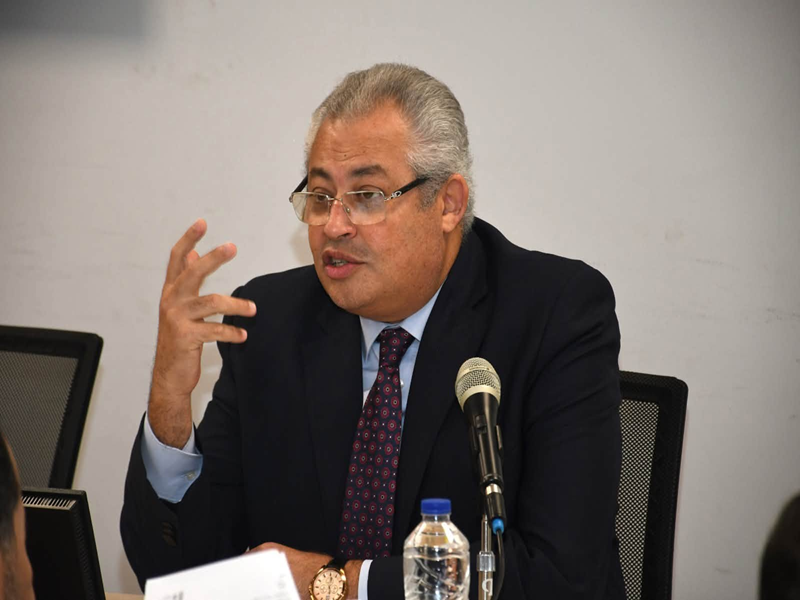
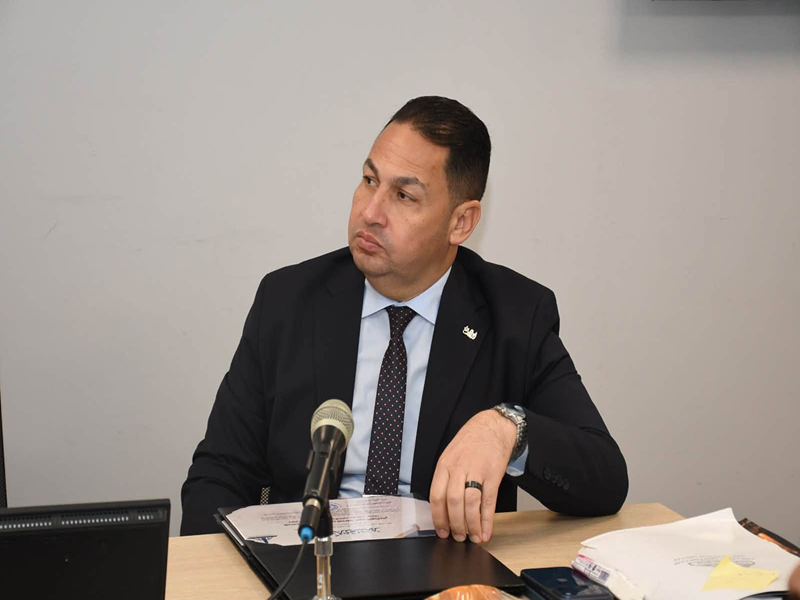
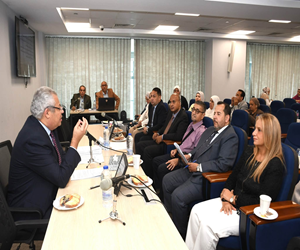
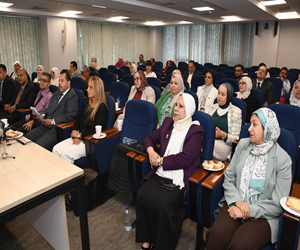
The Ain Shams University Education and Student Affairs Council held its first meeting of the 2026/2027 academic year yesterday, Wednesday, September 23, chaired by Prof. Rami Maher Ghali, Vice President of Ain Shams University for Education and Student Affairs , and attended by faculty deans, vice deans for Education and Student Affairs, external members of the Council, and Mr. Ibrahim Saeed Hamza, Assistant Secretary-General of the University for the Education and Student Affairs Sector.
Beginning of the New Academic Year
 |
 |
 |
||
At the outset of the meeting, Prof. Rami Maher Ghali extended his sincere congratulations to the Council members on the beginning of the new academic year, expressing his hope that it would be a year marked by development and achievement across Ain Shams University’s education system and student services.
The Vice President emphasized the importance of continuing to work as one team and strengthening integration and coordination between the Education and Student Affairs Sector and the University’s faculties, in a manner that contributes to enhancing the quality of the educational process, ensuring a prompt response to students’ needs, and improving the services provided to them. He also stressed the need to translate the Council’s decisions and recommendations into clear and tangible executive measures that directly benefit students and the educational process.
 |
 |
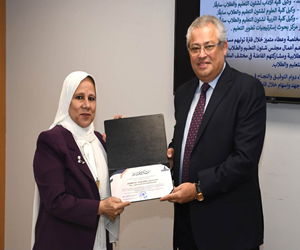
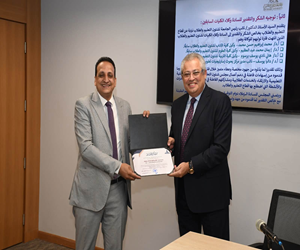
On behalf of the Education and Student Affairs Sector, Prof. Rami Maher Ghali extended his sincere appreciation and presented certificates of recognition to the former vice deans for Education and Student Affairs whose terms had ended. They included Prof. Mohamed Ibrahim Hassan Mohamed, former Vice Dean of the Faculty of Arts for Education and Student Affairs; Prof. Iman Mohamed Abdel Azim, former Vice Dean of the Faculty of Science for Education and Student Affairs ; Prof. Hany Nady Youssef Barsoum, former Vice Dean of the Faculty of Education for Education and Student Affairs ; as well as Prof. Dalia Youssef, Deputy Director of the Education Development Strategies Research Center. The recognition came in appreciation of their dedicated efforts, outstanding contributions, and effective role in supporting the Council’s work, developing the educational process, improving student services, and actively participating in the various files, initiatives, and activities undertaken by the Education and Student Affairs Sector. He wished them continued success in their future positions and responsibilities.
The Vice President also welcomed the members whose Council memberships had been renewed: Prof. Ahmed Refaat Ezzat, Chairman of the Standing Committee and former Dean of the Faculty of Science, and Prof. Hossam Fahim, Advisor to the University President for Information Technology and Digital Transformation. He emphasized the importance of their continued participation in the Council’s work and benefiting from their academic, administrative, and specialized expertise to strengthen integration among the educational, technological, and administrative aspects of the University.
He also welcomed Prof. Khaled Hamdy, former Dean of the Faculty of Law and former President of Ahram Canadian University, as a member of the Council, praising his academic, administrative, and leadership expertise and the valuable contribution it would bring to the Council’s work and discussions. He further welcomed Prof. Miriam Ayad, Professor at the Faculty of Pharmacy and Director of the Quality Assurance Center, stressing that her academic and specialized expertise would support the Council’s work and enrich its discussions.
He also welcomed the new members joining the Council: Prof. Hanan Kamel, Acting Dean of the Faculty of Arts; Prof. Safaa Shehata, Dean of the Faculty of Education; and Prof. Amal Morsi, Acting Dean of the Faculty of Science. He wished them success in carrying out their responsibilities and emphasized the importance of their active participation in the Council’s work and in supporting efforts to develop the educational process and student services.
Regulations to Streamline the Workflow
Prof. Rami Maher Ghali affirmed that the diversity of the Council members’ academic, administrative, and specialized expertise represents one of the key factors in enriching discussions and supporting the decision-making process, thereby contributing to the development of the education and student affairs system and the achievement of the University’s strategic objectives.
During the meeting, the Vice President for Education and Student Affairs stressed a number of organizational regulations aimed at streamlining the workflow between the Education and Student Affairs Sector and the University’s faculties, accelerating responses to assigned tasks, and ensuring the accuracy of data and information submitted to the Office of the Vice President.
He also emphasized the importance of promptly responding to the directives of the Supreme Council of Universities, in addition to providing the Office of the Vice President with a comprehensive monthly report on international students at each faculty. The report should include the number of enrolled students, their academic and registration status, financial status, total outstanding debts, amounts collected and remaining balances, as well as any problems or obstacles requiring intervention or coordination at the University level. This comes as part of efforts to strengthen the system for monitoring international students and enhance the accuracy of data related to their academic and financial status.
He further stressed the importance of implementing the Supreme Council of Universities’ decision concerning mechanisms for collecting tuition fees from international students who are in arrears.
Prof. Rami Maher Ghali, Vice President for Education and Student Affairs , emphasized the importance of continuing to support international students and providing them with an attractive educational and service environment, thereby strengthening Ain Shams University’s position and its ability to attract more international students from different countries. He noted that the University places particular emphasis on facilitating their integration into university life and enabling them to benefit from the activities and services available to them.
He also stressed the necessity of adhering to the specified deadlines for completing questionnaires sent to the faculties, given their importance to quality assurance processes and the reliance of studies, recommendations, and decision-making processes on their results.
Based on the principle that students are at the heart of the educational process, Prof. Rami Maher Ghali emphasized the importance of strengthening direct and continuous communication between vice deans for Education and Student Affairs and students, providing regular opportunities to meet with students, listen to their views, problems, and suggestions, and follow up on them while taking the necessary measures.
Identifying and Addressing Problems
He also stressed the importance of ensuring that Education and Student Affairs offices remain accessible to students during working hours and of establishing a clear mechanism for receiving their inquiries, complaints, and suggestions. This would help ensure prompt identification and resolution of problems, improve the quality of student services, and strengthen students’ trust in and sense of belonging to the University.
During the meeting, the Vice President for Education and Student Affairs reviewed the work of the committee chaired by him to develop the executive framework for the Summer Professional Qualification Program for Future Skills for undergraduate students, which includes Micro-Credentials.
Prof. Hany Barsoum, former Vice Dean of the Faculty of Education, also reviewed e-learning activities for the 2026/2027 academic year, presenting an overview of the unit, a summary of its activities, and its future directions. He noted that the University’s educational platforms had been upgraded to the latest systems, directors of e-learning units had received training, and several training courses had been organized for faculty members to enable them to use the platform and take full advantage of its capabilities.
He also reviewed the interactive e-book system, noting that all faculties included in the system had been followed up, while coordinators at newly participating faculties had been trained, provided with data-entry licenses, and supported in linking books to the library.
Representation of E-Learning Units
He also addressed virtual experiments, efforts to maximize students’ benefit from them and from virtual slides, as well as the representation of e-learning units on official councils, thereby strengthening institutional integration and supporting the development of the University’s e-learning system.
The meeting also reviewed aspects of the Education and Student Affairs Sector’s preparations for the new 2026/2027 academic year. Most student admission procedures through the electronic coordination system have been completed, with approximately 40,000 students admitted to date, in addition to around 8,000 students admitted through the electronic transfer platform.
Reference was also made to the results of a survey conducted to measure the satisfaction of students and parents with the performance and services provided, which showed highly satisfactory results. Brochures and informational booklets outlining admission requirements for faculty programs were also updated and distributed at higher education fairs, contributing to increased demand during the early application stage for several programs, including those offered by the Faculties of Computer and Information Sciences, Medicine, Al-Alsun, and others.
As part of the preparations, electronic coordination labs were opened to receive students throughout the various admission stages, including General Secondary Education Certificate holders, equivalent certificate holders, and others. A dedicated lab was also allocated at the Faculty of Arts to receive students with disabilities and provide them with the necessary facilities and support.
The Council also reviewed the efforts of the General Administration of Education and Student Affairs in receiving different categories of students, including newly admitted students, students in higher academic years, students seeking transfer of enrollment, and dismissed students, through the electronic transfer platform. This is carried out according to organized and clearly defined forms and procedures, facilitating access to the appropriate service for each student’s academic status, with follow-up until the service is fully completed.
During the meeting, the Council approved assigning the administrative and operational supervision of the swimming pool at the Faculty of Women to the Education and Student Affairs Sector, as the entity responsible for overseeing students’ sports and social welfare activities, while taking the necessary legal and administrative measures for implementation.
The Council also ratified the minutes of the Education and Student Affairs Council meeting held on May 20, 2026, and was briefed on matters presented to the University President during the period when the University Council was not in session, as well as matters presented to the Vice President for Education and Student Affairs during the period when the Council was not in session. It also ratified the minutes of the Standing Committee meeting held on September 15, 2026, together with the matters included therein.
The first meeting of the Education and Student Affairs Council for the 2026/2027 academic year comes as part of Ain Shams University’s commitment to continuing the development of its education system and student services and strengthening coordination between the Education and Student Affairs Sector and the University’s faculties, in a manner that supports the quality of the educational process and places students’ needs at the forefront of priorities for the new academic year.