.svg)

From "Behind the Scenes of Diplomacy to Shaping Public Awareness"…Ambassador Alaa Youssef Engages in an Open Dialogue with Faculty of Mass Communication Students
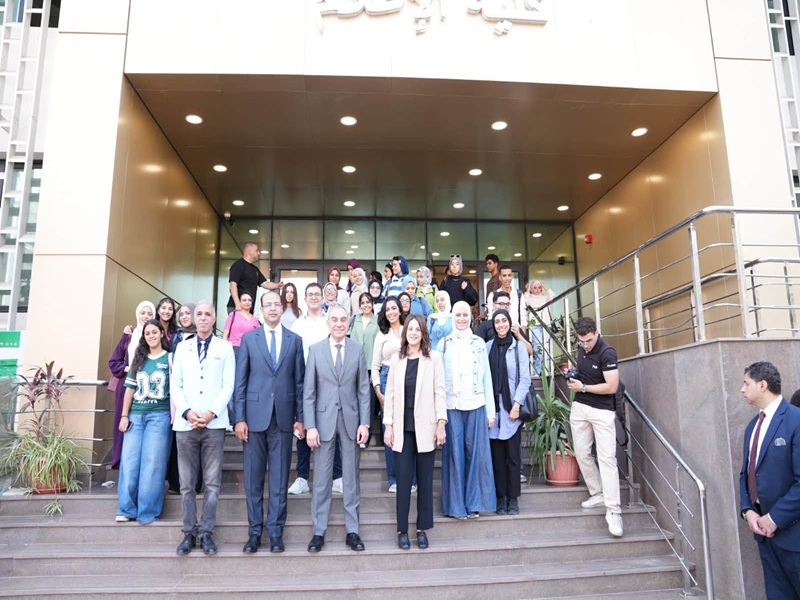
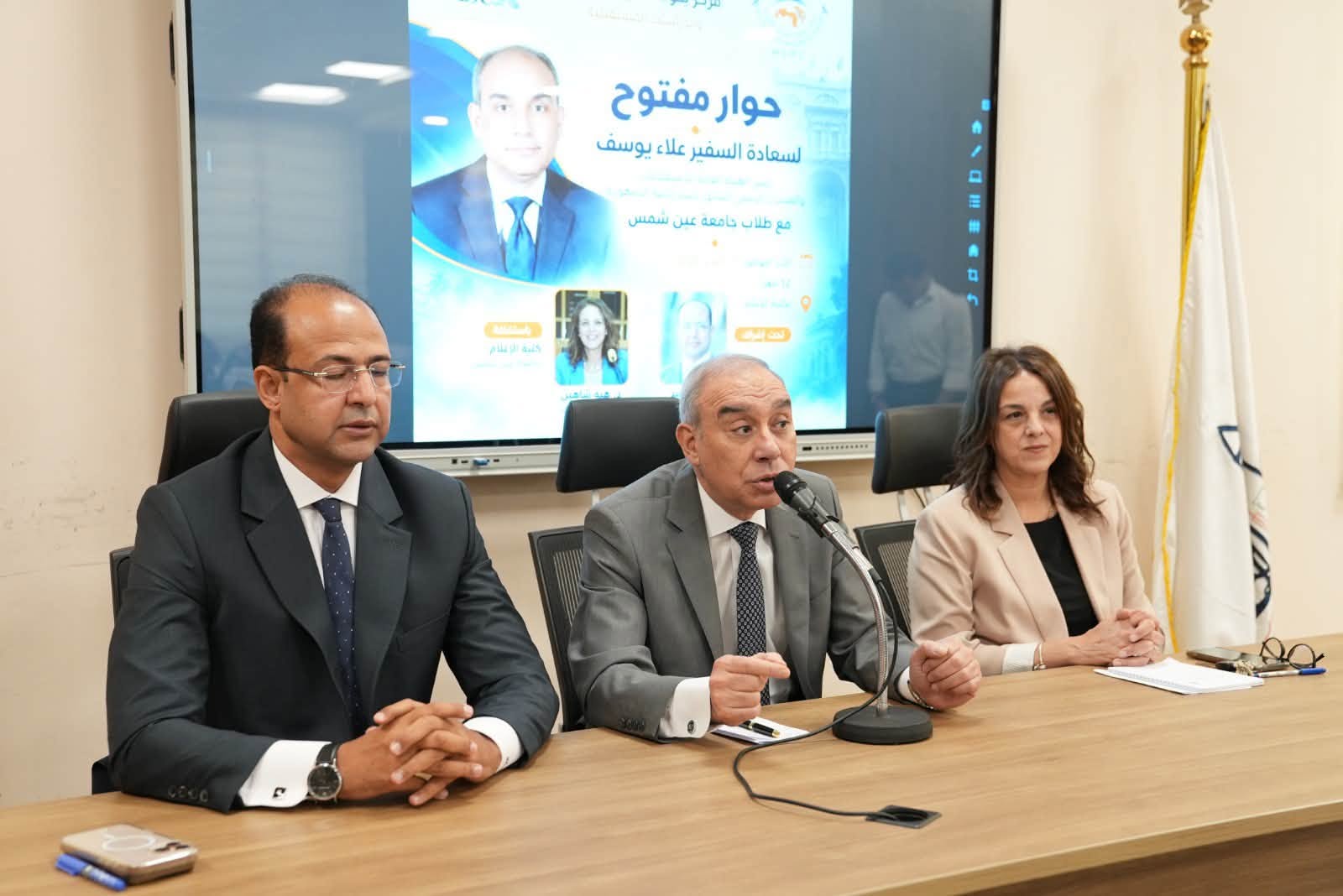
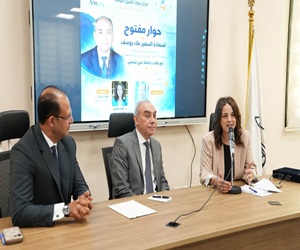
When ideas meet experience, questions become knowledge, and dialogue opens a window onto the deeper meaning behind events. Bringing together professional expertise and intellectual exchange, the Middle East Research and Future Studies Center at Ain Shams University, in cooperation with the University's Faculty of Mass Communication, organized an open dialogue with H.E. Ambassador Alaa Youssef, Chairman of the State Information Service and former Presidential Spokesperson. The event brought together university students on Sunday, October 11, 2026, at the Faculty of Mass Communication's Conference Hall.
 |
 |
 |
||
The event was held under the supervision of Dr. Hatem El-Abd, Director of the Middle East Research and Future Studies Center, and hosted by Dr. Heba Shaheen, Dean of the Faculty of Mass Communication. It reflected both institutions' commitment to connecting students with distinguished national experts and providing young people with firsthand insights into diplomatic and media work, as well as the role of institutions responsible for international communication in addressing regional and global issues and challenges.
Connecting Academic Research with Real-World Issues
Opening the event, Dr. Hatem El-Abd welcomed Ambassador Alaa Youssef, emphasizing the importance of direct engagement with experienced professionals in developing young people's awareness and deepening their understanding of state institutions and how they operate, particularly amid rapid global transformations and the growing volume and diversity of information sources.
 |
 |
 |
||
He noted that genuine awareness goes beyond following current events to understanding their context, analyzing their various dimensions, and verifying the information surrounding them.
El-Abd reaffirmed the Middle East Research and Future Studies Center's commitment to connecting academic research with real-world issues through scientific events and interactive discussions that enable young people to engage with specialists, strengthen their critical thinking and analytical skills, and better understand regional developments and their implications for national and regional affairs.
Engagement with Media and Diplomatic Professionals Enhances Students' Skills
For her part, Dr. Heba Shaheen, Dean of the Faculty of Mass Communication, welcomed Ambassador Alaa Youssef, highlighting the value of bringing students together with accomplished professionals. She stressed that such encounters help bridge the gap between academic learning and practical experience, offering insights into professional practices and challenges.
She added that direct interaction with media and diplomatic professionals contributes to developing students' skills and strengthening their awareness of the media's responsibility to communicate information, interpret events, and address different issues with professionalism and sound judgment.
Challenges Posed by Rapid Developments in Media
During the dialogue, Ambassador Alaa Youssef outlined the responsibilities of the State Information Service and its role in communicating Egypt's official positions and policies to international audiences, maintaining contact with foreign correspondents accredited in Cairo, and providing information and official statements that clarify Egypt's stance on various issues.
The discussion also addressed the challenges arising from the rapid evolution of media outlets and digital platforms, particularly the proliferation of information sources and the spread of inaccurate news. The Ambassador emphasized the importance of factchecking, relying on verified information, and professionally addressing reports concerning Egyptian affairs to support effective communication with domestic and international audiences.
Insights into Diplomatic Work
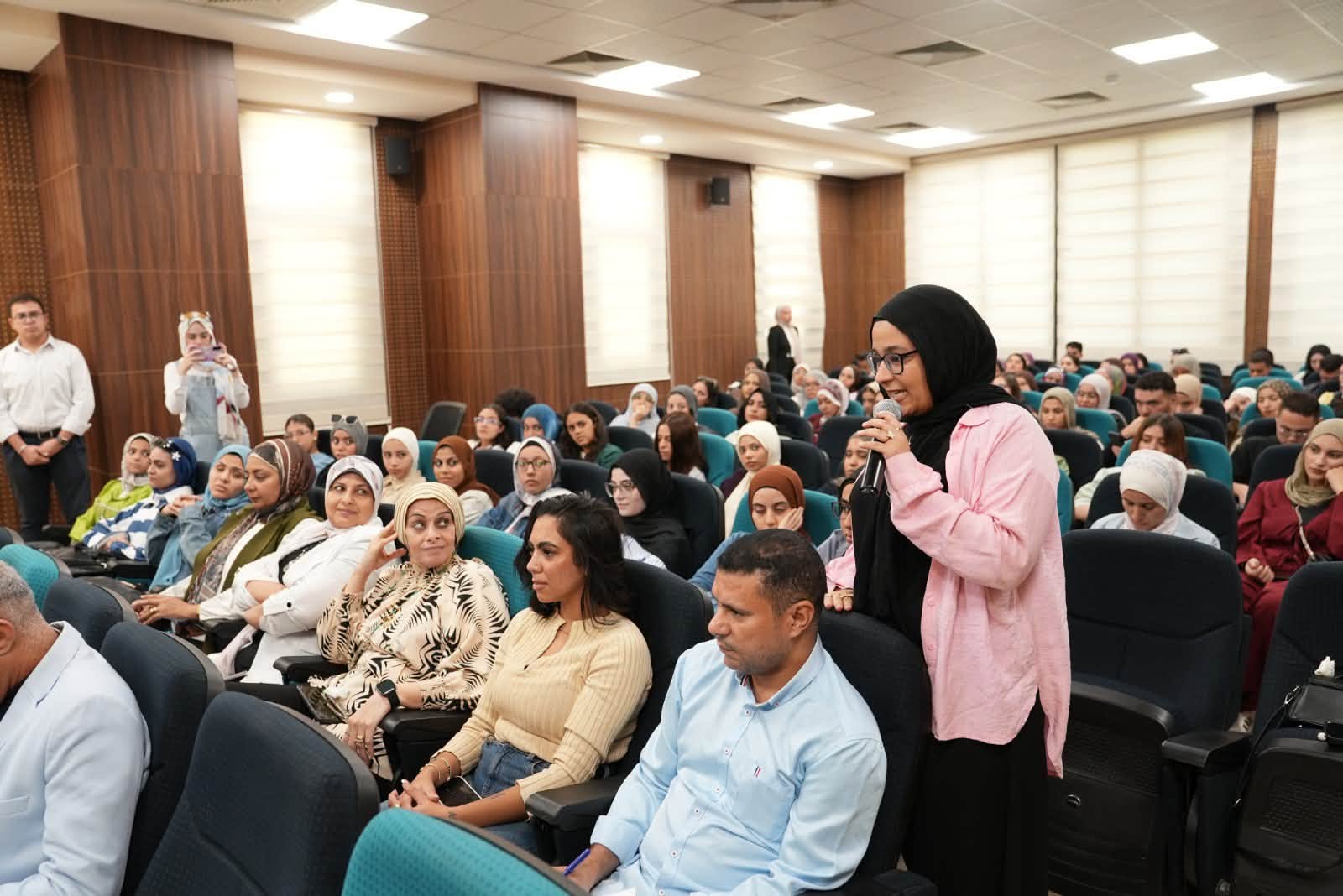
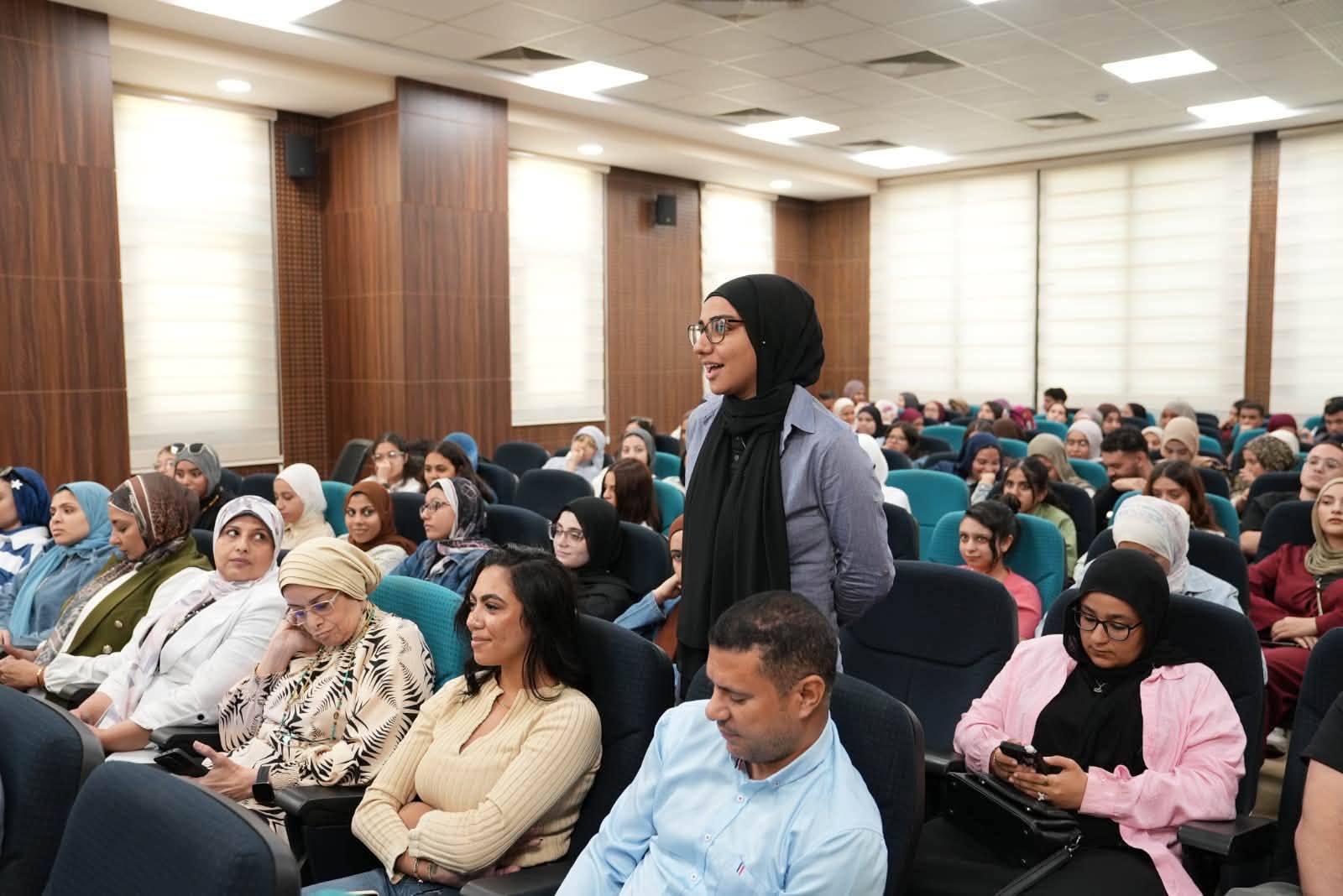
The event featured a lively and engaging discussion, transforming the conference hall into an open forum for questions and the exchange of perspectives. Students raised a wide range of questions about how the State Information Service responds to rumors and misinformation on social media, approaches reports issued by certain international organizations, and contribute to clarifying facts and presenting information in its proper context.
The discussion also explored practical and professional aspects of diplomacy. Students asked about the nature of diplomatic work, Ambassador Alaa Youssef's professional experience within the Presidency, the major challenges he encountered throughout his career, and the differences between diplomatic service and working within the presidential institution. They also sought advice on career opportunities in international organizations and the qualifications and skills required to pursue them.
Responding to students' questions, the Ambassador shared insights from his professional experience, stressing the importance of equipping media professionals with strong research, analytical, and fact-checking skills, alongside an understanding of the political and diplomatic contexts surrounding events, enabling them to fulfill their professional responsibilities effectively and responsibly.
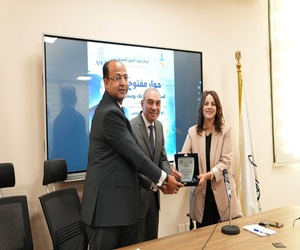
At the conclusion of the dialogue, Ambassador Alaa Youssef praised Ain Shams University students for their active participation and keen interest in the topics discussed, commending their thoughtful questions and engagement. Students, in turn, expressed their appreciation for the event, which offered them valuable firsthand insights into the work of the State Information Service and practical experience in the fields of media and diplomacy.
Organized jointly by the Middle East Research and Future Studies Center and the Faculty of Mass Communication at Ain Shams University, the dialogue underscored the importance of collaboration between research and academic institutions in broadening young people's intellectual horizons, bridging academic study and practical experience, and strengthening their ability to understand and analyze contemporary issues. Such initiatives contribute to preparing media professionals equipped with awareness, practical skills, and a strong sense of professional responsibility.
Engaging with experienced professionals is more than an opportunity to exchange questions and answers; it broadens intellectual horizons, develops analytical abilities, and encourages young people to move beyond simply following events toward understanding their broader dimensions and implications. Ultimately, such dialogue fosters informed awareness, deeper perspectives, and a greater capacity to navigate the complexities of a changing world.