
Vision of the Quality Assurance Unit
The Quality Assurance Unit at the Faculty of Dentistry – Ain Shams University seeks to be a leading unit in sustaining comprehensive quality in the field of dentistry at both the local and regional levels.
Mission of the Quality Assurance Unit
The Unit aims to activate an effective and continuous internal system based on the principles of implementing and sustaining quality, to monitor and evaluate performance, thereby contributing to the continuous development of the Faculty of Dentistry, Ain Shams University.
Director of the Quality Assurance Unit
 |
Director of the Quality Assurance Unit and Professor of Endodontics Prof. Dr. Abeer Abdel-Hakim El-Gendy |
Word from the Director of the Quality Assurance Unit
Based on the College’s deep belief in the importance of quality and institutional excellence, the Quality Assurance Unit seeks to entrench a culture of continuous improvement and to apply quality standards and academic accreditation requirements in a way that contributes to advancing the educational, research, and service processes.
The Unit works in cooperation with all sectors of the College to develop institutional performance, enhance the efficiency of academic programs, and support the capacities of faculty members and staff, in order to achieve the College’s mission and strategic objectives, and to meet community needs and labor market requirements.
The Quality Assurance Unit affirms its full commitment to spreading awareness of the culture of quality and achieving the highest levels of performance, striving for excellence and sustainability, in the hope that together we will realize our College’s aspirations toward leadership and academic accreditation.
Importance of Quality and Accreditation
Quality and accreditation are among the fundamental pillars for developing the educational system and ensuring its effectiveness, especially in higher education, due to their direct impact on students, the institution, and society. Their importance can be clarified as follows:
First: Importance of Quality in Education
● Improving learning outcomes
Ensuring that students acquire knowledge, skills, and values in line with labor market requirements and modern academic standards.
● Enhancing the efficiency of the educational process
Through the development of curricula, teaching methods, assessment tools, and the use of modern educational technologies.
● Achieving continuous improvement
Quality relies on ongoing self-evaluation, identifying strengths and weaknesses, and developing actionable improvement plans.
● Enhancing stakeholder satisfaction
Including students, faculty members and their assistants, administrative staff, the community, and other stakeholders.
● Developing faculty members’ capacities
Through continuous training and the enhancement of academic and research performance.
Second: Importance of Academic Accreditation
● Official recognition of the educational institution
Affirms the institution’s commitment to nationally or internationally approved quality standards.
● Enhancing credibility and institutional reputation
Which increases the confidence of society, students, and graduates in the institution and its programs.
● Improving graduates’ opportunities
As accredited degrees are recognized locally, regionally, and internationally, facilitating employment and postgraduate study opportunities.
● Supporting competitiveness and excellence
Accreditation helps educational institutions compete locally and globally.
● Linking education to community needs
By aligning educational programs with the requirements of sustainable development and the labor market.
Duties of the Quality Assurance Unit
● Documenting and approving the college’s vision, mission, and strategic objectives, and defining mechanisms for their updating.
● Promoting a culture of quality among faculty members, their assistants, administrative staff, employees, and students.
● Achieving the college’s mission and strategic objectives by ensuring the quality of educational, research, and community activities.
● Developing the quality and type of academic programs offered by the college, reflecting positively on graduates’ level and competitive abilities.
● Establishing a system for receiving and following up on students’ complaints and mechanisms for addressing them.
● Preparing the annual report for performance evaluation and quality assurance at the college and presenting and discussing it at the College Council.
● Following up and implementing the necessary mechanisms to ensure the effectiveness and continuity of internal review systems.
● Ensuring fulfillment of the requirements and standards of the National Authority for Quality Assurance and Accreditation and qualifying the college to obtain accreditation.
● Gaining community trust in graduates and proposing the establishment of new programs in line with community needs.
● Enhancing the level of the college’s community participation to ensure the provision of distinguished services and achieve beneficiary satisfaction and trust.
● Maximizing the college’s performance in community service and environmental development, and strengthening communication between the college and its graduates.
● Establishing mechanisms to activate internal and external evaluation of the college’s academic and non-academic activities.
Achievements of the Quality Assurance Unit
● The college obtained accreditation from the National Authority for Quality Assurance of Education in January 2015.
● Accreditation was renewed in March 2021.
● Bachelor’s degree programs were accredited by the AQAS organization in 2024.
International Accreditation of Bachelor’s Programs: click here
Quality Assurance unit
he quality assurance unit is directed by the president/chairman of board (Dr. Abeer El Guindy) and 12 vice presidents who are responsible for 12 the standards which are inspected during the accreditation process. The 12 standards are listed as follows:
● Standard 1: Strategic Planning
● Standard 2: Leadership and Governance
● Standard 3: Quality management and development
● Standard 4: Faculty and support staff
● Standard 5: The administrative staff
● Standard 6: Financial and material resources
● Standard 7: Academic Standards and Educational Programs
● Standard 8: Teaching and Learning
● Standard 9: Students and alumni
● Standard 10: Scientific Research and Scientific Activities
● Standard 11: Postgraduate Studies
● Standard 12: Community Participation and Environmental Development
Four committees emerge from the unit that enable it to perform the tasks entrusted to its implementation, namely, the Committee of Internal Audit, the committee of Training and publication for Quality Culture, Committee of Questionnaire Design, Execution and Analysis, Committee of Student Participation, in addition to standards coordinators and quality coordinators at scientific Departments (Annex 3-1-3).
The unit’s board of directors meet once a month to discuss the unit’s tasks and committee reports. The institution study programs are accredited at the level of undergraduate programs (Main stream program and Credit hour system program) as well as postgraduate programs (Clinical Master Degree program, Academic master degree program and Doctorate Degree).
The Quality Assurance Unit has a fixed office, and the faculty supplies it with all the appropriate resources and equipment to carry out its activities at an optimum level.
Grievance Procedures for All Administrative Staff Members:
● A complaints box is available on the ground floor of the Faculty.
● An electronic mechanism is available through the link announced below: Grievance Procedures
Code of Conduct and Ethics of Public Service
First: Vision and Objectives of the Code
Vision:
To standardize the State’s administrative apparatus in terms of the principles and values that ensure ethical conduct of public employees, in line with Egypt’s Vision 2030 — aiming to improve the management of state resources and respond effectively to citizens’ aspirations.
Objectives:
● Establish a common and agreed-upon value framework among all employees in the state administrative apparatus.
● Unify accountability and disciplinary standards.
● Achieve a balance between the rights and duties of both parties — the employing authority and the public employee.
● Build an efficient and effective administrative apparatus that enhances the management of state resources and improves citizen satisfaction, in alignment with Egypt Vision 2030.
Introduction
The focus on codes of conduct and ethics in public service represents one of the key approaches to developing public administration. These codes serve as a guide for public employees, fostering ethical harmony, consistency, and coherence within the State’s administrative system.
The true success of the government depends on the public servant — on their competence, efficiency, and ability to fulfill their responsibilities in delivering public services, treating citizens with respect, and facilitating their needs regardless of their growing and diverse demands.
Reference Framework of the Code
The reference framework of this Code is based on the following legal and institutional provisions:
● Article (218) of the Constitution:
States the commitment to promoting integrity and transparency values to ensure the proper performance of public service and the protection of public funds.
● Article (8) of the United Nations Convention against Corruption:
Provides that: “Each State Party shall endeavor to apply, within its own institutional and legal systems, codes or standards of conduct for the correct, honorable, and proper performance of public functions.”
● Egypt Vision 2030 – Axis of Transparency and Efficiency of Government Institutions:
Emphasizes the activation of professional codes of conduct for employees within the State’s administrative apparatus as part of the implementation policies of the National Strategy for Preventing and Combating Corruption.
● Article (57) of the Civil Service Law No. 81 of 2016:
States that: “An employee must comply with the codes of conduct and ethics of civil service.”
● Article (149) of the Executive Regulations of the Civil Service Law:
Specifies that: “The employee shall, in particular, adhere to the provisions of the Code of Conduct and Ethics of Civil Service.”
● National Anti-Corruption Strategy (2019–2022)
● National Strategy for the Empowerment of Women (2017)
Institutional Reference Framework
The Governance Center at the National Institute for Governance and Sustainable Development, affiliated with the Ministry of Planning, Follow-up and Administrative Reform, undertook the following:
● Conducting comparative studies of regional and international codes of conduct in both public and private sectors.
● Organizing a series of workshops to operationalize governance mechanisms in drafting and developing the Code. These workshops gathered insights from
● the academic community
● civil society organizations
● the media
● the business sector, CEOs
● local officials
● regulatory authorities.
To view the Code of Professional Conduct document: Code of Professional Conduct
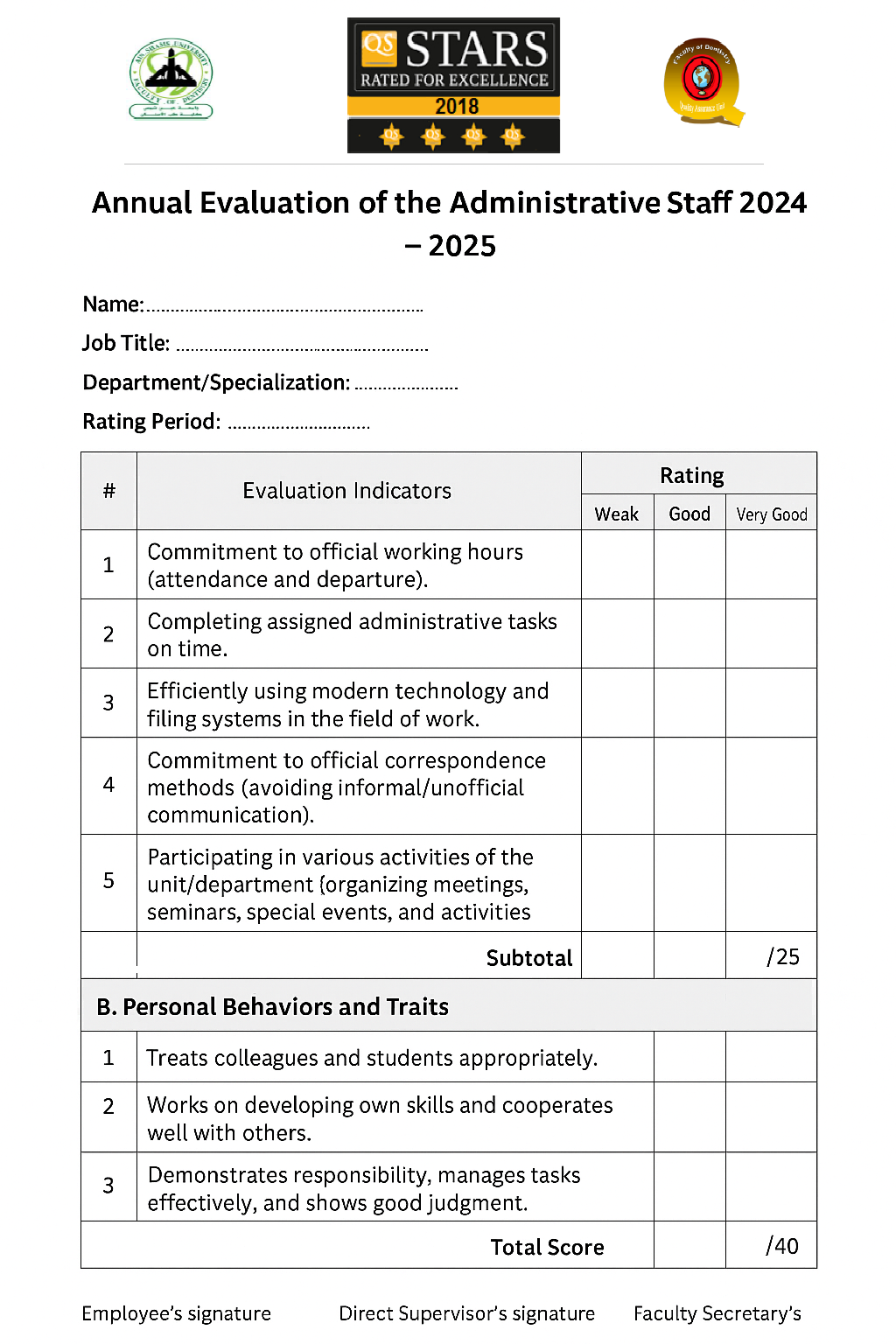
Annual Performance Evaluation Criteria for the Administrative Staff
University Policies
Ain Shams University policies are a set of regulations that govern the work of the university and its educational institutions. They guide current and future decision-making within the framework of the university’s goals and values. Procedures, on the other hand, describe and define how policies are implemented in the form of structured and sequential activities to ensure adherence to a systematic and consistent approach to work.
University policies link the formulation of the strategic plan with its implementation and represent the general framework that guides the execution of the strategy across all its components and at different levels. These policies are designed to ensure that university leadership and official councils make decisions that support the university’s mission and strategic objectives and lead to the effective implementation of the strategy.
University policies are diverse and cover the sectors of education and students, scientific research and postgraduate studies, community service and sustainable development, in addition to general policies. The university assigns official councils and committees to develop and oversee sector-specific policies in order to achieve the college’s mission and vision and to raise the level of its graduates, enhancing the university’s competitiveness locally, regionally, and internationally.
When updating policies, the university ensures that they are presented and discussed with relevant stakeholders, approved by the University Council, and then published on the university and faculty websites to guarantee proper implementation with the participation of the university administration and its institutions. Policies are reviewed, updated, and developed periodically in line with updates to the university’s strategic plan and whenever necessary To view the University Policies document, click here..
To view the Faculty Policies page: click here
Program Specification for Bachelor of Oral and Dental Medicine and Surgery (B.D.S) : click here
Program Specification for Bachelor of Clinical Dentistry (B.C.D) : click here
National Academic Reference Standards (NARS) : click here
Functional Description of the Faculty of Dentistry, Ain Shams University : click here
■ Mechanism for Preventing Conflicts of Interest within Academic Departments
This mechanism aims to promote integrity and transparency in academic and administrative activities within the college’s academic departments. It ensures the avoidance of any situations that may lead to a conflict of interest, thereby serving the public good and maintaining impartiality in decision-making.
Definition of Conflict of Interest
A conflict of interest is any situation in which the personal, familial, financial, or professional interests of a faculty member or employee could influence their academic or administrative decisions within the academic department.
Examples of Conflicts of Interest
● Supervising or evaluating students who have a family relationship or personal interest with the faculty member.
● Participating in appointment or promotion decisions involving individuals with whom the member has familial or financial ties.
● Using departmental resources or facilities for personal benefit outside the scope of academic work.
Procedures for Disclosure of Conflicts of Interest
● Periodic Declaration
All faculty members and employees are required to disclose any potential conflicts of interest by completing an official declaration form.
●This declaration must be updated annually or whenever a change in circumstances occurs.
● Periodic Review
The head of the department shall review all declarations and notify the college administration of any cases that require action.
Management of Conflict of Interest Cases
If a conflict of interest case is identified, it shall be handled through the following steps:
● Exclusion of the Member
The concerned member shall be excluded from participating in any decision related to the case.
● Appointment of a Substitute
Another faculty member from the department or the college shall be assigned to ensure the continuity of work without delay.
● Documentation
All steps and actions taken regarding the case shall be properly documented to ensure transparency and protect rights.
■ Template of the Mechanism for Preventing Conflicts of Interest for Examination Control Committee Members
This mechanism aims to ensure transparency and integrity in the work of the Examination Control Committee and to maintain the impartiality of its members. It seeks to prevent any negative influence on the committee’s decisions resulting from personal or professional conflicts of interest.
Definition of Conflict of Interest
A conflict of interest is any situation in which a member’s objectivity may be affected by personal, familial, financial, or any other relationships that could influence the performance of their official duties.
Procedures for Disclosure of Conflicts of Interest
Each committee member must complete a written declaration confirming that no conflict of interest exists or disclosing any potential cases of conflict.
This declaration shall be updated periodically before the start of each examination session or whenever a change in circumstances occurs.
Management of Conflict of Interest Cases
If a conflict of interest is identified, the concerned member shall be excluded from participating in discussions or decisions related to the conflicting case.
A substitute member shall be assigned to ensure the continuity of work without delay.
All disclosures and correspondence related to conflicts of interest shall be kept in special records to ensure transparency.
Responsibilities of Members
● Members must immediately report any conflict of interest upon its occurrence or discovery.
● Members must refrain from participating in any decisions or tasks that could be influenced by personal interests.
Penalties
In case of failure to disclose a conflict of interest or non-compliance with the stated procedures, appropriate disciplinary actions shall be taken, which may include a formal warning or removal from the Control Committee.
Declaration Signature
Each member is required to sign the declaration.
■ The Quality Assurance Unit also includes a number of other mechanisms that support the implementation of quality standards and governance, including the following:
● Mechanisms for training academic and administrative leaders: Click here
● Mechanisms for evaluating the performance of academic and administrative leaders:
● Mechanisms to ensure fairness, non-discrimination, and avoidance of conflicts of interest:
● Mechanisms for selecting leaders: Click here
● Mechanism for addressing shortages in the number of assistant staff members at the Faculty of Dentistry: Click here
● Mechanism for submitting and handling complaints for faculty members and assistant staff: Click here
● Mechanism for submitting and handling complaints for administrative staff and employees: Click here
● Mechanism for submitting and handling complaints – Faculty of Dentistry: Click here
● Mechanism for documenting students’ responses in electronic assessment methods:
● Mechanism for documenting examination results: Click here
● Template for the mechanism on avoiding conflicts of interest in scientific departments: Click here
● Template for the mechanism on avoiding conflicts of interest for control (examination committee) members: Click here
Quality Assurance Unit Guide : click here
Quality Assurance Unit Regulations: click here
Faculty Training Plan : click here
Templates for Course/Program Description
Quality Culture Workshop Templates : Click Here
Academic Program Report Template 2025 : Click Here
Course Report Template 2025 : Click Here
Academic Program Description Template 2025 : Click Here
Course Description Template 2025 : Click Here
Exam Paper Analysis and Evaluation Form : Click Here
Questionnaires and Reports
Job Satisfaction Evaluation for Administrative Staff 2023–2024: Click Here
Job Satisfaction Evaluation for Assistant Staff 2023–2024: Click Here
Job Satisfaction Evaluation for Faculty Members 2023–2024: Click Here
Regular Program Students’ Satisfaction with College Facilities 2023–2024: Click Here
Credit-Hours Program Students’ Satisfaction with College Facilities 2023–2024: Click Here
Workshops
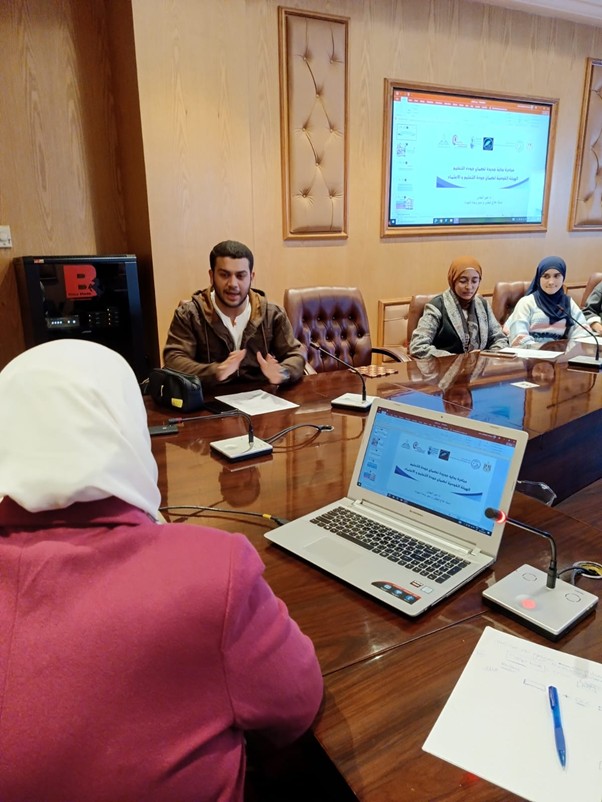
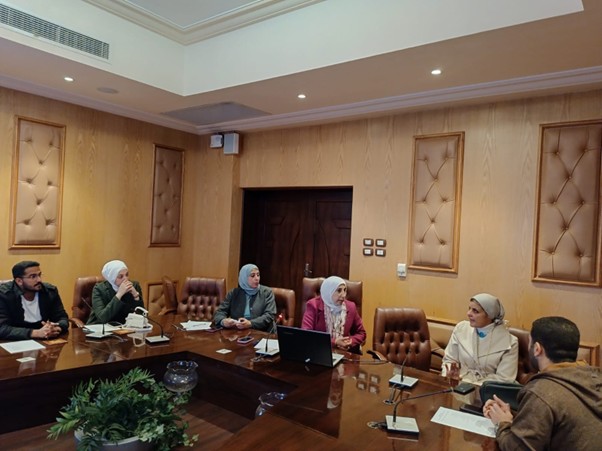
● Awareness Session Introducing Students to Their Role in the College’s Quality System – 28 December 2025
The Quality Assurance Unit at the Faculty organized an awareness session for students, presented by the Director of the Quality Assurance Unit, as part of the College’s efforts to promote a culture of quality and highlight the students’ key role in supporting accreditation and improving the educational process.
During the session, students were introduced to the concept of quality in higher education, its importance in developing academic programs, and enhancing graduate competencies to meet labor market requirements. The role of students as active partners in achieving quality was also emphasized, including adhering to regulations, participating in surveys and student activities, and providing constructive suggestions.
The Director highlighted that student feedback is one of the most important tools for continuous evaluation and improvement, noting that positive student participation directly supports accreditation efforts and elevates the College’s standards.
The session witnessed active student engagement, with several questions raised and answered, helping to strengthen their awareness of the importance of quality and their role in achieving it.
 |
 |
 |
 |
 |
 |
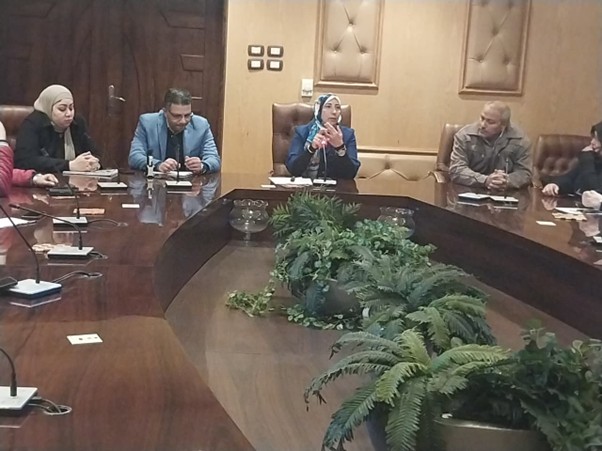
● Awareness Session on Strengthening the Role of Administrative Staff in Implementing Quality Standards – 4 January 2026
As part of supporting the College’s quality and accreditation system, the Quality Assurance Unit organized an awareness session for administrative staff, presented by the Director of the Unit, aimed at clarifying the pivotal role of administrative staff in fulfilling quality and institutional accreditation requirements.
The session covered the importance of quality in developing administrative performance and improving service levels within the College. It also reviewed the administrative staff’s role in documenting procedures, adhering to regulations, and achieving institutional work efficiency, which positively impacts the overall educational process.
The Director emphasized that administrative staff are essential partners in the success of the quality system, and that accuracy in performance and adherence to standard procedures are key pillars for accreditation.
The session included productive discussions and exchange of ideas on improving administrative work, raising awareness, and strengthening the sense of institutional responsibility and belonging among staff.
 |
 |
 |
 |
 |
 |
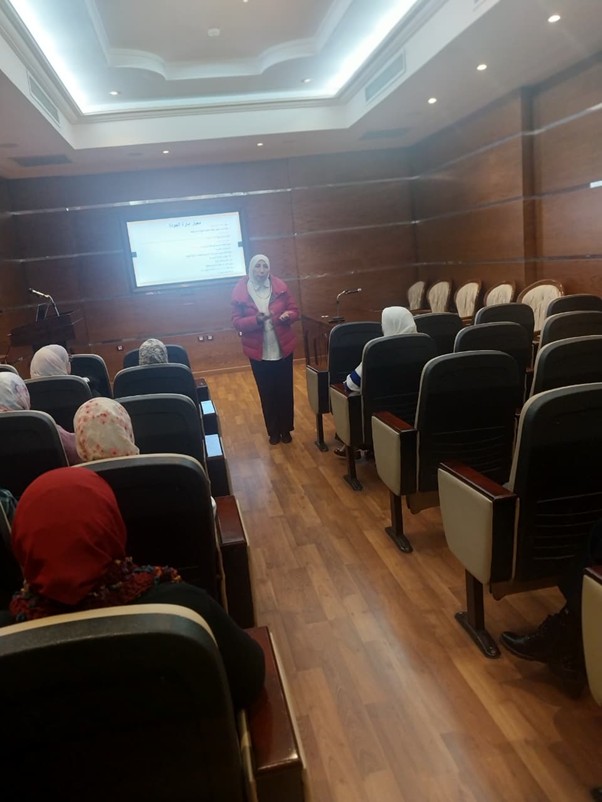
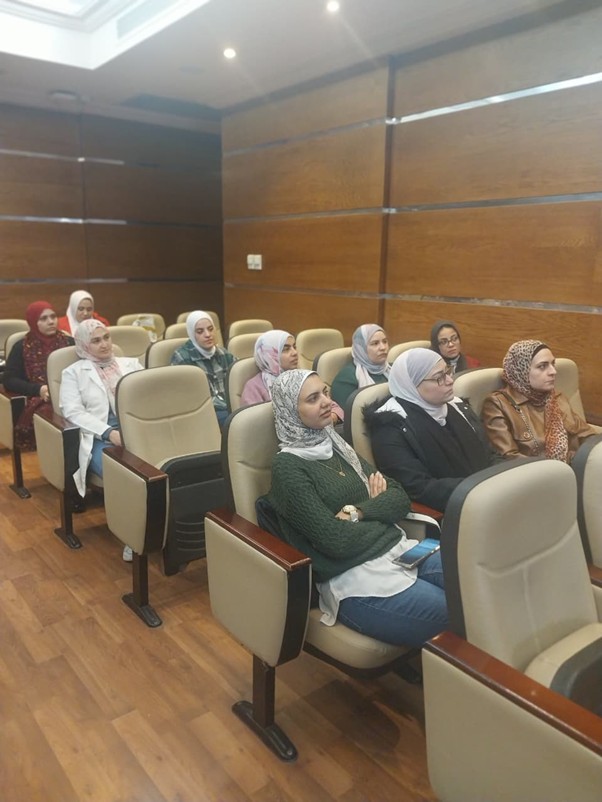
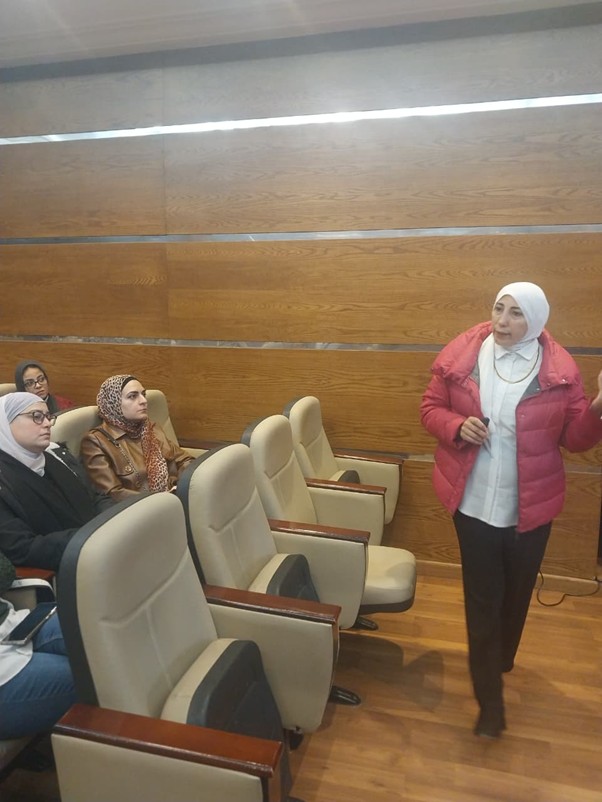
● Awareness Session for Faculty Members on Their Role in Achieving Quality and Accreditation – 11 January 2026
The Quality Assurance Unit organized an awareness session for faculty members, presented by the Director of the Unit, as part of the College’s plan to promote a culture of quality and support readiness for academic accreditation.
The session focused on the role of faculty members in applying quality standards, particularly regarding course descriptions, learning outcomes, teaching and assessment methods, and aligning them with reference academic standards to improve the quality of the educational process.
The Director stressed that faculty members are the cornerstone of educational quality, and that integration between teaching, assessment, research, and community service forms the foundation of institutional excellence.
The session also highlighted the role of the assistant staff in implementing educational plans, participating in practical and clinical teaching, and supporting the documentation of courses and educational activities to ensure the achievement of targeted learning outcomes. Assistant staff serve as the link between students and faculty, and their adherence to quality standards in academic, research, and administrative performance directly improves education and supports accreditation efforts.
Faculty and assistant staff actively participated in the session, exchanging experiences, discussing challenges, and exploring development strategies, which strengthened awareness of their role in the quality system and fostered a sense of responsibility and institutional belonging.
 |
 |
 |
● Awareness Session for Assistant Staff to Strengthen Their Role in the College’s Quality System
As part of the College’s commitment to promoting a culture of quality and institutional accreditation, the Quality Assurance Unit organized an awareness session specifically for assistant staff, presented by the Director of the Unit. The session aimed to clarify their vital role in supporting the educational process and fulfilling quality requirements.
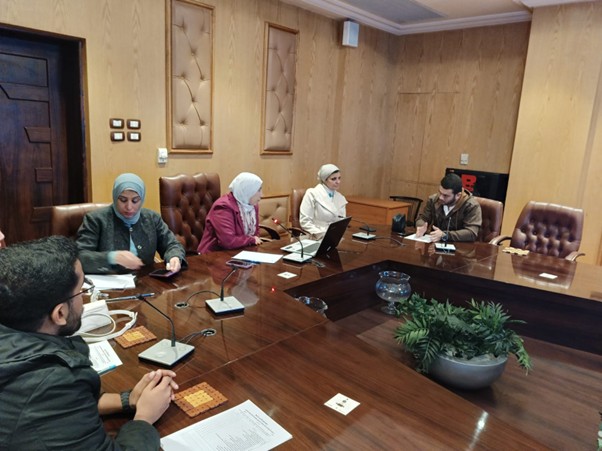
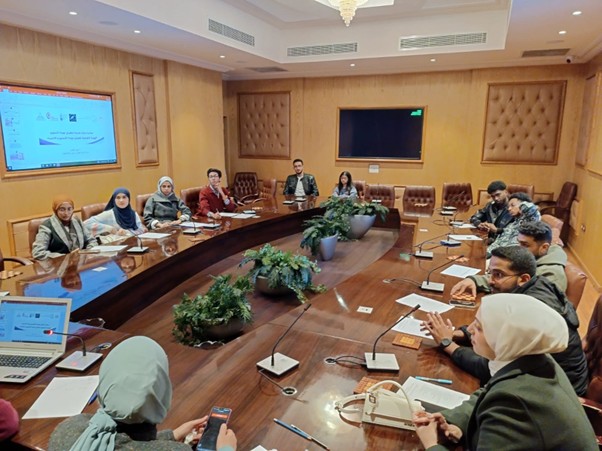
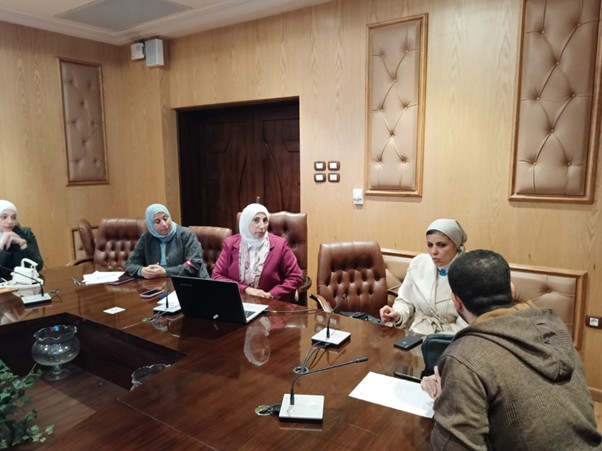
● Meeting of the Director of the Quality Assurance Unit with Academic Leaders to Promote a Culture of Quality at the College
As part of the College’s commitment to supporting the quality system and enhancing institutional performance, the Director of the Quality Assurance Unit held an extended meeting with academic leaders, aiming to promote a culture of quality and raise awareness of academic accreditation requirements and the mechanisms for achieving them.
The meeting addressed the pivotal role of academic leaders in supporting and activating the quality assurance system, as well as the importance of integrating efforts between academic departments and the Quality Assurance Unit to achieve the College’s mission and strategic objectives, thereby positively reflecting on the quality of the educational process and learning outcomes.
The discussion also covered quality and accreditation standards, the role of academic departments in documenting educational practices, and monitoring the implementation of strategic and continuous improvement plans. Emphasis was placed on the importance of promoting a culture of self-evaluation and evidence-based improvement.
The Director of the Quality Assurance Unit emphasized that academic leadership represents the cornerstone of a successful quality system through supporting faculty members, encouraging teamwork, and providing a learning environment that fosters quality and excellence.
At the conclusion of the meeting, the importance of continuing to hold such periodic meetings was highlighted, as they contribute to strengthening effective communication between the Quality Assurance Unit and academic leadership, and support the College’s efforts toward achieving academic accreditation and sustainable institutional excellence.
 |
 |
 |
 |
 |
 |
Contact Us
E-Mail : qud@dent.asu.edu.eg